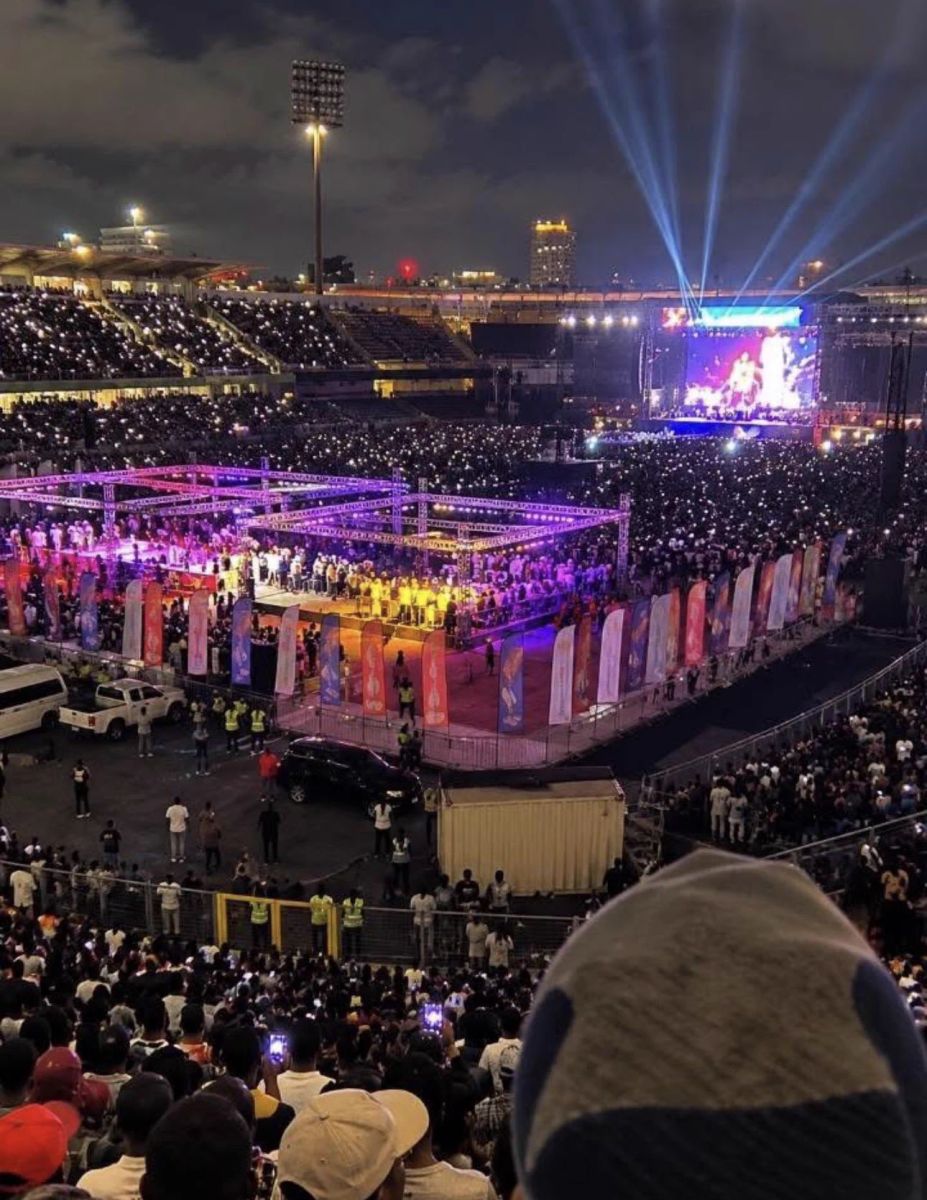
On Friday 16 October 2026 the World Assemblies of God Fellowship Congress finished its final programme at the Accra Sports Stadium, running past its 10 p.m. deadline. The very next day, Saturday 17 October, ShattaFest opened at the same venue, with many observers noting the stage’s near‑identical appearance to the Congress’s set.
Facebook posts erupted, accusing Shatta Wale’s team of copying the Congress’s design. The claim, however, overlooks the complex choreography that follows a major event. After the Congress ended, chairs were covered, the pitch cleared, and the stadium cleaned before ShattaFest’s production crew could begin their own work. The logistics of dismantling, re‑setting and re‑testing a stage, sound and lighting system in a single day are substantial.
ShattaFest’s organisers reportedly arrived early to help clear chairs and prepare the venue, a task that involves coordinating hundreds of workers, equipment and time constraints. Once the venue was ready, technical teams had to rebuild the stage, re‑install lighting, test sound and ensure everything met safety and performance standards. The process is not simply swapping one set for another; it is a rapid transformation that demands precision and coordination.
Industry examples show that stage sharing and rapid venue conversion are common practice worldwide. In London, the production company Okoru designed two distinct stage appearances for Arts House and Anjunadeep Open Air, sharing the same underlying infrastructure and enabling a three‑hour turnaround between events. In the UK, Sundown Festival and Reload Festival reused the same main stage and barrier layout at Norfolk Showground, a cost‑saving strategy highlighted in a PLASA report. Similar practices occur in the U.S., where venues like State Farm Arena routinely switch between basketball games, concerts and church services.
These precedents demonstrate that similar stage configurations across consecutive events are a deliberate, pragmatic production strategy rather than an act of copying. The focus is on efficient use of resources, time management and cost control, not on duplicating another event’s artistic vision.
While the exact contractual arrangements between ShattaFest and the Congress organisers remain undisclosed, the technical and logistical realities suggest that any resemblance in stage design is a consequence of shared infrastructure and rapid venue conversion, not plagiarism. The debate highlights the need for greater public understanding of live‑event production complexities.