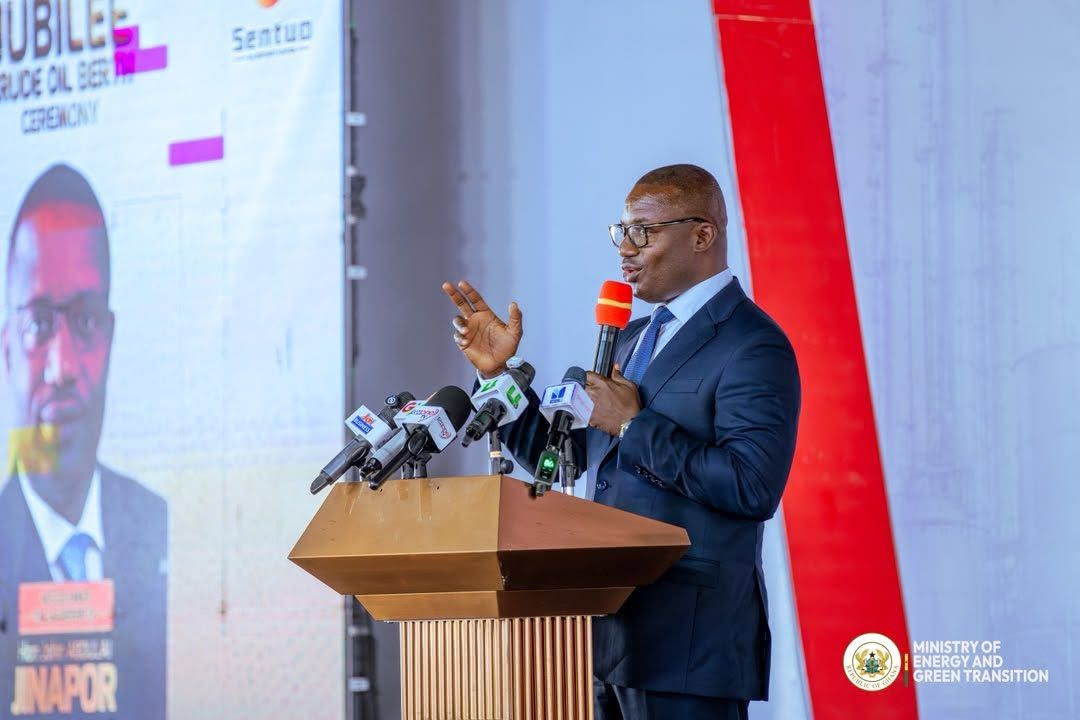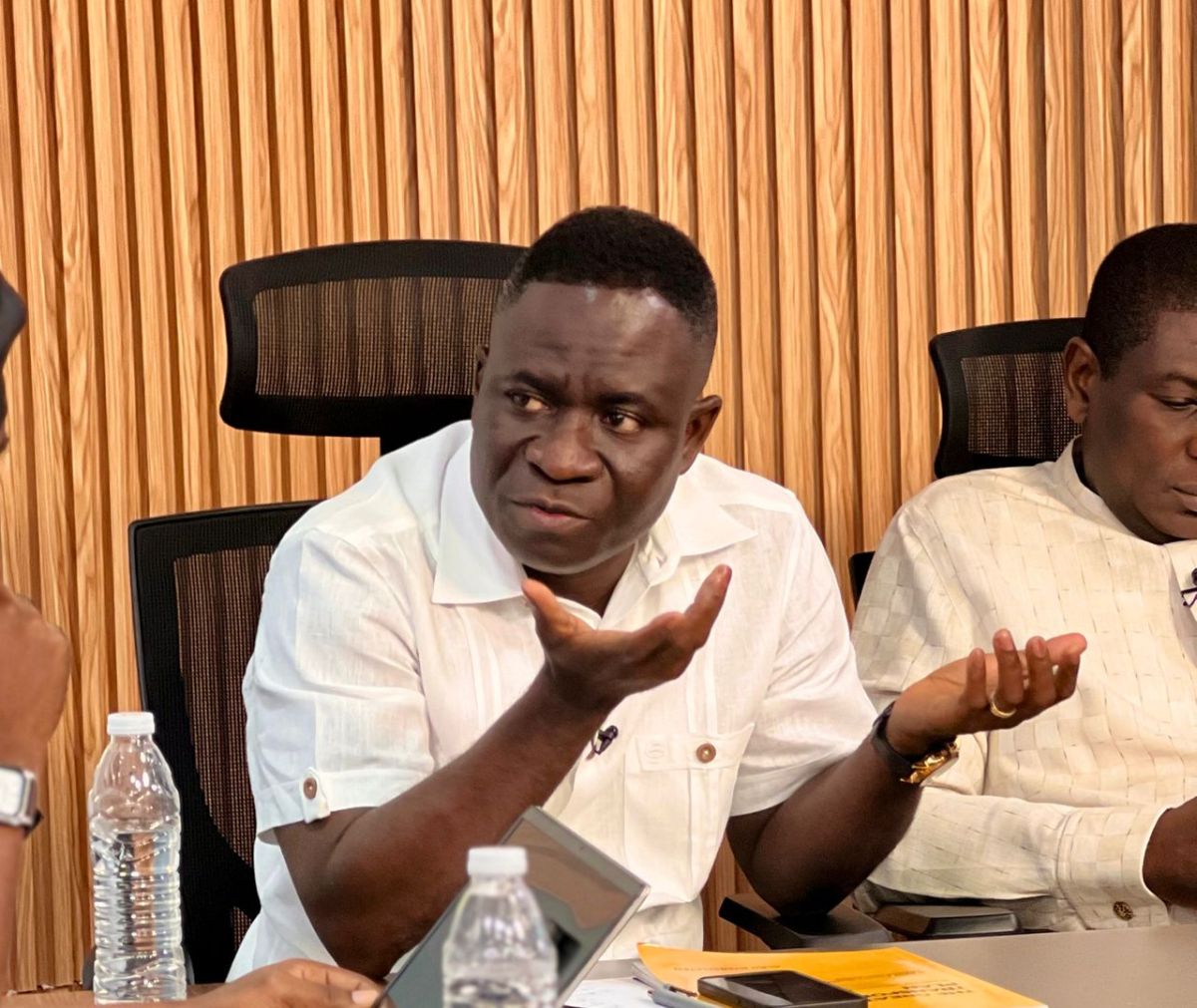
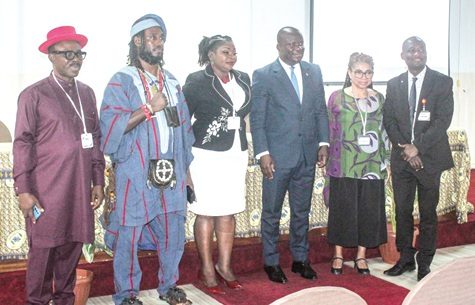
Former Minister of Lands and Natural Resources, Samuel A. Jinapor, has underscored the need for justice to take centre stage in the continent's approach to the global energy transition.
Delivering a keynote speech at the Ghana Component of the "Justice in critical minerals governance and green transition" programme at the University of Ghana last Monday, he explained that without deliberate policy with justice at its core, the global energy transition risked becoming another form of resource exploitation.
"It is, therefore, of utmost imperative that we do not just focus on the energy transition, but also how we pursue that transition, ensuring that justice prevails across the entire value chain of mineral production and the energy transition," Jinapor, who is also the Member of Parliament for Damongo, said. He added that fairness in critical minerals governance must be pursued simultaneously between nations, states and host communities, as well as between present and future generations.
Organised by the Institute of African Studies at the University of Ghana, the Ghana Component project is backed by the United Kingdom Research and Innovation (UKRI) in partnership with King's College, London, and the Institute of African Studies. It examines how fairness can be built into the global scramble for minerals such as lithium, cobalt, graphite, nickel, manganese and rare earth elements.
Jinapor pointed to the wide value gap between raw extraction and finished products. Citing Bloomberg estimates, he said the global lithium mining industry was valued at about $11 billion, compared with more than $7 trillion for battery production, a gap that leaves African lithium producers capturing only 10 to 15 per cent of the value chain. He said countries such as the Democratic Republic of Congo, which holds roughly 51 per cent of global cobalt reserves, and Zimbabwe, exporting raw lithium ore from its Bikita mine, remain locked into exporting unprocessed minerals while refining, battery manufacturing and technological innovation are concentrated elsewhere.
Citing Ghana's own experience, he said the country had mined gold for over a century without developing refining capacity and continued to export raw bauxite while importing refined alumina for the Volta Aluminium Company (VALCO) smelter. As a result, he said, when he was sector minister, he led the formulation of a policy that raised royalties on green minerals to a minimum of seven per cent, increased state and Ghanaian participation to a minimum of 30 per cent, and introduced, for the first time in the country's history, provisions for establishing a domestic refinery, alongside Ghana Stock Exchange listing requirements and local content rules.
On large-scale mining, he said it had been linked to reduced water levels, acid mine drainage, heavy metal contamination and the destruction of farmlands in the country. He stressed that justice for host communities should not be reduced to questions of compensation but should also extend to their participation in decision-making.
The Director of the Institute of African Studies, Prof Samuel Ntewusu, said deliberations would, among other things, focus on restoring communal equity by drawing on pre-colonial models that treated mineral wealth as a collective trust. They would also seek to correct the structural dispossession of local populations and traditional authorities from resource stewardship, and address how political patronage and electoral cycles weaken regulatory enforcement against illegal mining. He challenged stakeholders to move beyond diagnosis toward concrete policy frameworks for sustainable development.
The Director of Research at the Ministry of Lands and Natural Resources, Josephine Baddoo, said Ghana's stable democratic governance and investor-friendly policies had made it one of Africa's most attractive investment destinations, with its mining sector now diversifying. She said green minerals governance was also a tool against illegal mining, pointing to the Minerals and Mining Act, 2006 (Act 703), which criminalises unlicensed mining with prison terms of 15 to 25 years and bans mining in protected areas. She added that Ghana's green minerals policy framework prioritises revenue maximisation, value addition, local content and increased state participation.