
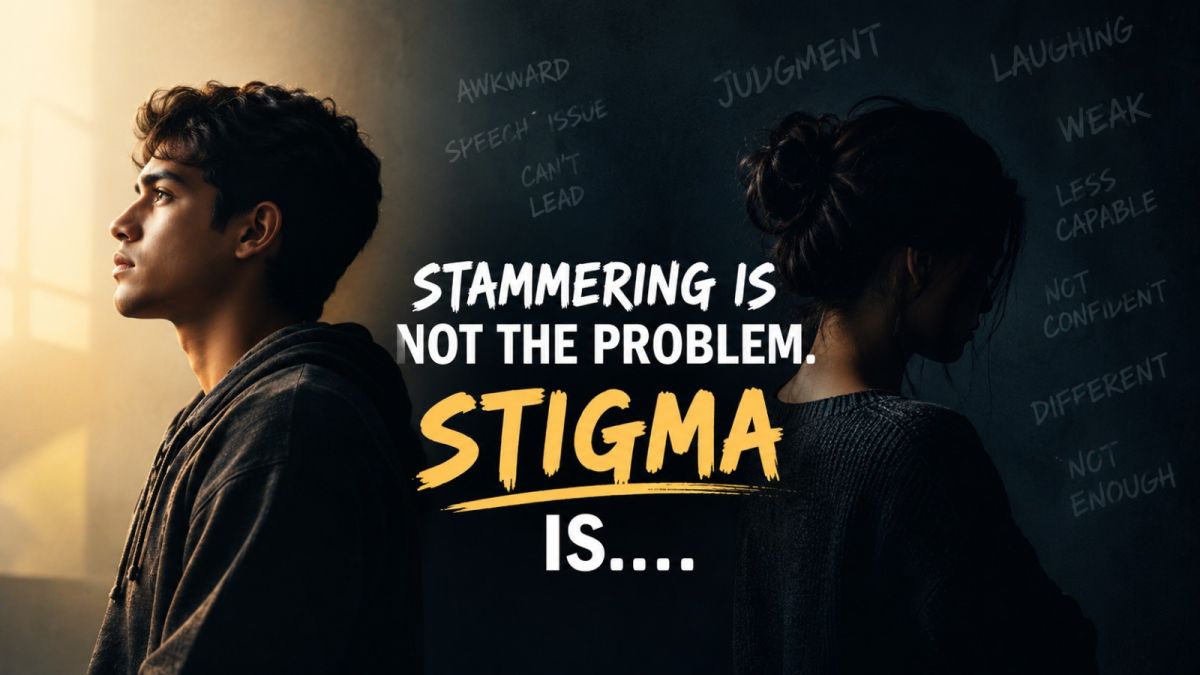
Melody Fafa Kportufe, a Ghanaian journalist, revealed that her stammer has never stopped her from pursuing a career in media, but the stigma attached to the speech disorder has caused her to face anxiety and self‑doubt.
She explained that stammering, or stuttering, is a speech fluency disorder marked by repetitions, prolongations and blocks, and that it typically begins in early childhood. While the condition has nothing to do with intelligence, living in a culture that places heavy emphasis on eloquence can expose people to frustration, anxiety and social exclusion.
In a recent interview, Kportufe recounted how she learned coping strategies such as slowing her speech when excited or angry, and how speech therapy has helped her improve fluency and confidence. She noted that some children naturally outgrow the disorder, while others continue to experience it into adulthood.
During a conversation with Dr Eugene K. Dordoye, Acting Chief Executive Officer of Ghana’s Mental Health Authority, Kportufe heard him emphasize that stammering is not a mental illness, yet it can lead to emotional distress when society’s misconceptions and superstitions prevail. Dordoye, who stammers himself, shared how he supported his children who showed early signs of the disorder, reinforcing that a speech difference does not have to become a life sentence of self‑doubt.
She warned that Ghana’s superstitious attitudes—attributing stammering to evil spirits or divine punishment—prevent people from seeking appropriate help and can foster harmful attitudes toward those with communication differences. The psychological toll of stigma can drive people to avoid public speaking, withdraw from social situations or miss opportunities that require verbal communication.
As World Mental Health Day falls on October 10, Kportufe calls on the public to be kinder and give grace to those who live under such circumstances. She reminds readers that the real problem is not always the struggle to speak, but a society that refuses to listen.