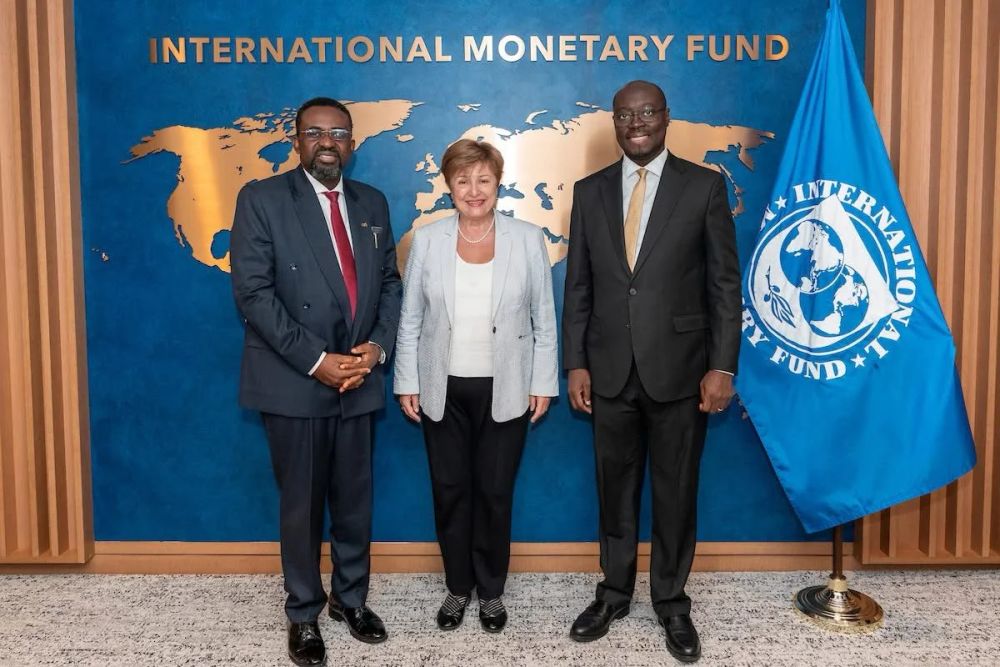
Dr. Johnson Asiama, Governor of the Bank of Ghana, said the country will maintain the policy discipline achieved under the International Monetary Fund’s Extended Credit Facility (ECF) as Ghana transitions into a new phase of engagement with the Fund.
He urged that the Bank of Ghana and fiscal authorities remain prudent in monetary and fiscal policy to preserve investor confidence and consolidate the gains made under the ECF programme.
Speaking on the transition, Dr. Asiama stressed that the PCI will serve as an important signal to financial markets, which will closely monitor the credibility of Ghana’s economic policies. “This is a policy signalling instrument, and the markets will watch the behaviour of monetary and fiscal policy for credibility. We need to show the same discipline in conducting monetary policy as we did with the ECF,” he said.
Ghana’s 39‑month ECF programme formally ended in July 2026 after the IMF Executive Board completed the sixth and final review. The country has since moved into a 36‑month, non‑financing Policy Coordination Instrument (PCI), designed to anchor the government’s reform agenda and sustain macroeconomic stability.
The Governor also pointed to the first review under the new framework as an important test of Ghana’s continued commitment to the reform agenda. “The first PCI review in October approaches with its attendant accountability demands,” he added.
Under the IMF’s published schedule, the first PCI test date is September 30, 2026, with the review expected to be considered by the IMF Executive Board by January 2027.
The IMF said the ECF‑supported programme helped Ghana restore macroeconomic stability, improve debt sustainability, rebuild international reserves and strengthen confidence in the economy. However, the Fund has stressed that sustained implementation of reforms under the PCI will be essential to preserve these gains.
The PCI covers six priority areas, including growth‑friendly fiscal consolidation, debt sustainability, fiscal transparency and governance, monetary and exchange‑rate policy, financial‑sector stability, and economic diversification and inclusive growth.
Moving forward, Ghana will need to demonstrate that the same level of fiscal and monetary discipline that secured the ECF gains can be maintained under the PCI framework, a challenge that will be closely watched by investors and the IMF alike.