The government has officially accepted sweeping proposals by the Constitutional Review Committee to reform Ghana’s 1992 Constitution, introducing significant changes to the executive, legislature, judiciary, and local governance structures.
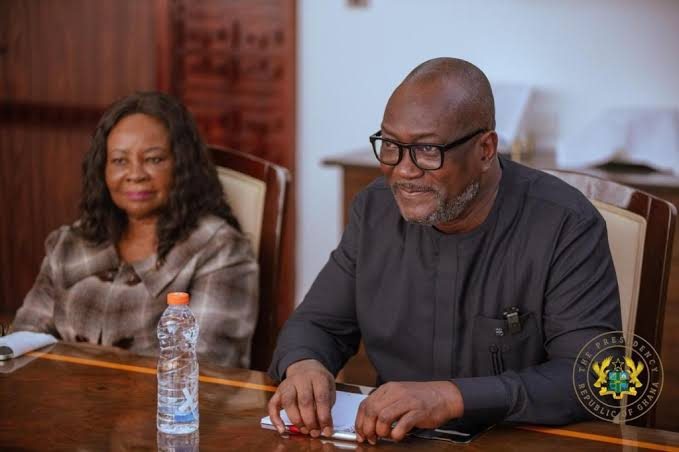
The Attorney-General and Minister for Justice, Dr. Dominic Ayine, announced the decisions during a media briefing in Accra on Thursday, July 30, 2026, where he presented the government's official 89-page position paper on the committee's final report.
Dr. Ayine clarified that the document was not a traditional White Paper because the committee was not constituted as a formal commission of inquiry under Chapter 23 of the Constitution. He outlined that the government's responses fell into three distinct categories: full acceptance, acceptance in principle with modifications, and outright rejection, complete with supporting rationales.
Executive and Electoral Timeline Overhaul
In a major shift for national elections, the government has accepted extending both the presidential and parliamentary terms from four to five years. Dr. Ayine explained that the current four-year cycle severely constrains governance once transition periods and election campaigns are factored in.
Key changes affecting the Presidency and elections include:
Age Qualification: Lowering the minimum age to contest for president from 40 to 35 years (modifying the committee’s 30-year proposal).
Taxation: Removing the President's blanket tax exemption; the Head of State will now pay income and indirect taxes on salaries and allowances, though presidential pensions remain tax-exempt.
Electoral Timelines: Setting presidential elections for the first week of November, with election petitions mandated to be filed within 14 days and resolved by the Supreme Court within 30 days.
Cabinet & Ministerial Caps: Capping the total number of Ministers of State at 60 (up slightly from the committee’s proposed 57).
Parliamentary Expansion and Dual Citizenship Rights
Under the approved reforms, the membership of Parliament will increase from 276 to 300 seats. The 24 additional seats will be allocated via proportional representation and reserved exclusively for women, youth, and persons with disabilities.
In a historic move for the diaspora, the government accepted removing long-standing constitutional barriers that barred dual citizens from contesting parliamentary seats or holding key public offices including President, Vice-President, Chief Justice, Speaker of Parliament, and Chairperson of the Electoral Commission. Furthermore, a constitutional right of abode and a heritage-based pathway to citizenship will be established for people of African descent in the diaspora.
Judicial, Political, and Human Rights Reforms
The reforms also target judicial administration, political party internal democracy, and civil rights:
Judiciary Capping: The Chief Justice will now serve a single, non-renewable 10-year term (or until the mandatory retirement age of 70). Supreme Court membership will be capped at 19 justices (the Chief Justice plus 18 others).
Universal Voting in Parties: Aligning with a Supreme Court ruling delivered on July 29, 2026, political parties will be required by law to give all members in good standing equal voting rights in internal primary elections, effectively eliminating the delegate system. A new Political Parties Regulatory Commission will oversee party registration and compliance.
Abolition of Capital Punishment: The death penalty will be formally abolished, replaced by mandatory life imprisonment for capital offenses.
Human Rights Act: A new Human Rights Act will expand fundamental freedoms in Chapter Five without requiring a referendum for every addition.
Local Governance and Separation of Powers
For local government, the administration rejected a phased transition and instead opted for the immediate direct election of all Metropolitan, Municipal, and District Chief Executives (MMDCEs). Under the proposed model, the President will nominate five individuals (including at least two women) per district, from which a shortlisted three (including at least one woman) will contest the election.
To address public expenditure on political leadership, an independent Public Emoluments Commission will be established to set salaries and benefits for Article 71 office holders, effectively replacing the presidential committees previously appointed for this task.
Additionally, the Office of the Attorney-General will undergo structural decoupling: the Attorney-General will no longer sit in Cabinet or act as a Minister of State, focusing strictly on public prosecutions and legal advice with tenure security equivalent to a Supreme Court Justice. A separate Ministry of Justice will manage administration of the justice sector.
Road to Implementation
President John Dramani Mahama will soon inaugurate a Constitutional Review Implementation Committee to draft two distinct constitutional amendment bills:
Non-Entrenched Provisions Bill: Subject to a two-thirds majority vote in Parliament.
Entrenched Provisions Bill: Subject to a national referendum.
The government aims to finalize both amendment bills by October 2026, with plans to hold the national referendum alongside the 2027 District Assembly elections to minimize public expenditure.