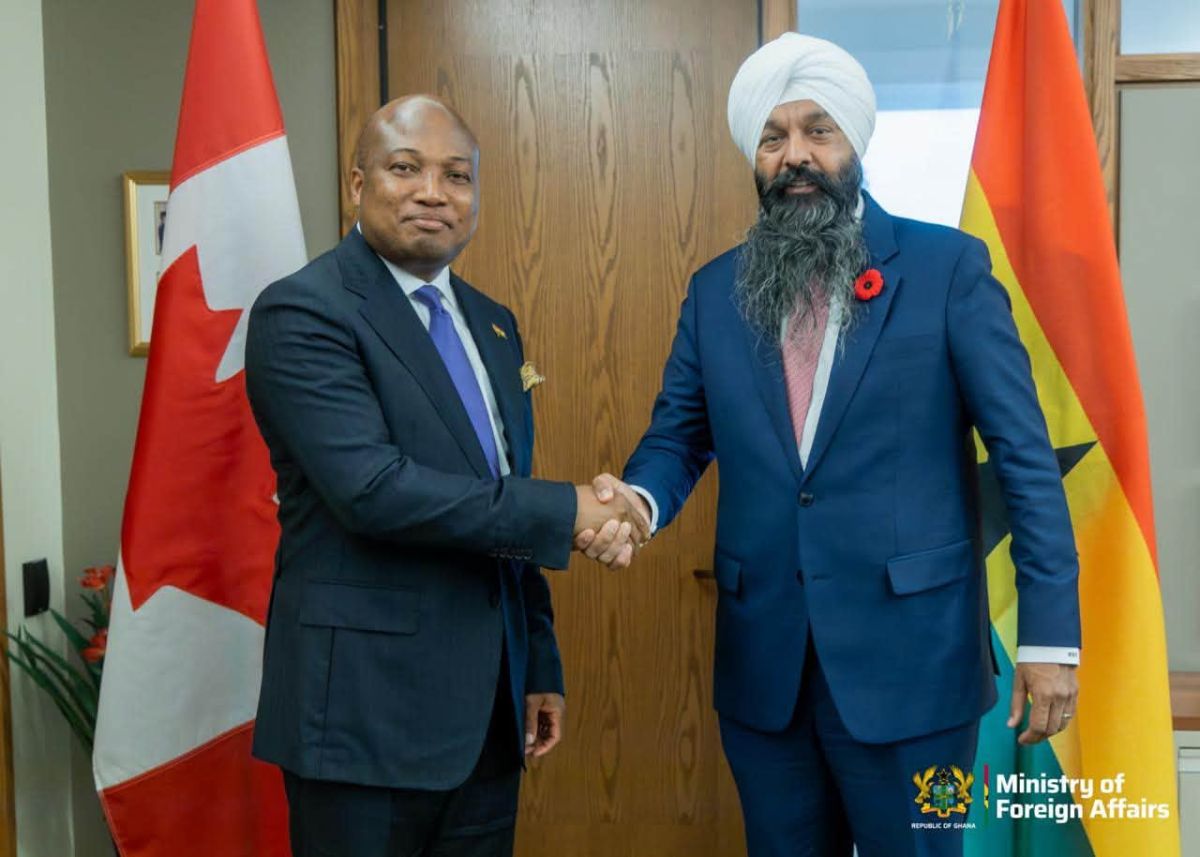
Ghana and Canada have agreed to collaborate on the establishment of Ghana’s Women’s Development Bank, with Canada expected to provide technical support for the initiative. The agreement was announced by the Minister for Foreign Affairs, Samuel Okudzeto Ablakwa, after discussions with Canada’s Secretary of State for International Development, Randeep Sarai.
Ablakwa said the proposed collaboration forms part of a broader package of development partnerships agreed upon by the two countries, aimed at strengthening economic opportunities, skills development and sustainable growth. In a Facebook post, the Foreign Affairs Minister described his engagement with Mr Sarai as positive and meaningful, noting that the discussions had produced several concrete areas of cooperation between Ghana and Canada.
Among the key outcomes, he said, was Canada’s commitment to provide technical assistance towards establishing the Women’s Development Bank, an initiative expected to support efforts to improve women’s access to financial services and economic opportunities. “Canada will offer technical support for the establishment of Ghana’s Women’s Development Bank,” he added.
Beyond the Women’s Development Bank, Ghana and Canada also agreed to establish a partnership focused on labour mobility and skills empowerment for young people. The proposed partnership would cover digital literacy, standardised certification for international employment opportunities, energy transition and technical and vocational education and training (TVET).
The two countries also agreed to strengthen their collaboration with the Kofi Annan International Peacekeeping Training Centre (KAIPTC). Environmental protection and reclamation also featured in the discussions, with Ghana and Canada agreeing to cooperate on modern approaches to environmental management. Ablakwa said the two countries would work together to promote legal and sustainable mining practices while strengthening environmental protection and reclamation efforts.
What follows is a series of joint initiatives aimed at fostering economic growth and sustainable development across both nations. The Women’s Development Bank is expected to become a cornerstone of Ghana’s financial inclusion strategy, while the broader partnership will create pathways for young Ghanaians to acquire skills and access global employment opportunities.