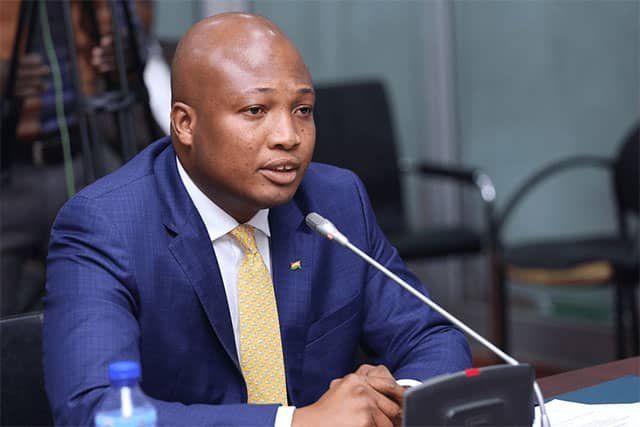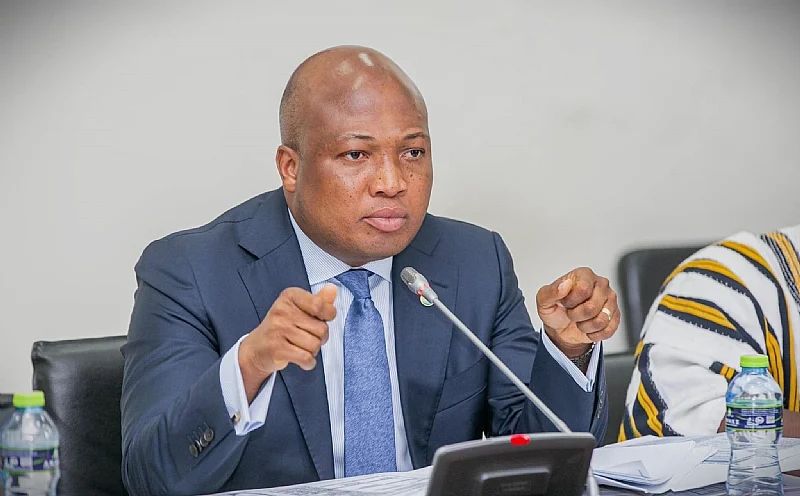
Ghana has endorsed the proposed Fossil Fuel Treaty, but Minister for Foreign Affairs Samuel Okudzeto Ablakwa stressed that any global framework must provide fair financing and allow countries to determine their own transition pathways in line with national circumstances. The remarks were made at a ministerial meeting held on Monday, November 2, 2026, in Antigua and Barbuda.
The gathering convened at the Admiral Ballroom of Sandals Grande Antigua Hotel, bringing together ministers and senior officials to discuss the treaty’s objectives, the challenges faced by fossil‑fuel‑dependent economies, and the financial arrangements needed for a just transition. Ablakwa welcomed the initiative but cautioned that the shift to cleaner energy must account for each nation’s capacities, energy needs and development priorities.
He highlighted that Ghana’s petroleum sector remains a key contributor to government revenue, foreign exchange earnings, electricity generation and LPG supply for cooking. Therefore, the transition must be carefully managed to avoid undermining economic stability, energy affordability and national development. The minister invoked the principle of Common but Differentiated Responsibilities and Respective Capabilities (CBDR‑RC), arguing against uniform transition timelines that ignore differing circumstances.
Ablakwa called for dedicated and accessible financing, including grants and concessional loans, as well as technology transfer and technical assistance to help developing countries move toward cleaner energy sources. He also emphasized protecting workers and communities whose livelihoods could be affected by the transition, while safeguarding national sovereignty in setting energy policies and development pathways.
Participants discussed the need for a comprehensive international framework to guide the transition away from fossil fuels amid energy insecurity, volatile fuel prices and the growing impacts of climate change. The meeting explored the possibility of a coalition of countries leading the treaty, establishing common standards and building political momentum even without universal agreement.
Antigua and Barbuda’s Minister for Health, Wellness, Environment and Civil Service Sir Molwyn Joseph highlighted the vulnerability of small island developing states to climate‑related disasters. Bahamas Minister for Foreign Affairs and Immigration Fred Mitchell stressed the need for reforms to the international financial architecture to help vulnerable countries build resilience and adapt to climate change. Former Governor of the Central Bank of Trinidad and Tobago Jwala Rambarran proposed a Transition Financing Facility under the treaty, offering grants, concessional financing, debt restructuring, disaster‑related debt suspension, debt‑for‑climate swaps and investment guarantees.
The discussions are part of diplomatic efforts to secure a negotiating mandate for the treaty. The next Conference on Transitioning Away from Fossil Fuels is scheduled in Tuvalu in July 2027, following the inaugural conference in Santa Marta, Colombia, in April 2026.