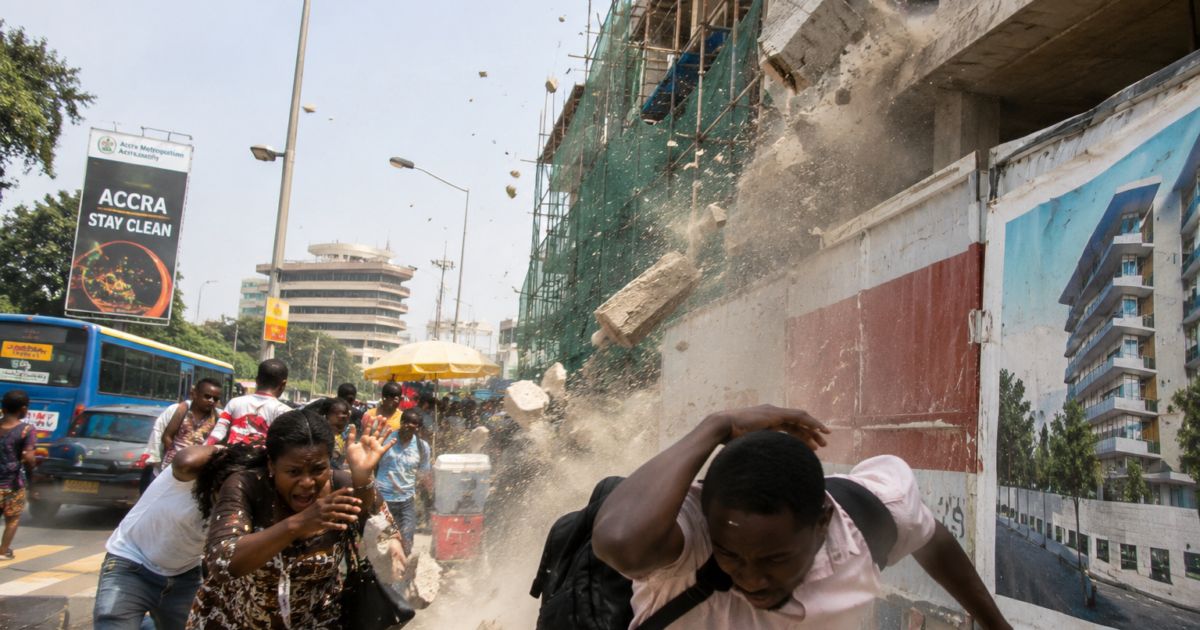
On 21 October 2026, a high‑rise development at Villaggio, close to the Tetteh Quarshie Interchange in Accra, saw concrete blocks and other construction materials tumble onto the street below. The fall, which occurred several floors above pedestrians, was attributed either to a deliberate disposal of debris or to strong winds sweeping away freshly laid blockwork, according to post‑incident inspections. Fortunately, no casualties were reported, but the event highlighted the risks that poorly managed construction activities pose to the public.
Accra’s rapid urbanisation has brought new developments into close proximity with existing homes, offices, schools and roads. When a multi‑storey building rises beside an occupied property, there is little buffer between construction work and everyday life. Falling materials, unsecured scaffolding, uncontrolled demolition, dust, vibration and heavy equipment can all affect pedestrians, motorists and neighbouring buildings. The incident at Villaggio underscores the need to distinguish occupational safety—which protects workers—from public safety, which extends to anyone who may be affected by construction activities.
Ghana’s legal framework already addresses these concerns. The Factories, Offices and Shops Act, 1970 (Act 328), and the Labour Act, 2003 (Act 651) require safe working conditions and protection for non‑employees. The National Building Regulations, 1996 (LI 1630), set standards for hoarding, scaffolding and demolition precautions. The Public Procurement Authority’s Standard Tender Document for Major Works includes clauses on safety procedures and public protection. Beyond statutory duties, tort law—through negligence, nuisance and trespass—provides additional accountability for foreseeable harm caused by construction.
Incidents like the Villaggio fall are often the result of multiple preventable factors: inadequate fencing, poorly secured blockwork, careless debris disposal, weak supervision, and insufficient enforcement of safety procedures. Weather conditions, such as strong winds or heavy rain, can expose weaknesses in temporary structures. Poor traffic management further increases risks where pedestrians and construction vehicles share access routes without proper separation or signage. Pressure to meet deadlines and cut costs can also lead to safety being overlooked, especially beyond the site fence.
In light of this incident, stakeholders are calling for stricter enforcement of safety regulations, better site planning, and greater accountability for contractors. The goal is to ensure that construction projects do not jeopardise the lives and properties of those who have no connection to the work being done.