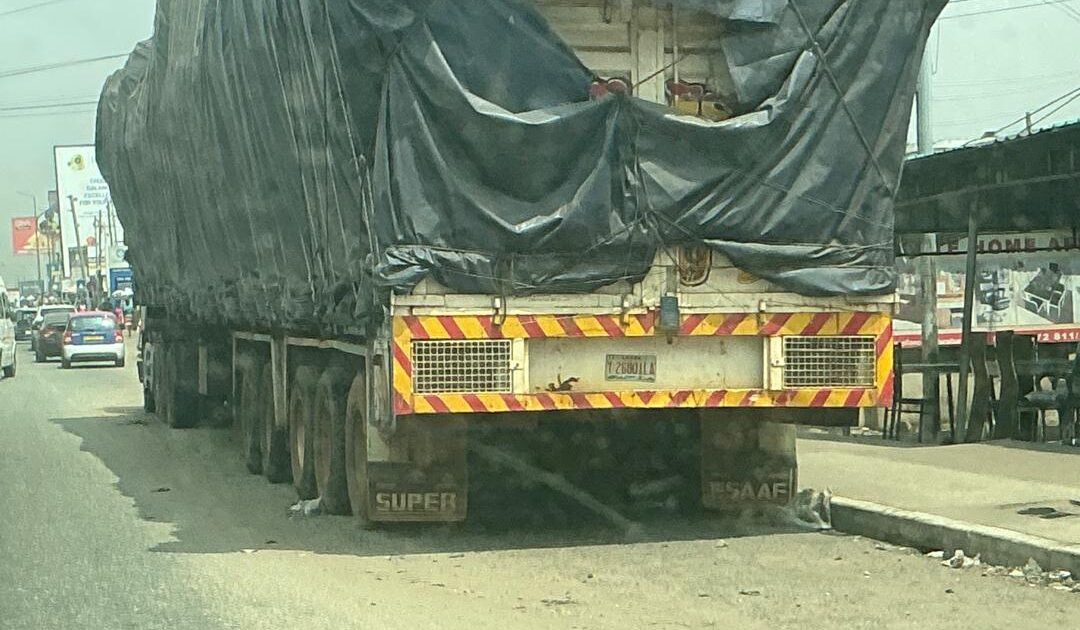
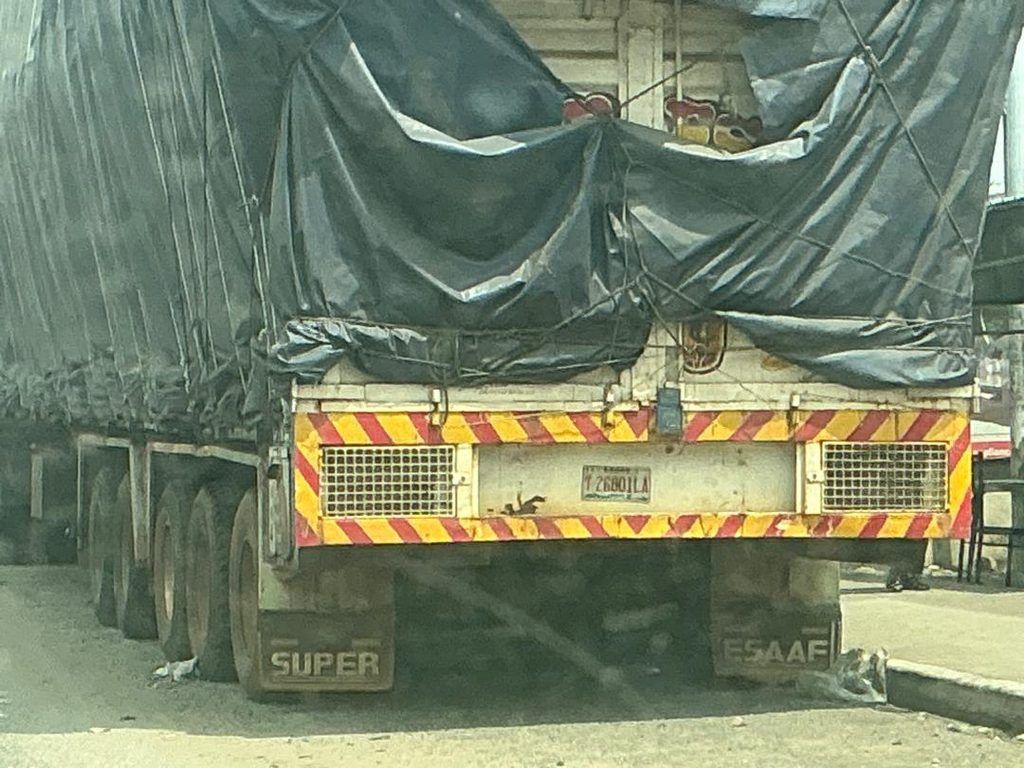
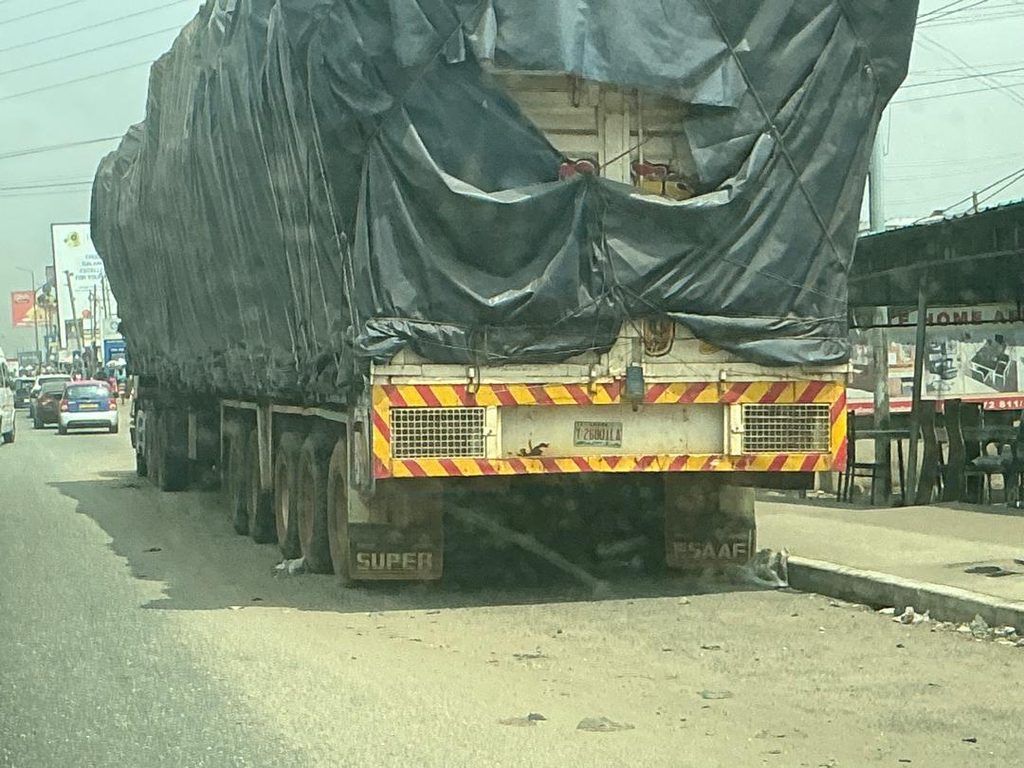
A Nigerian‑registered articulated truck, registration number T-26001LA, has been parked along the Achimota stretch of the Accra–Nsawam road, just before ABC Junction, for more than a month. The vehicle’s prolonged presence has worsened rush‑hour congestion on an already busy corridor, raising serious road safety and national security concerns, according to CUTS International.
Appiah Kusi Adomako, Director of the West Africa Regional Centre of CUTS International in Accra, photographed the truck on 8 October after noticing it had been there for weeks. “I photographed this truck on 8 October after seeing the vehicle parked there for weeks. The truck continues to occupy road space while motorists struggle through congestion. The responsible agencies owe the public an explanation for this prolonged inaction,” he said.
The truck sits less than 100 metres from the point where police officers regularly direct traffic at Neoplan Junction. CUTS questions how an obstruction so close to routine police operations has remained unresolved for weeks, noting that traffic management requires officers to identify hazards and ensure their removal. The relevant municipal assembly must also report persistent obstructions and coordinate with enforcement agencies to protect road users.
Under the Road Traffic Regulations, 2026, L.I. 2519, parking on a road or hard shoulder is prohibited unless in an emergency with adequate advance warning. Regulation 127(1) requires the owner or person in charge to ensure immediate removal of a broken‑down vehicle, while Regulation 127(7) authorises the Police or NRSA to tow a vehicle left in a dangerous position or likely to cause an accident or injury.
Beyond traffic law, CUTS argues that the situation warrants a security assessment. The organisation has no verified information about the cargo or whether the authorities have inspected the truck, and no visible cordon has been observed. “A loaded truck left beside a busy road for weeks should attract official attention. The Police should establish ownership, verify the cargo and assess the circumstances. Public safety requires active supervision and timely intervention,” Mr Adomako added.
Drawing parallels to the Appiatse disaster of 20 January 2022 and the Beirut port explosion of August 2020, CUTS stresses that neglecting hazardous cargo can have catastrophic consequences. The Minerals Commission has introduced additional safeguards for transporting explosives, including strengthened inspection and escort arrangements. Regulations 79 and 80 of L.I. 2519 address hazardous‑goods transportation, driver qualifications, cargo documentation, labelling and vehicle safety.
CUTS calls on the Ghana Police Service, National Security, NRSA and the relevant municipal assembly to inspect the truck immediately, identify its owner and operator, verify the cargo, assess risks, provide appropriate warnings and arrange safe removal using suitable equipment. The agencies must also explain the prolonged failure to clear the obstruction, investigate any neglect of duty and apply relevant sanctions, including recovery of towing and storage costs where the law permits.
“The owner must take responsibility for the truck. State agencies must also fulfil their enforcement responsibilities. Road users should not continue to bear the consequences of this neglect,” Mr Adomako said.