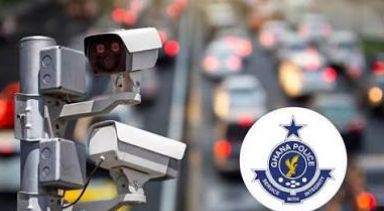
In a recent position paper, road‑safety minister Kweku Omanba criticised the government’s plan to deploy Traffitech automated speed enforcement on Ghana’s major inter‑city corridors, arguing that the 50kph limit would be counter‑productive in densely built‑up stretches of the N1 and N6 highways.
Omanba noted that towns such as Kasoa, Winneba, Mankessim, Nsawam, Anyinam and Nkawkaw now line the shoulders of these highways, turning the routes from inter‑city corridors into continuous built‑up settlements. He warned that a blanket 50kph limit would force travel times to stretch from 2.5 to 4‑5 hours between Accra and Cape Coast, and from 4.5 to 7‑8 hours between Accra and Kumasi, thereby increasing fuel consumption, vehicle wear, driver fatigue and transport costs.
He outlined a three‑tier approach to avoid a “mess” from unplanned enforcement. Tier 1 would re‑classify speed limits: 50kph only in high‑density town centres, 70kph in lightly built‑up transitional zones, and 80‑90kph on open inter‑city stretches. Tier 2 would see the installation of advance warning signs 500m, 300m and 100m before cameras, a 90‑day public education period with SMS warnings and full disclosure of camera locations to promote compliance. Tier 3 would involve medium‑to‑long‑term road engineering, including bypasses, service roads and pedestrian walkways to separate local and through traffic.
Omanba concluded that road safety cannot be achieved by penalising drivers for a planning failure. He called for a balanced approach: review speed limits, engineer the road and then enforce with Traffitech.
The ministry is expected to review the proposal in the coming weeks, with stakeholders from transport, commerce and civil society invited to comment.