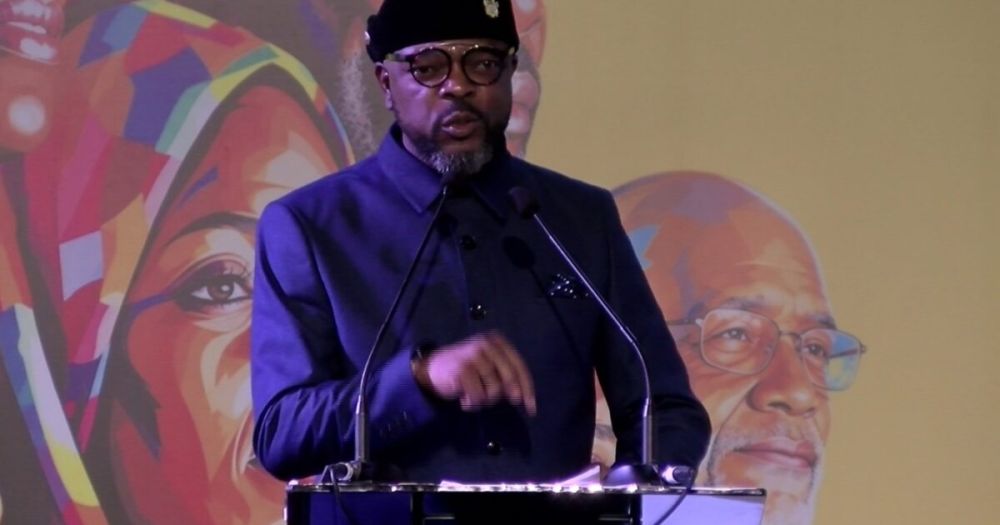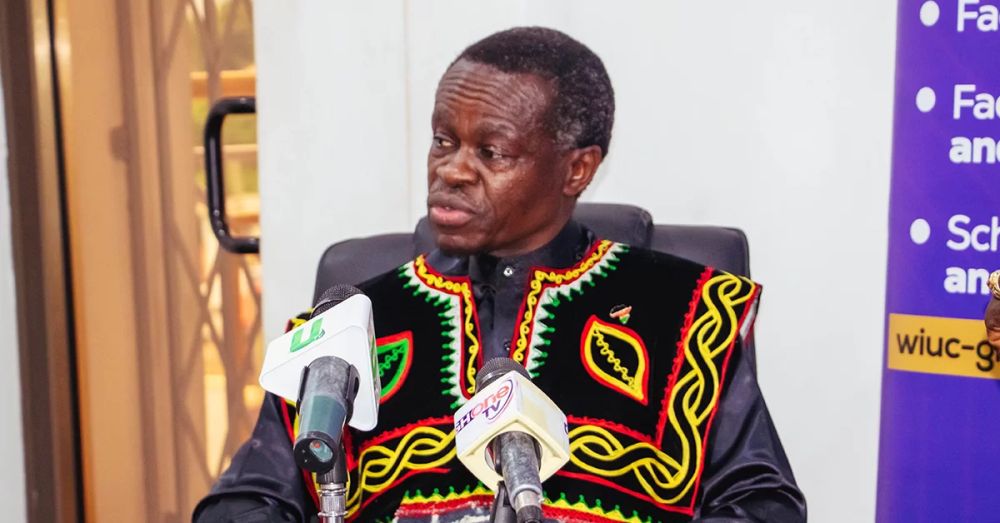

Professor P.L.O. Lumumba, a noted Pan‑Africanist and anti‑corruption activist, used the 117th anniversary of Kwame Nkrumah’s birth at Nkroful to demand a fresh commitment to the former Ghanaian President’s ideals. He argued that Africa’s political and economic liberation remains incomplete, and that Nkrumah’s vision of a united continent must be carried forward.
Speaking at the ceremony, Lumumba highlighted Nkrumah’s unique stance that Ghana’s freedom mattered only when tied to the liberation of the rest of Africa. He recalled the independence day declaration of 6 March 1957, where the Osagyefo pledged that Ghana’s independence would be a stepping‑stone to African dignity and freedom. “He did not just look at Ghana. He looked at the rest of Africa,” Lumumba said.
He noted that Ghana quickly became a hub for African liberation movements, hosting leaders such as Julius Nyerere, Milton Obote, Kenneth Kaunda, Hastings Banda, Dawda Jawara, Jomo Kenyatta, Nelson Mandela, Sam Nujoma, Agostinho Neto, Eduardo Mondlane and Amílcar Cabral. Intellectuals W.E.B. Du Bois, George Padmore and Martin Luther King Jr. also spent time in Ghana, underscoring the country’s influence under Nkrumah’s leadership.
Lumumba traced Nkrumah’s Pan‑African campaign to major conferences, including the 1958 Accra conferences and the 1961 Casablanca meeting. He stressed that political independence without continental unity could leave African states vulnerable to external influence, citing the founding of the Organisation of African Unity (OAU) in Addis Ababa in 1963 and its later evolution into the African Union.
He also referenced the struggles of Patrice Émery Lumumba of the Congo and Sylvanus Olympio of Togo, framing them as part of the broader post‑independence struggle that Nkrumah sought to shape. Lumumba said that attempts to suppress Nkrumah’s ideas after his 1966 overthrow failed, noting that the former President was overthrown while on a diplomatic mission to Beijing and Hanoi.
Highlighting Nkrumah’s enduring legacy, Lumumba pointed to the movement of the former President’s remains—from Conakry to Nkroful, and finally to Accra in 1992—and urged that commemorations not become mere annual rituals. He cited contemporary challenges such as conflicts in Somalia, Sudan and Cameroon, Sahel terrorism, irregular migration, and Africa’s dependence on foreign supplies of medicine, food, technology and information.
“We are not here simply to memorialise the Osagyefo Kwame Nkrumah. We are not here just for an annual jamboree. We are here because we know that the work that was started by Kwame Nkrumah is incomplete,” Lumumba said, calling for greater African capacity to produce its own technology, strengthen its agricultural and industrial base, and develop a robust Pan‑African press.
As Ghana and the continent move forward, Lumumba’s message serves as a reminder that Nkrumah’s call for unity, self‑reliance and industrialisation remains a vital blueprint for Africa’s future.