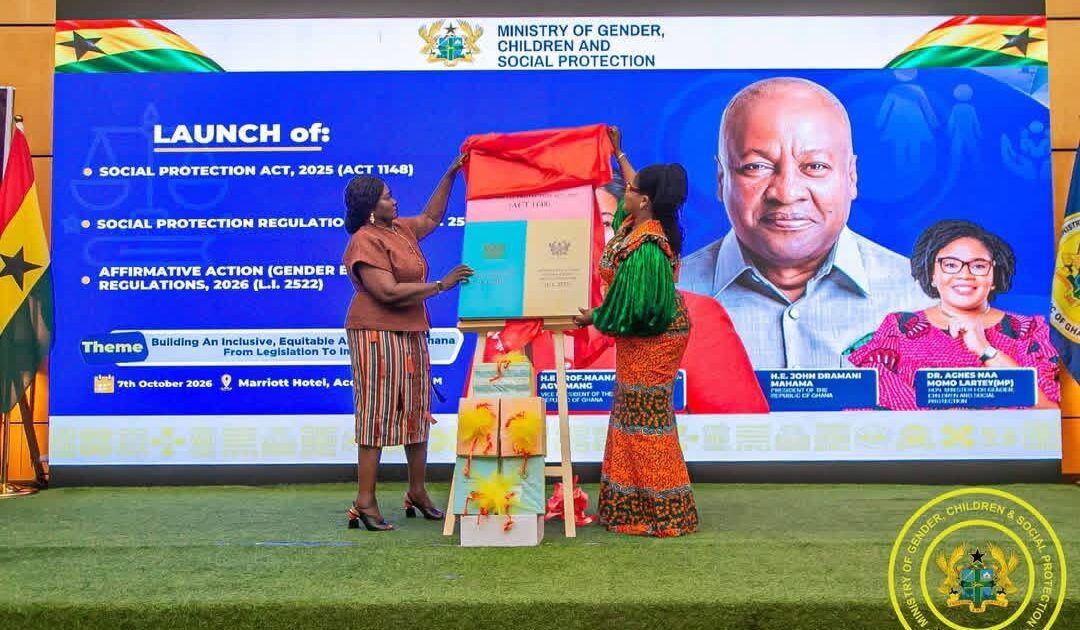
On 7 October, Vice President Naana Jane Opoku‑Agyemang inaugurated the Social Protection Act, 2025 (Act 1148), the Social Protection Regulations, 2026 (L.I. 2521) and the Affiantive Action (Gender Equity) Regulations, 2026 (L.I. 2522) in Accra. The ceremony, organised by the Ministry of Gender, Children and Social Protection (MoGCSP), carried the theme “Building an Inclusive, Equitable and Resilient Ghana: From Legislation to Results.”
The Act establishes a coordinated national system covering social assistance, social insurance, emergency support, the Social Protection Fund and mechanisms for complaints and redress. The accompanying Regulations are designed to guide implementation, while the Gender Equity Regulations require institutions to advance women’s participation in leadership and decision‑making.
During the launch, the Vice President said the success of the new frameworks would be measured by their impact on the lives of Ghanaians. She urged effective implementation, accountability and efficient use of public resources so that those experiencing poverty and vulnerability receive appropriate support and women have fair opportunities to contribute to national development.
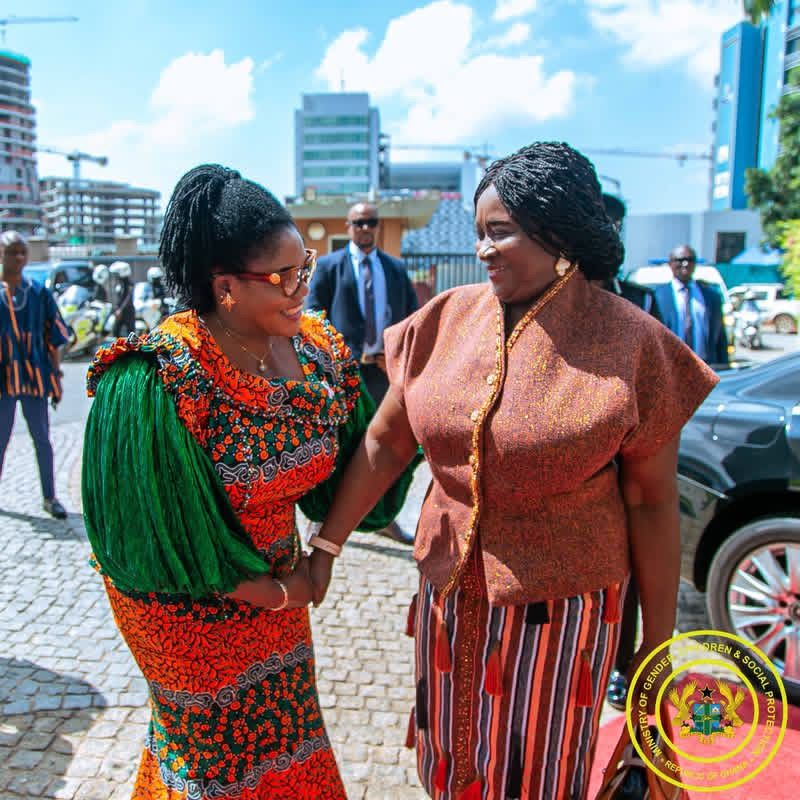
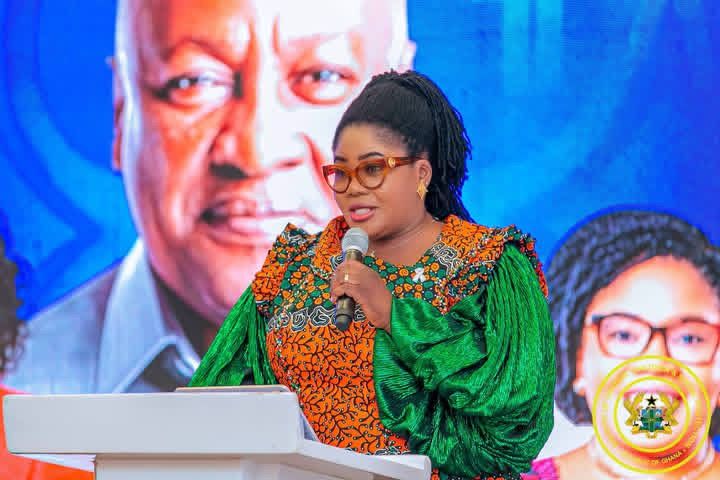
Hon. Dr Agnes Naa Momo Lartey, Minister for Gender, Children and Social Protection, described the launch as both an achievement and a responsibility for the Ministry. She highlighted years of advocacy and consultation involving women’s groups, persons with disabilities, older persons and other stakeholders that shaped the instruments.
Minister Lartey outlined five commitments to guide implementation: making the laws accessible in plain language and local languages; providing institutions with practical guidelines, reporting templates and training; strengthening data, targeting and coordination systems; improving complaints and feedback mechanisms; and publishing regular progress reports. She also pledged full compliance with the Gender Equity Regulations and urged frontline personnel to perform their duties with fairness, professionalism and compassion.
The importance of social protection was illustrated through the story of an older widow whose husband’s death left her struggling to provide for her children. Without a salary or pension, she relied on support to meet basic needs, highlighting the role of the Livelihood Empowerment Against Poverty (LEAP) programme and the need to link social assistance with livelihood opportunities to build lasting resilience.
Representatives of UNICEF and the World Bank commended Ghana for this milestone, reaffirming their support for strengthening social protection and gender equity. They emphasised the importance of reliable data, effective programme delivery and connecting social assistance to services, skills development, livelihoods and financial inclusion.
The launch brought together representatives of Parliament, traditional authorities, public institutions, development partners, civil society, organised labour, the private sector, women’s groups, persons with disabilities, youth organisations, academia and the media. The Vice President subsequently unveiled the three instruments, marking the beginning of a renewed focus on implementation. The priority now is to ensure that the new legal frameworks translate into tangible improvements in the lives of Ghanaians.