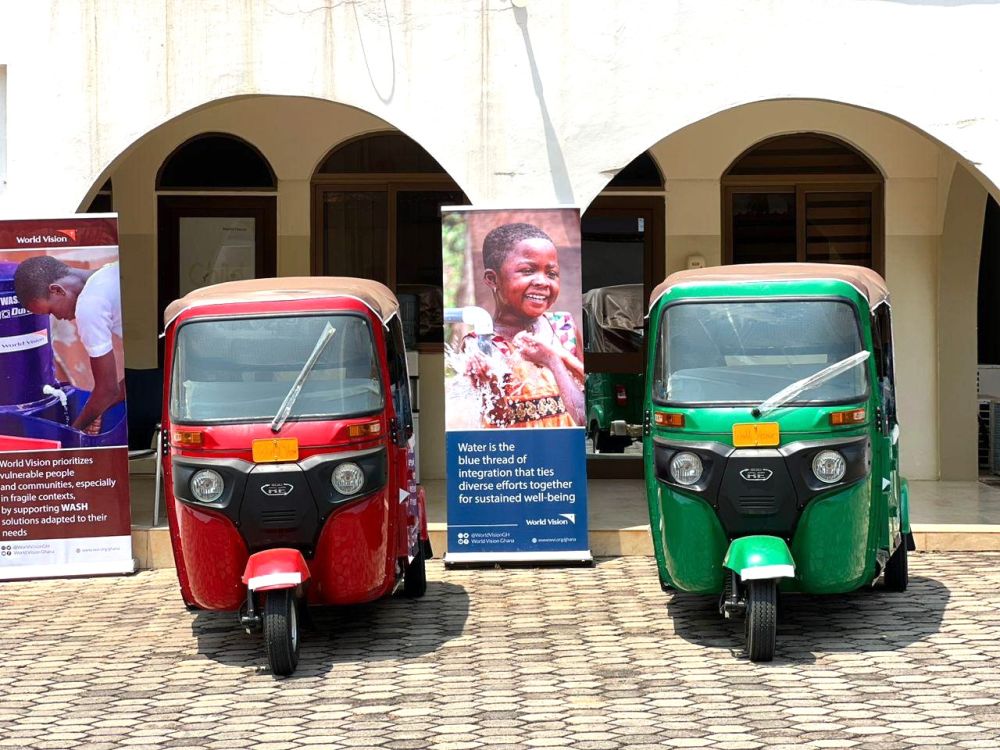
Residents in hard‑to‑reach communities in Agortime, Oti Region, will soon benefit from mobile health services as World Vision Ghana and Somoco Ghana Limited hand over two specially equipped tricycles to the Ghana Health Service.
The tricycles, part of a Community‑based Health Planning and Services (CHPS) initiative, will transport essential medicines, maternal health supplies, vaccines, diagnostic equipment and support antenatal and postnatal care, immunisation, basic diagnostics and referrals to underserved villages.
According to the partners, some residents travel more than 10 kilometres to reach a health facility, with poor roads and difficult terrain further limiting access. The new mobility solution aims to bring essential services closer to families and help community health workers reach areas that are otherwise hard to serve consistently.
World Vision Ghana’s Health Technical Specialist, Awurabena Quayeba Dadzie, said the partnership would help address last‑mile barriers for pregnant women, newborns and children. “By strengthening the mobility of community health workers, we are helping to bring essential services closer to families and supporting the Ghana Health Service to reach communities that might otherwise be difficult to serve consistently,” she said.
Somoco Ghana’s Business Support Manager, Theophilous Lampey, added that the tricycles are designed to help health professionals go further and overcome physical barriers created by distance and terrain. “We are proud to partner with World Vision Ghana and the Ghana Health Service to put practical, reliable mobility in the hands of frontline health workers,” he said.
The partnership aligns with World Vision Ghana’s five‑year strategy, *Hope for Every Child: Harnessing Opportunities for the Protection and Empowerment of Every Child* (HOPE, 2026‑2030), which focuses on improving child well‑being through health, education, protection and participation interventions.
World Vision Ghana also highlighted that the initiative builds on its existing community‑based health programmes, including the Channels of Hope for Maternal, Newborn and Child Health programme and the Community Health Committee model.
Business Development, Partnerships and External Engagement Director, Joseph Appiah, said the intervention was intended to remove distance as a barrier between families and essential healthcare, strengthening outreach services and improving connections between community health workers and households in underserved communities.
As the tricycles roll out, residents in Agortime can expect more reliable access to life‑saving health services, with the partnership demonstrating the power of collaboration to overcome logistical challenges.