
There was a time in Ghana when a football match was not an event you watched, it was an event you lived through.
Streets would empty. Shops would shut early. Taxis would vanish because every driver wanted to be home in front of a television before kickoff. Even people who couldn't tell a corner kick from a throw-in suddenly had strong opinions about the back four. When the Black Stars played, the country didn't just support them. It stopped for them.
That memory is exactly what a recent social media post tapped into, sparking widespread conversation and, for many Ghanaians, a quiet moment of reflection. "Back in primary school, Ghana playing a match could literally change the whole day," the post read, before asking a question that has been sitting uncomfortably with football fans for a while now: did the Black Stars lose the fans, or did the fans lose faith in the Black Stars?
To understand how we got here, it helps to remember where "here" used to feel like.
2006: The birth of a nation's obsession
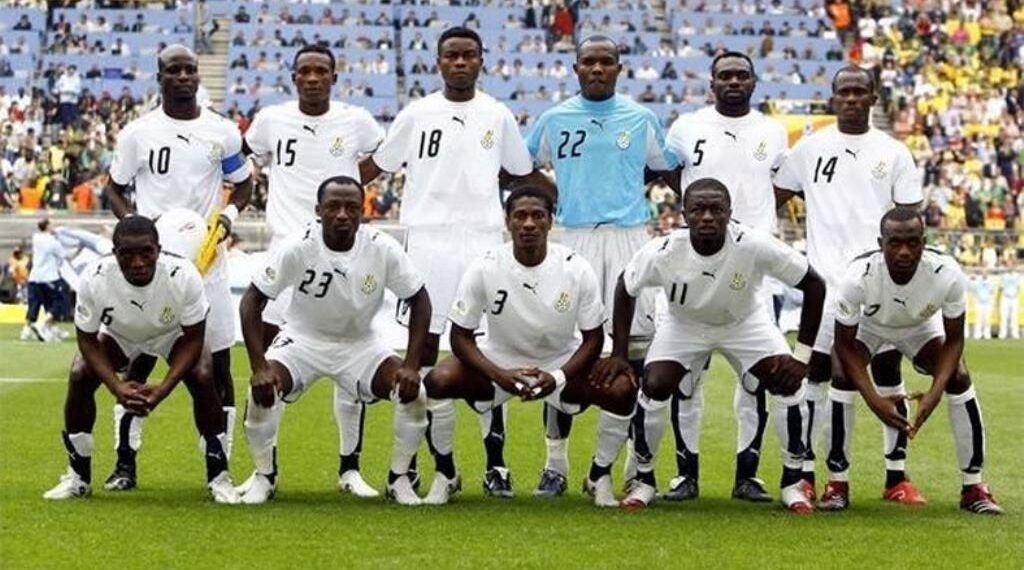
Ghana's first-ever World Cup appearance, under Serbian coach Ratomir Dujković, wasn't just a football milestone — it was a cultural reset. After a humbling 2-0 opening defeat to eventual champions Italy, the Black Stars responded with statement wins over the Czech Republic and the United States to become the only African team to reach the knockout stage in Germany. They eventually fell 3-0 to Brazil in the Round of 16, but by then it didn't matter. A golden generation, Michael Essien, Sulley Muntari, Asamoah Gyan, Stephen Appiah, John Mensah, had already given the country something it had never quite had before: proof that Ghana belonged on the biggest stage, and a squad worth rearranging your entire day around.
2010: The heartbreak that united a continent
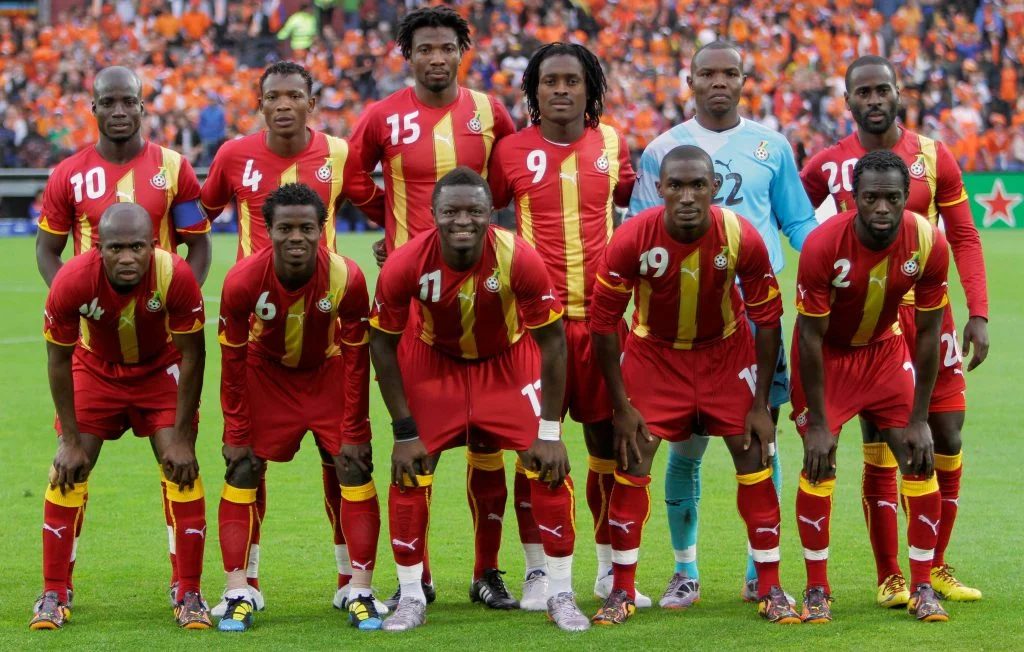
If 2006 built the obsession, South Africa 2010 nearly delivered its reward. Ghana reached the quarter-finals, the furthest any African nation had ever gone at a World Cup, and stood 30 seconds from a historic semi-final berth against Uruguay. Then Luis Suárez's deliberate handball on the goal line, and Asamoah Gyan's missed penalty in the ensuing shootout, turned certain glory into the most painful moment in Ghanaian football memory. And yet, even in defeat, that tournament may represent peak Black Stars love: an entire continent, not just a country, mourning alongside Ghana.
2014: The suitcase of cash that changed everything
Brazil 2014 marked a turning point, and not the good kind. Ghana failed to advance from the group stage for the first time, but the football itself was almost secondary to what happened off the pitch: a very public, very embarrassing scandal in which $3 million in cash had to be flown to Brazil to pay disgruntled players amid bonus disputes, with images of government officials carrying suitcases of money becoming a symbol of everything fans felt was wrong with how the team was being run. For many supporters, that tournament didn't just end a World Cup campaign, it planted the first real seeds of distrust.
The missed years
The decade that followed was one of contradictions. Between 2008 and 2017, Ghana actually enjoyed one of its most consistent stretches ever, reaching six straight AFCON semi-finals and two finals, in 2010 and 2015, both lost on penalties. But that consistency at continental level never fully translated into sustained public excitement, and cracks were forming underneath. Ghana missed the 2018 World Cup entirely. Then came a gut-punch few saw coming: in 2025, Ghana failed to qualify for AFCON for the first time in 20 years, a stunning fall for a four-time African champion, and a moment that shook confidence in the team's direction under then-coach Otto Addo.
2026: Qualification, without the roar
Ghana bounced back to qualify for the 2026 World Cup, its fifth appearance, but the road there told its own story. After back-to-back friendly defeats to Austria and Germany just months before the tournament, the Ghana Football Association dismissed Addo and turned to veteran Portuguese tactician Carlos Queiroz, brought in with barely ten weeks to prepare a squad for the World Cup stage. Ghana even changed captains mid-campaign, a small but telling sign of a team still searching for itself.
At the tournament itself, co-hosted by the United States, Canada and Mexico, the Black Stars opened with a 1-0 win over Panama, held England to a battling 0-0 draw, then lost 2-1 to Croatia, results that were enough to sneak them into the knockout rounds. Their World Cup ended in the Round of 32, beaten 1-0 by Colombia in Kansas City.
Solid, professional, unremarkable, and for a generation of fans raised on the emotional highs of 2006 and 2010, quietly forgettable.
So, what actually happened?
The uncomfortable truth is probably that it's not one thing, it's everything. It's a golden generation that has retired without an equally golden generation fully ready to replace it, even as academies like Right to Dream, WAFA and Feyenoord Academy Ghana continue producing individual stars like Mohammed Kudus, Ernest Nuamah and Kamaldeen Sulemana. It's a national team set-up that has cycled through coaches at a pace that makes long-term identity difficult to build. It's years of financial controversy and bonus disputes that chipped away at the goodwill fans once gave freely. And it's a football landscape that has simply changed, Ghanaians now watch the Premier League, La Liga and the Champions League every weekend, with many of the Black Stars' own players as the stars of those leagues, diluting the sense that the national team is where the magic happens.
Individual brilliance can mask systemic gaps for a while. But as one recent analysis of the team's struggles put it, no golden generation lasts forever, and when it fades, what's left exposed is whatever foundation, or lack of one, was built underneath it.
The question the viral post posed, when was the last Black Stars match that made you cancel your plans, scream at your TV, and feel proud to be Ghanaian, doesn't have an easy answer anymore. Maybe that, more than any scoreline, is the real story of what's changed since 2006.