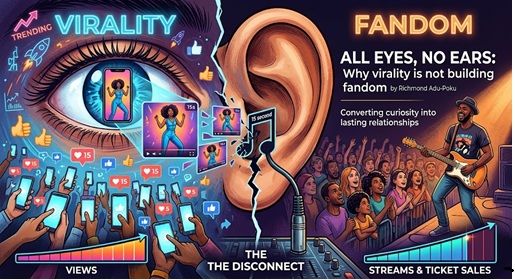
In Ghana’s music industry, a single song can amass half a million views overnight, trend on TikTok by lunchtime, and inspire thousands of dance videos before the weekend. The artist then appears on every feed, only to be forgotten when the next clip drops.
Researchers at MIDiA found that 52 percent of consumers streamed music after discovering it on social media, yet 48 percent did not. The data suggest that a viral moment does not automatically translate into listeners searching for the full track on Spotify, Audiomack, Apple Music or YouTube.
When a Ghanaian artist’s track explodes through a dance challenge, influencers jump in, content creators cash in, and the song dominates feeds. But how many viewers can name the artist without a caption, recall the second verse, or pay GH₵150 for a live show? The gap between popularity and fandom is stark.
Social media has democratised promotion, giving emerging talents access to audiences once reserved for big‑budget acts. However, MIDiA’s findings indicate that short‑form video is increasingly competing with streaming rather than directing listeners toward it. Some users feel they have heard enough of a song on social media and see little reason to stream it again.
For Ghanaian artists, repeating the same snippet 40 times may entertain app users but fails to build a sustainable fan base. A viral video is a snapshot, not a financial statement. Trending numbers do not automatically pay producers, clear music video debts or fund another album.
“The real question is what those impressive numbers produce after the excitement fades,” said a MIDiA analyst. “If audiences love live performances, offer memorable sessions. If they connect with storytelling, share the inspiration behind the music.”
Labels, managers and promoters must link discovery to listening, repeated engagement and commercial opportunities. The goal is not to abandon social media but to use it as an invitation, not the entire party.
Ghana also benefits from traditional channels—radio, campus events, church gatherings, live bands and television—which can turn casual listeners into committed supporters. A radio interview can direct audiences to streaming platforms; a live show can introduce new music; a social clip can promote a concert, which in turn generates fresh content.
Mid‑year findings show that 55 percent of consumers aged 16 to 24 are more interested in discovering new music. The appetite exists, but the challenge is converting curiosity into lasting relationships with music and the people who create it.
When the dance challenge ends, the hashtag disappears and the algorithm changes its mind, the artist still needs an audience. The goal is not just to make Ghana dance for 15 seconds but to make Ghana listen, remember, return and pay.