
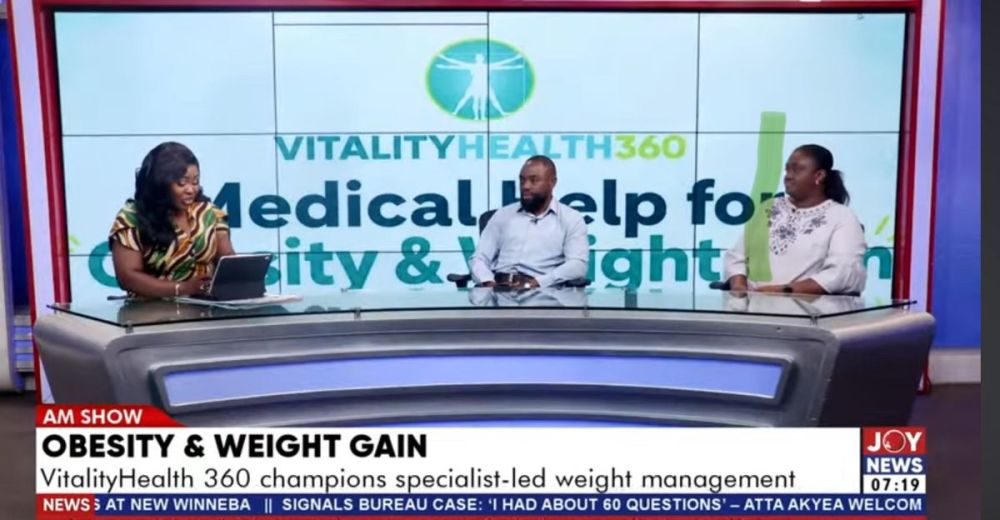
Ghanaian health experts have warned that treating obesity as a cosmetic problem or a simple diet challenge is inadequate. On the AM Show, physician Dr. Rex Kwame Bonsu and nurse Ozwella Yeboah of Vitality Health 360 explained that obesity is the excessive build‑up of dysfunctional fat tissue that can disrupt biological, physical and metabolic functions.
Dr. Bonsu highlighted that obesity is linked to non‑communicable diseases such as hypertension, type‑2 diabetes, insulin resistance, obstructive sleep apnoea and cancers including breast, endometrial and colorectal. He noted that a person’s weight alone does not reveal the full picture; health professionals use measurements such as weight, height and the Body Mass Index (BMI) to screen for risk. However, he cautioned that BMI is only a screening tool because it does not account for age, sex, muscle mass, fat mass or bone density.
Ms Yeboah added that weight loss requires a calorie deficit—burning more energy than is consumed—and that regular physical activity supports the process. She explained that hormonal and metabolic factors, such as thyroid dysfunction and appetite‑altering hormones, can make weight loss harder for some people.
Both experts warned against unsupervised weight‑loss injections, stating that such treatments should only be administered under the guidance of qualified health professionals. “Now, you must have heard about weight‑loss injections and so on and so forth. That should be done under the guidance of a specialist,” Dr. Bonsu said.
At Vitality Health 360, clients first undergo a thorough medical assessment that may include full blood counts, liver and kidney function tests, cholesterol levels and body‑composition analysis. When necessary, DEXA scans are used to evaluate bone density, muscle mass and fat mass. Depending on the results, patients may receive medication to regulate appetite, cravings or metabolic conditions, but only under specialist supervision.
The facility, located on Oxford Street at Osu near Photo Club in Accra, offers physician specialists and dietitians who craft personalised meal plans and adjust them as clients progress. Dr. Bonsu and Ms Yeboah urged anyone struggling with obesity or seeking professional support to visit the centre rather than rely on unverified diets, treatments or injections.
In closing, the experts emphasised that weight management is not a one‑size‑fits‑all solution and that professional assessment and guidance are essential for safe and effective results.