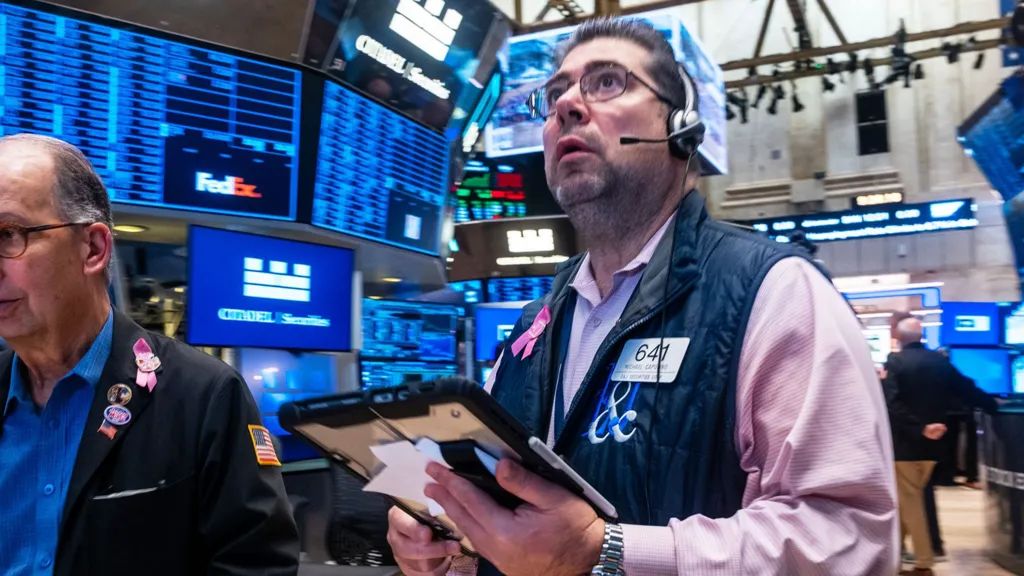
The recent US mid‑term elections, which gave Democrats full control of Congress, have sent shockwaves through the global stock market, with the Nasdaq experiencing its steepest decline in recent weeks. The drop hit tech titans such as Alphabet, Nvidia, Meta and Apple, all of which have benefited from the AI boom that began with OpenAI’s ChatGPT launch in late 2022.
Investors now fear that a new Democratic majority could push for tighter regulation on the expansion of data centres, the backbone of AI infrastructure. The sector, which has seen investments projected to reach $1 trillion in 2026, has already outpaced other industries, raising borrowing costs elsewhere and inflating valuations.
Public concerns over AI safety and the environmental impact of data centres have been amplified by comments from researchers warning of existential risks. A Gallup poll released in May found that 71% of Americans would oppose building a data centre in their community, a figure higher than the 53% opposed to a nuclear power station.
Senator James Talarico of Texas, who won his race amid the Democratic surge, said, “While we want to protect America's leadership in artificial intelligence, we are still grappling with how it will affect everything from how we work to how our children learn. We must protect Americans and establish clear, consistent laws for businesses.”
With both houses of Congress now under Democratic control, lawmakers are expected to challenge President Trump’s AI agenda and introduce legislation that could curb the industry’s growth. Texas’ newly elected governor‑elect Gina Hinojosa, a Democrat, has already pledged a moratorium on new data‑centre construction, a move that could clash with tech giants such as Elon Musk’s SpaceX and Tesla, which have invested heavily in the state.
Analysts remain divided. Tudor Brown of Arm Holdings notes that stock values reflect future earnings, not current ones, and that if expected rewards dim, investors may sell off. Nandini Roy Choudhury of Future Market Insights warns that the market may not rebound quickly, as traders will likely favour firms with stronger balance sheets.
While the sell‑off appears tied to the mid‑term results, concerns about overvaluation in tech stocks had been brewing prior to the elections. The key question now is whether this is a natural correction or a sign of a broader bubble in the AI sector.
Investors and policymakers alike will watch closely as the new Congress moves forward, as the outcome could reshape the future of AI development and the tech economy at large.