Fitch Solutions has upheld its Gross Domestic Product forecast for Ghana at nearly 6.0 % for 2026, citing a resilient economy that has weathered global shocks.
The firm said the country’s growth has been buoyed by high gold prices, low domestic inflation, and the Bank of Ghana’s 1,400‑basis‑point easing cycle. Elevated oil prices have pushed the energy import bill higher, yet Ghana remains largely net neutral in oil trade thanks to the Jubilee and TEN offshore fields, with a trade deficit of just 0.3 % of GDP in the second quarter of 2026.
Fitch’s Commodities team projects gold to stay above US$4,200 per ounce, which should keep the current account surplus sizable at 5.3 % of GDP in 2027, supporting reserves and curbing exchange‑rate pressure.
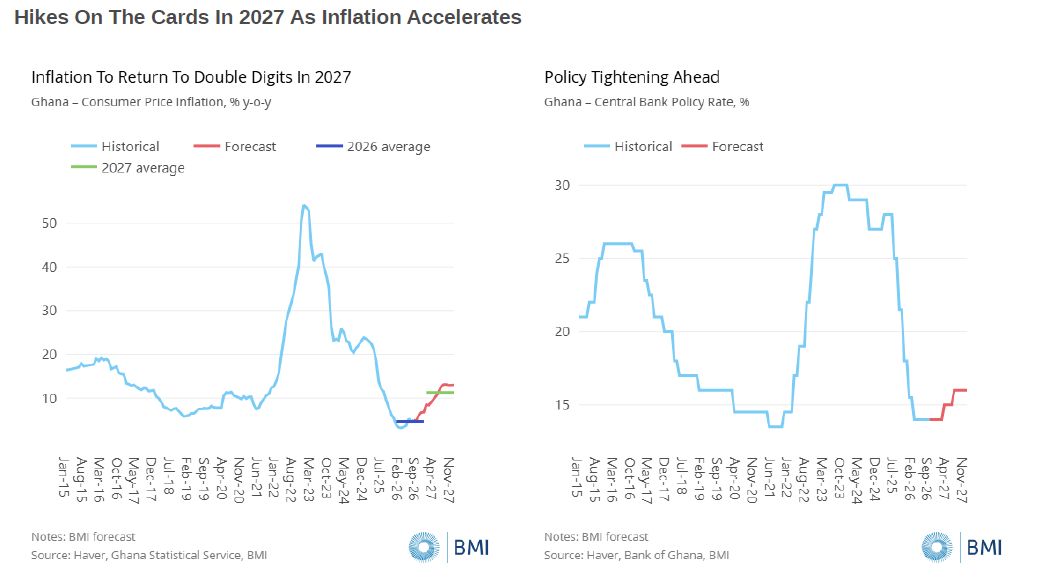
However, the agency warns that growth will slow to 4.7 % in 2027, as inflation is expected to rise from an average of 4.7 % in 2026 to 11.3 % in 2027. The jump reflects unfavourable base effects, rapid money‑supply growth and higher global food prices linked to El Niño.
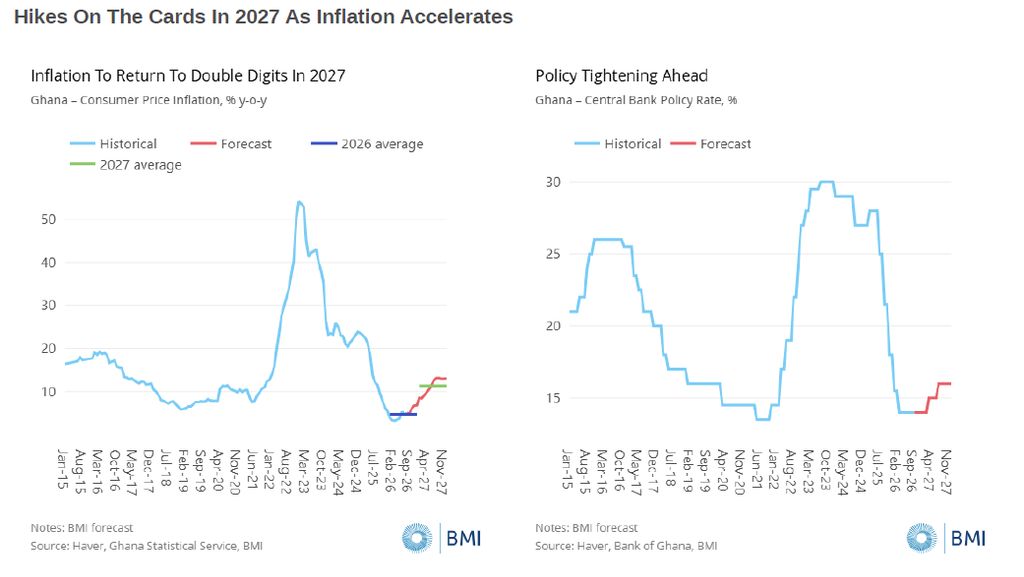
Combined with a slowdown in credit growth as the Bank of Ghana resumes tightening, domestic demand is likely to feel the squeeze. Fitch noted that for most Sub‑Saharan economies, a persistent inflationary environment will erode purchasing power and dampen private consumption and business activity, creating a headwind to growth in 2027.
Oil‑exporting markets, however, may still benefit from elevated energy prices, which could support export earnings and fiscal revenues more than previously anticipated, giving a temporary lift to growth prospects.
The outlook signals that while Ghana’s 2026 economy remains robust, the coming year will bring challenges that could temper the pace of expansion.