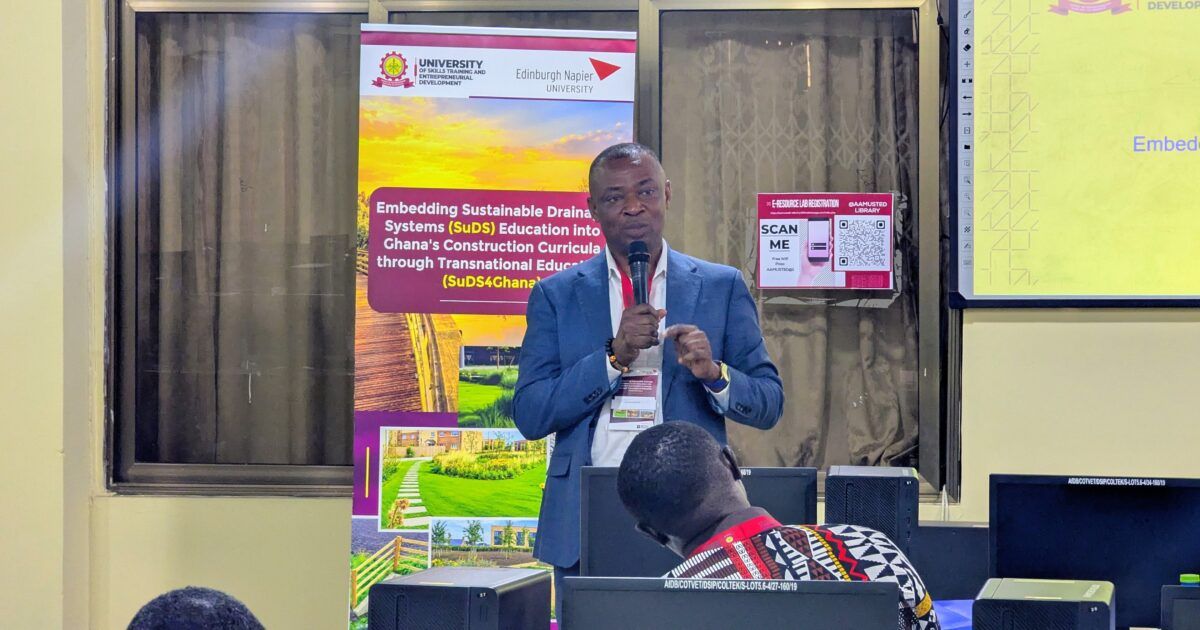
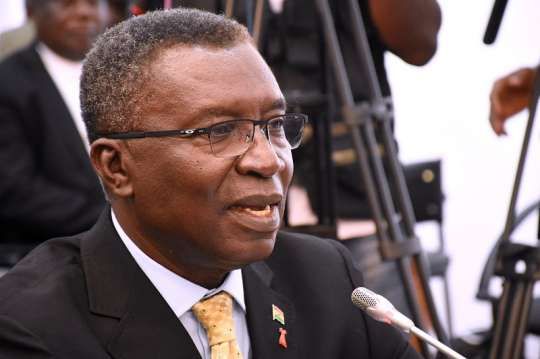
Professor Kwabena Frimpong‑Boateng, former Minister of Environment, Science, Technology and Innovation, warned that Ghana’s ongoing environmental crisis stems from a political system that punishes enforcers while rewarding inaction. Speaking at the Fourth Annual Colloquium of the Department of Political Science at the University of Education, Winneba on 2 September 2026, he said the political cost of enforcing environmental law falls on the enforcer, and the political cost of not enforcing it falls on nobody.
Frimpong‑Boateng, who chaired the Inter‑Ministerial Committee on Illegal Mining from 2017 to 2021, noted that successive governments introduced a range of measures to curb illegal mining, known locally as galamsey. These included a 2017 ban on artisanal and small‑scale mining, Operation Vanguard, the creation of 72 district committees, training of 3,000 miners, and systems to track mining concessions and excavators. He said the initiatives initially yielded positive results, with sections of the Pra River clearing and water‑treatment costs dropping at affected intake points.
However, he warned that many safeguards were abandoned after the mining ban was lifted on 21 December 2018. “The permission survived. The architecture that made the permission defensible did not,” he said. He also recalled submitting a report to the Presidency at the end of his tenure detailing the state of illegal mining and alleged obstruction of enforcement efforts. When the report became public in 2022, he said the national debate focused on his motives rather than its substance.
“The country did not ask: is it true? The country asked: why did he write it, and whom does it help? The substance was set aside and the messenger was examined,” he said.
Frimpong‑Boateng argued that Ghana’s environmental protection strategy is constrained by short‑term political calculations. Immediate political costs of enforcement can affect electoral fortunes, while the benefits of restoring rivers and forests may take years or generations to materialise. He proposed a National Environmental Compact, negotiated across political parties and approved by Parliament, to provide continuity for key environmental commitments. Under the compact, any administration wishing to discontinue a commitment would have to submit a report to Parliament detailing the decision, its rationale, and the public resources already invested.
He cautioned that abandonment of environmental policies is currently cost‑free. “Make it merely expensive and half of it will stop,” he said. The proposed compact aims to make the cost of abandoning such policies tangible, thereby discouraging governments from reversing measures introduced by their predecessors.
Moving forward, Frimpong‑Boateng calls on lawmakers to enact the compact and establish mechanisms that hold governments accountable for environmental stewardship, ensuring that the political cost of enforcement is shared and the political cost of inaction is no longer absent.