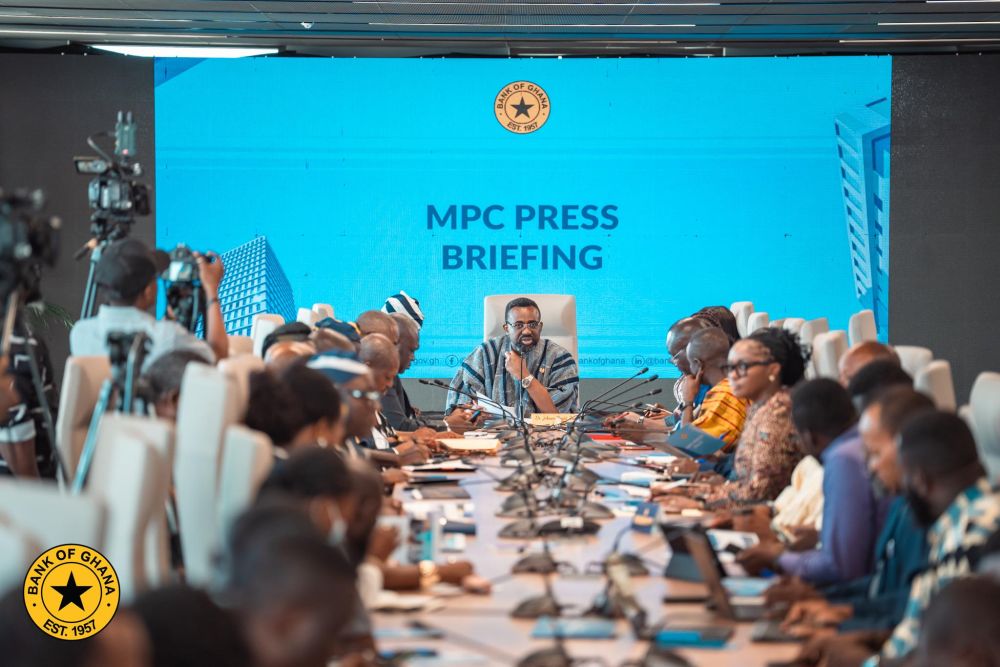
The Bank of Ghana (BoG) has opened its September monetary policy meeting on Tuesday, September 22, 2026, with the central bank’s Monetary Policy Committee (MPC) weighing a 5% consumer price inflation against a backdrop of stronger economic activity and a stable cedi.
Inflation has climbed from the exceptionally low levels seen at the start of 2026 but remains comfortably within the BoG’s medium‑term target band of 8% ±2 percentage points. The latest Ghana Statistical Service data show August inflation at 5%, down from 5.3% in June and still below the lower bound of the target corridor.
Economic growth, recorded at 6.0% year‑on‑year in the second quarter, has strengthened, while the cedi has traded around GH¢11.55 to the US dollar on September 18. Financial conditions have continued to ease, and the exchange rate has shown relative stability, factors that the MPC sees as supportive of a potential easing cycle.
What the committee now faces is whether the recent rise in inflation is a temporary normalisation or the first sign of a new upward trend. A rate cut would signal confidence that the 5% reading is within the target floor and that further easing can bolster the economy without reigniting price pressures.
Market analysts have projected that the MPC could trim the policy rate to between 12% and 13% in September, arguing that the inflation uptick reflects a return to the target corridor after a period of unusually low inflation earlier in the year.
However, the BoG has cautioned against premature easing. The July decision highlighted concerns about higher petroleum prices, geopolitical tensions, utility tariff adjustments, supply‑chain disruptions and weather‑related food pressures—all of which could feed into domestic prices. External shocks can quickly translate into higher import costs and cedi depreciation, potentially eroding the gains from a lower policy rate.
In addition, the committee will assess inflation expectations, the stability of the cedi, and the trajectory of economic growth. If growth remains robust and inflation stays contained, the case for a gradual rate cut strengthens. Conversely, a slower pace of easing could keep borrowing costs high for businesses, while an aggressive cut might prompt a rebound in inflationary pressures.
As the MPC deliberates, the Bank of Ghana faces a genuine mixed policy outlook: a 5% inflation rate below the target floor, stronger growth, and stable financial conditions on one side, and rising inflation from low levels, geopolitical and energy‑price risks on the other. The decision will shape Ghana’s monetary stance for the coming months and influence borrowing costs for businesses and households alike.