The High Court has handed Bernard Antwi Boasiako, popularly known as Wontumi, a 20‑year prison sentence for offences linked to mining activities on Akonta Mining’s concession. The decision, while focused on the individual, carries broader implications for Ghana’s mining sector. The court’s ruling hinges on a key question: can a lease holder allow another party to mine on its concession without first obtaining ministerial approval? The judge ruled that any such allowance, whether formal or verbal, constitutes unlawful dealing with mineral rights. This interpretation could influence future mining cases, underscoring that owning a lease does not grant unlimited freedom to dictate who operates on the land. The state grants mineral rights under strict conditions, and the law now reinforces that concession holders must follow the legal approval process or face criminal liability.
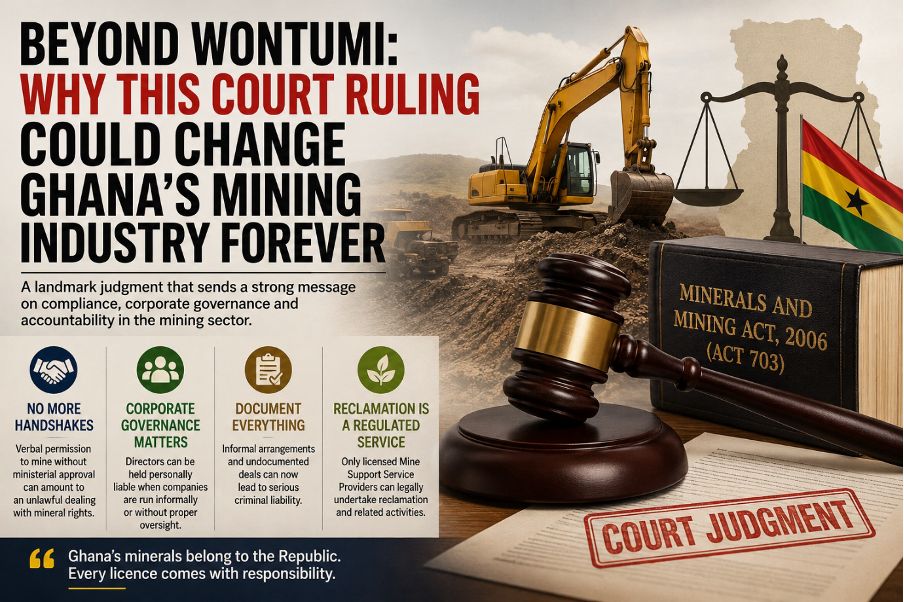
One of the most striking aspects of the judgment is its treatment of informal agreements. Across many sectors in Ghana, business relationships often begin with trust, a handshake, or a telephone conversation. In mining, however, the stakes are higher. The court made it clear that informal arrangements can become legal liabilities. Concession holders are now warned that every arrangement involving access to a concession must be properly documented, legally reviewed, and, where required, approved by the relevant authorities. Good paperwork is no longer just good administration; it may be the difference between compliance and prosecution.
The judgment also highlighted corporate governance issues. The court found that Akonta Mining was effectively run by a single individual rather than through proper corporate structures, leading the judge to lift the corporate veil. This means that directors who ignore corporate governance principles or make major decisions informally could lose the legal shield that incorporation normally provides. The ruling also addressed land reclamation, declaring it a regulated mine support service that requires proper licensing. Companies may need to conduct greater due diligence before appointing contractors for reclamation or other technical work.
Beyond the individual case, the decision signals a broader shift in Ghana’s fight against illegal mining. The law is now prepared to examine the actions of concession holders themselves. If illegal mining occurs because someone knowingly facilitated access or ignored legal requirements, courts may hold that person accountable. This approach acknowledges that illegal mining thrives on networks of facilitators, financiers, and equipment suppliers, not just the miners on the ground.
As the mining industry absorbs this ruling, companies will likely tighten their operational protocols, formalize agreements, and strengthen corporate governance to avoid future legal pitfalls. The case may become one of the most significant legal decisions in Ghana’s mining sector since Parliament strengthened the Minerals and Mining Act to combat illegal mining.