In a recent article, Nyeya Yen questioned who truly owns Ghana’s gold and who should benefit from it. He lamented a missed chance for the state to have organised Talensi’s small‑scale miners into community‑owned, safe, and technically capable enterprises rather than leaving them to compete with larger players.
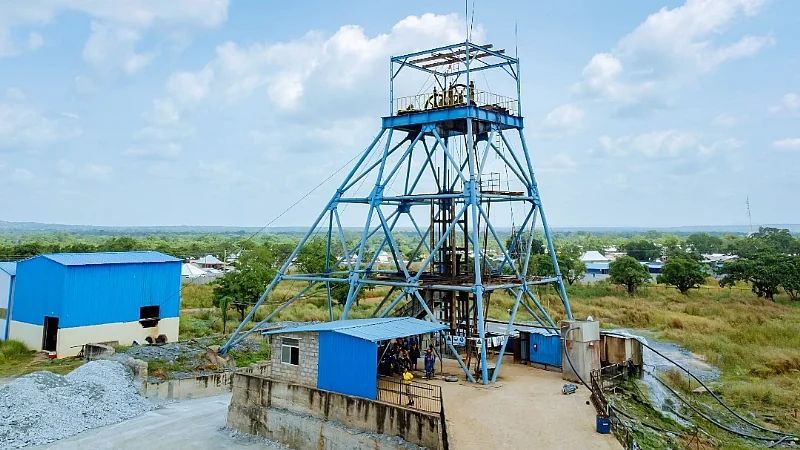
ISODEC echoes Yen’s diagnosis but insists the opportunity has not passed. Much of the gold in Talensi and the wider Upper East remains in the ground, and the choice of model is still open, with the cooperative model presented as the way forward.
In February 2024, ISODEC mapped the gold supply chain in Talensi, Kenyasi and Obuasi, interviewing more than twenty‑two stakeholders, from small‑scale miners and gold buyers to contractors, chiefs and host communities. In Talensi, miners consistently recounted a long history of prospecting by trial and error, often funded by loans from banks, relatives and friends.
When the gold proved too deep for their simple tools, they needed technology and capital. The government did not engage honestly with the groups on how to go deeper together. Instead, some miners were sent to China to learn small‑scale mining. A licensed local company then brought in a Chinese state mining‑service company to supply the technology, under an agreement that gave the local partner a 7 % share of the gold.
By the local partners’ account, the arrangement worked until the gold began to flow. Then the service partner turned itself into a private large‑scale miner and sought to absorb the small concessions around it. Our study found that nearly forty small‑scale miners with valid licences faced displacement, and that the move had the backing of politicians and traditional authorities.
Many operators objected. Some felt the compensation offered was far too small for what they had invested. Others rejected the principle of being consolidated out of the ground they had opened. Miners told us that police and military personnel were used to pressure some of them into accepting, and that those who took the compensation did so reluctantly and still feel aggrieved.
Two companies refused an offer of a 2 % stake and a few board seats. They had seen what happened to an earlier partner whose nominees, appointed to monitor the quantity and quality of gold produced, were reportedly shut out within days.
One concession holder, now in court, told us: “I thought that everyone from around here would help me to protect local ownership of mines … but to my surprise everyone from chiefs from this mining area to politicians in Bolga and Accra are urging me to sell my concession to the Chinese. … This is why I am in court fighting to protect local/Ghanaian ownership.”
These accounts highlight why Talensi today has local companies in court and many small‑scale miners who feel cheated by the consolidation. The lesson is plain: the pioneers’ sweat equity—years of risk, debt and discovery—was never valued. Compensation priced the land and the licence, not the discovery. Any just settlement, and any future model, must count it.
The problem is the model, not the miners. Talensi follows a pattern seen across Ghana’s mining areas: local people take the risk and find the gold; better‑financed operators arrive with equipment and capital; small holdings are then absorbed or squeezed out, and disputes follow over boundaries, safety and promises.
ISODEC proposes seven building blocks for Talensi, which could later extend to other mineral‑endowed districts of the Upper East Region. These include recognising the pioneers’ stake, consolidating through miner‑owned cooperatives, promoting shared ownership, and using technology as a service, not a pathway to control.
While the story remains under investigation, the call for a community‑cooperative model underscores a broader debate about how Ghana’s mineral wealth should be shared and governed.