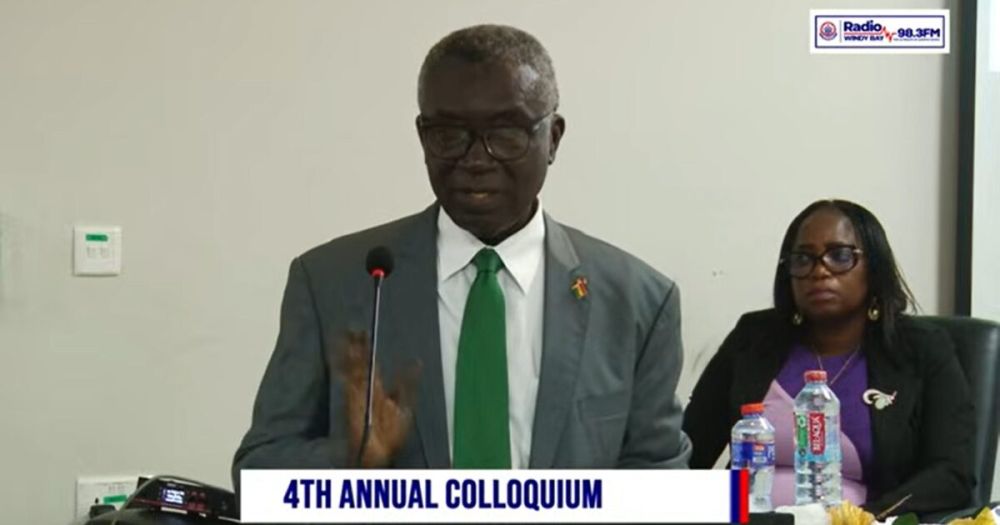
Former Minister for Environment, Science, Technology and Innovation, Prof Kwabena Frimpong‑Boateng, cautioned that corruption is not merely theft but a social disease with a mortality rate. Speaking at the Fourth Annual Colloquium organised by the Department of Political Science Education at the University of Education, Winneba, he said the diversion of public resources deprives citizens of essential services such as healthcare, clean water and environmental protection, and that the resulting hardship manifests as disease, disability and premature death.
Frimpong‑Boateng argued that Ghana’s failure to manage its environment stems mainly from corruption and a lack of technological capacity, not from a lack of knowledge. He highlighted that several policies, laws and programmes exist to safeguard natural resources and curb illegal mining, yet implementation has repeatedly been abandoned without accountability.
He cited the destruction of water bodies and forest reserves through illegal mining as a stark example, noting that communities exposed to mercury, arsenic, lead, cadmium and chromium face kidney damage, neurological disorders, cancer and pregnancy complications. He also warned that the capture of land‑use planning and public authority by chiefs, politicians and security personnel further erodes governance.
Frimpong‑Boateng called for stronger personal accountability for public officials, transparent records of environmental decisions and an annual State of the Environment audit presented to Parliament. He maintained that sustainable development in Ghana is unattainable without eliminating corruption, strengthening the rule of law and restoring public confidence in law enforcement and the judiciary.