
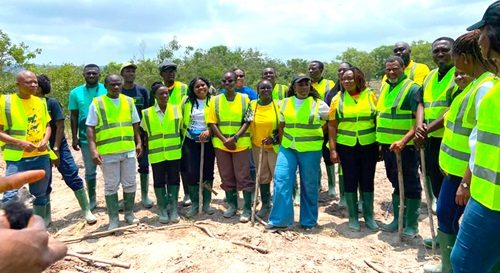
A high-impact reforestation exercise has kicked off at the Chepa Forest Reserve, bringing together the telecom sector, forestry regulators and international conservation organisations in a push to restore some of the country's depleted forest reserves.
Spanning two hectares of severely degraded land, the collaborative initiative targets the planting of 1,666 indigenous tree species carefully chosen to rehabilitate the local ecosystem. The effort addresses decades of environmental damage caused by illegal logging and unchecked fuelwood harvesting, which have left large swaths of the historically protected forest bare and vulnerable to extreme weather events. The drive forms part of a broader national push to expand forest cover and capture atmospheric carbon.
By introducing fast-growing, nitrogen-fixing trees, the initiative aims to rebuild soil health, create microclimates that help cool rising temperatures, and restore habitats for local wildlife. Beyond the planting itself, the partnership has built in an end-to-end maintenance framework designed to address the chronic problem of low sapling survival rates in large-scale tree-planting campaigns, backed by committed funding, structural maintenance protocols and dedicated security guards on site to ensure continuous watering and monitoring.
Speaking at the exercise in Accra last Tuesday, the Acting General Manager for Sustainability and Shared Value at MTN Ghana, Georgina Fiagbenu, said the tree-planting exercise served as the anchor for the final week of the company's sustainability month, following three weeks of internal and external environmental advocacy. "Trees improve our environment, help us breathe properly, shelter us and improve our overall well-being. Every community without trees struggles to survive. When we approached the Forestry Commission and the Rainforest Alliance, they directed us to the Chepa Forest Reserve to help fill in degraded portions," she said, adding that the long-term survival of the saplings remained the top priority.
Providing technical context on the reserve, the District Manager for the Tema-Ada Forest Services Division of the Forestry Commission, Linda Ansah, said the Chepa Forest Reserve was officially gazetted in the 1960s but had suffered severe degradation over time due to illegal logging and unauthorised firewood collection. She said the exercise contributes directly to the national target of planting 30 million trees under the Tree for Life campaign launched the previous year. Across the two-hectare area, the team selected Mahogany, Cassia and Acacia species after surveys confirmed they thrive in the local climate, grow rapidly, enrich soil nitrogen and serve as effective carbon sinks. She said the Forestry Commission had also established a complete post-planting maintenance strategy to prevent the common problem of tree abandonment.
The Country Director for Rainforest Alliance, Jenjri Nicholas, said restoring ecosystems required a blend of technology, human commitment and cross-sector partnerships. He noted that a single mature tree absorbs approximately 22 kilogrammes of carbon dioxide annually while providing habitat for diverse wildlife, including birds, insects, mammals and reptiles. He urged individuals across the country to adopt a personal culture of tree planting within their homes and communities, saying individual commitment was essential to sustaining national ecological recovery efforts.