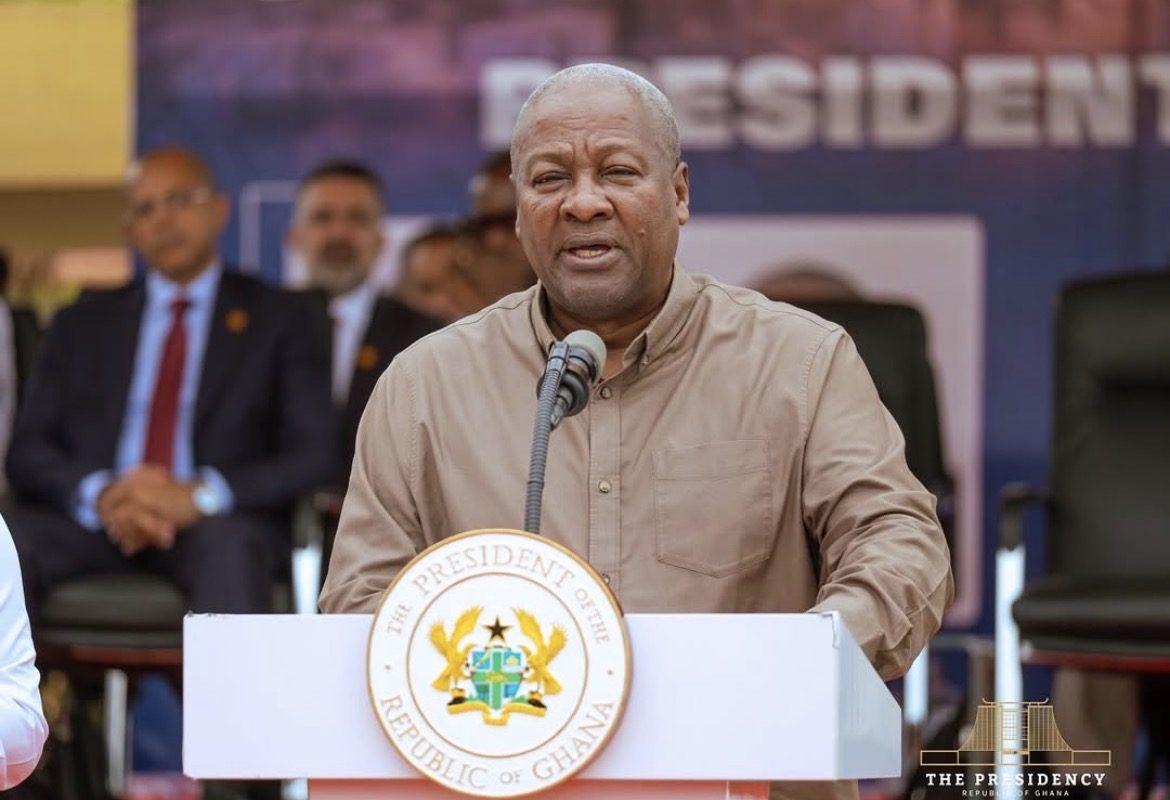
President John Dramani Mahama has directed the Minister of Energy and Green Transition to review existing crude oil payment arrangements and allow local refineries to purchase Ghana's indigenous crude in the Ghana cedi rather than the United States dollar.
The proposed policy shift aims to halt the continuous drain on the nation's foreign exchange reserves caused by local refineries sourcing US dollars on the open market to purchase crude produced off Ghana's coast.
Easing Pressure on the Cedi
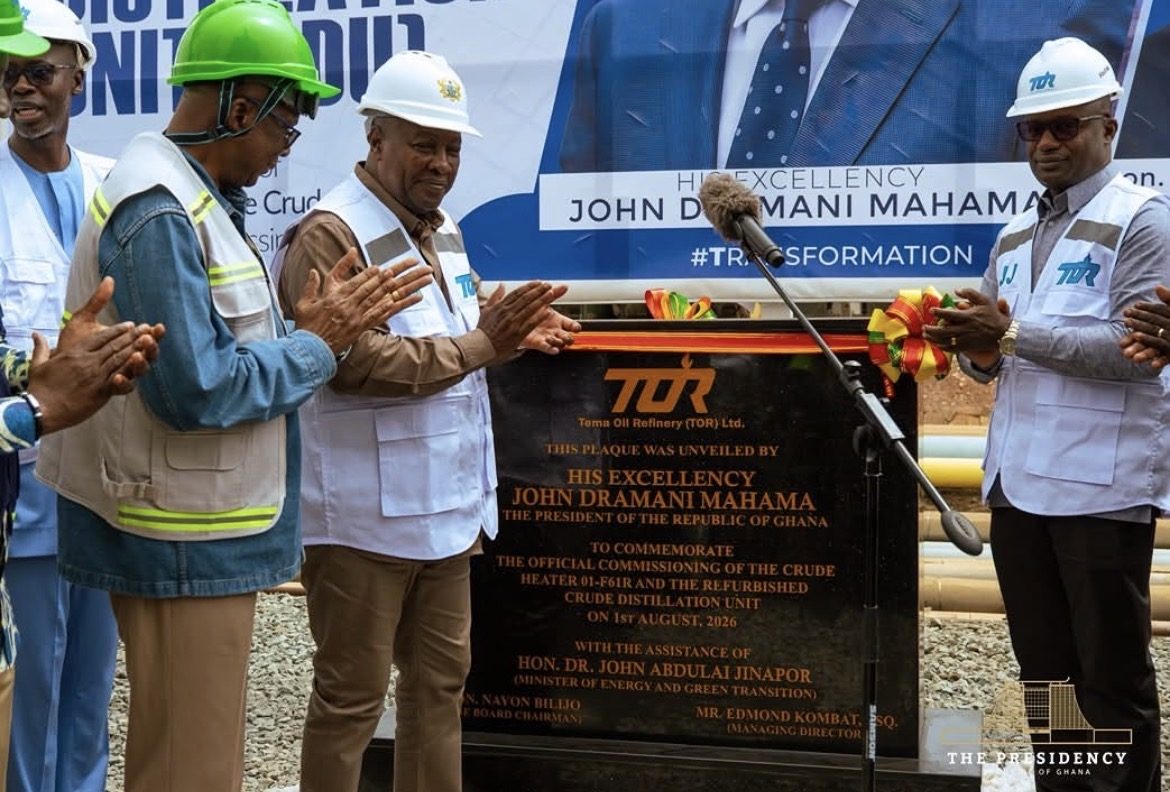
The Minister of Energy and Green Transition, Dr. John Jinapor, revealed the President's directive during the official commissioning of newly refurbished processing units at the state-owned Tema Oil Refinery (TOR) on Saturday, August 1, 2026.
Dr. Jinapor explained that President Mahama raised the issue during a high-level meeting attended by the Minister of Finance and the Governor of the Bank of Ghana, questioning why refineries processing and selling products locally in cedis were obligated to pay for raw crude in foreign currency.
"Jinapor, so when Tema Oil Refinery and Sentuo take the oil, how do they pay?" Dr. Jinapor quoted President Mahama as asking.
Upon explaining that current laws require payments into the Petroleum Holding Fund to be made in foreign currency, President Mahama issued a clear mandate to rethink the framework.
"He said, 'Rethink, take a second look at it. When Tema Oil Refinery takes the crude and they process and sell it in Ghana cedis, why don't we pay Ghana cedi into that account [of the Petroleum Holding Fund] and use our own cedi rather than going to the forex and buying dollars?'" Dr. Jinapor stated.
According to the Minister, the Bank of Ghana Governor concurred with the President's assessment, confirming that purchasing massive amounts of foreign exchange for local crude transactions puts unnecessary strain on the cedi and inflates costs. Inter-agency meetings are scheduled to design a new payment structure.
Existing Legal and Global Hurdles
Under standard international industry practice, crude oil is priced, invoiced, and traded globally in US dollars.
Furthermore, Ghana’s current legal framework—specifically the Petroleum Revenue Management Act and regulations governing the Petroleum Holding Fund—mandates that crude oil purchases, even from domestic fields such as Jubilee, Bonga, and Baleine, must be settled in foreign currency. Adopting a cedi-denominated system will require legislative or regulatory adjustments.
Facility Upgrades and 100,000 bpd Capacity Target
The policy announcement coincided with a major milestone for TOR, which formally commissioned several upgraded facilities, including:
A refurbished Crude Distillation Unit (CDU)
A Residue Fluid Catalytic Cracking Unit (RFCC)
A 120-ton steam boiler
A new F-61 Crude Heater
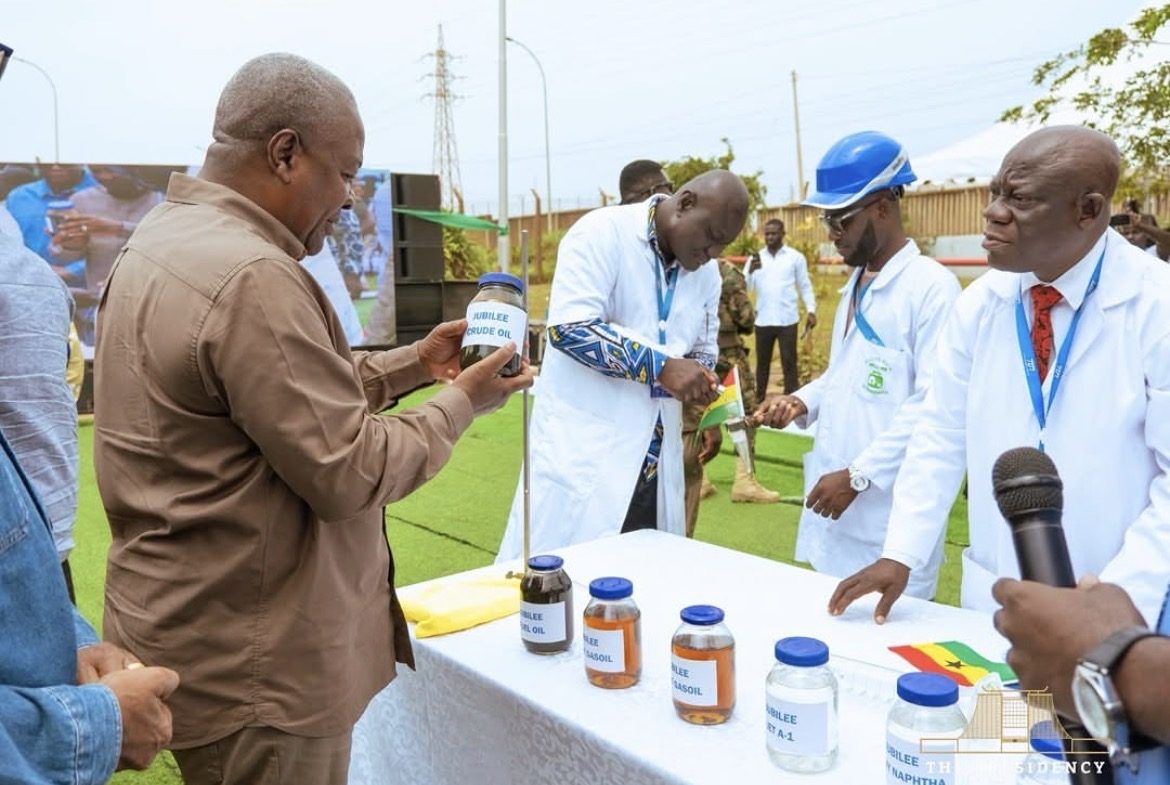
The ceremony also celebrated the receipt of one million barrels of Ghana’s indigenous Jubilee Medium Sweet Crude, delivered aboard the MT Apache for local refining.
Speaking at the event, President Mahama disclosed that TOR has received three separate cargoes of one million barrels of crude oil since May 2026, including Bonga, Baleine, and Jubilee crude. Two million barrels have already been successfully processed into refined petroleum products, with the Jubilee cargo paid for in full.
To secure the refinery's future, President Mahama directed the Energy Ministry, TOR Board, and management to draft a strategic plan aimed at scaling the refinery's processing capacity to 100,000 barrels per day.
He added that the government intends to restructure TOR's governance model to eliminate political interference, highlighting that the refinery's recent operational turnarounds were achieved without drawing funds from the central government budget.