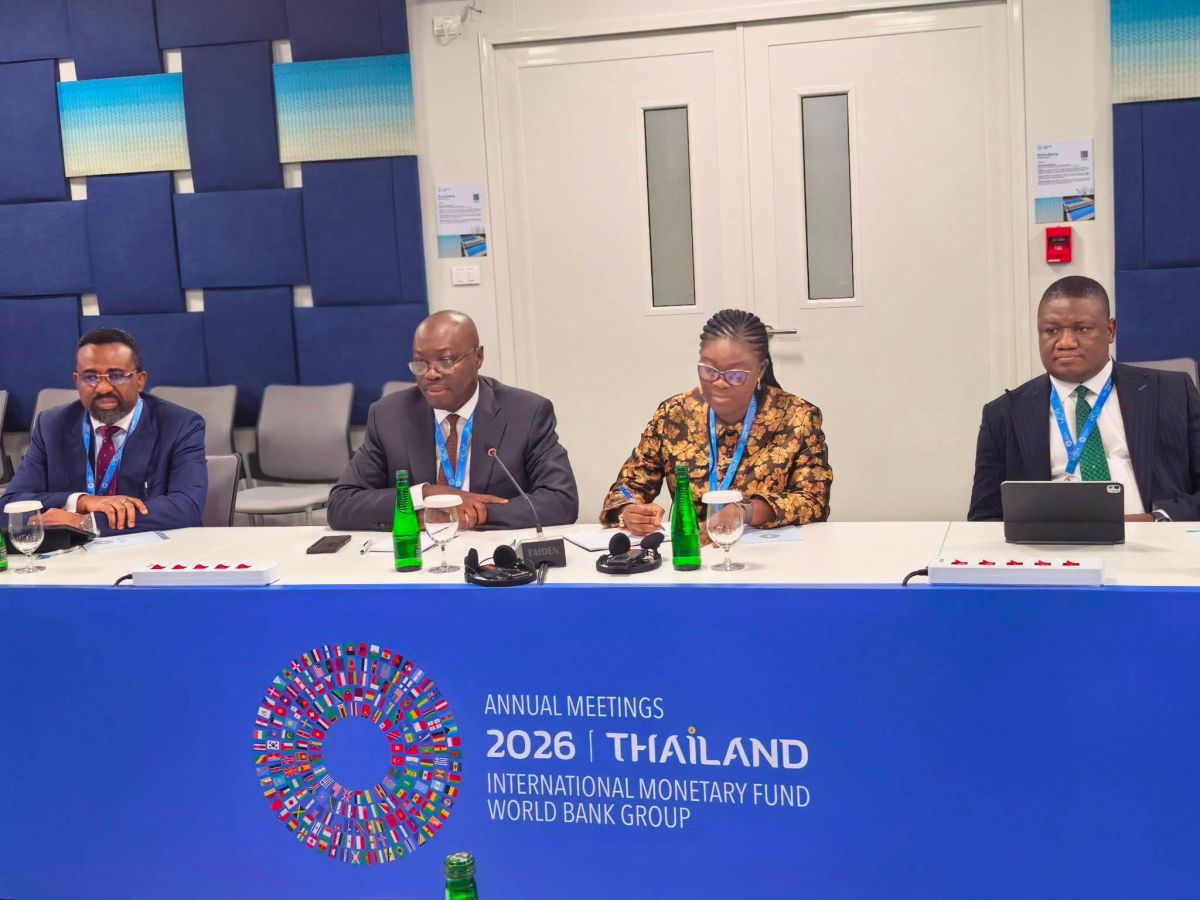
The International Monetary Fund (IMF) has issued a bullish assessment of Ghana’s economy, stating the country is better equipped to weather potential global commodity‑price shocks. The statement came as the IMF and World Bank concluded their 2026 Annual Meetings in Bangkok, Thailand.
Zeine Zeidane, Director of the IMF’s African Department, highlighted Ghana’s strong economic performance and a recent credit‑rating upgrade as evidence of progress. He noted that Ghana has moved beyond the completed Extended Credit Facility (ECF) bailout programme into a new phase of reforms under the Policy Coordination Instrument (PCI).
Speaking at a Sub‑Saharan African press briefing during the meetings, Zeidane said Ghana’s performance under the PCI had been strong so far and expressed confidence in the country’s direction. “The performance has been strong up to now. And also, you certainly have seen that recently, there was an upgrade of Ghana. So, things are moving in Ghana in the right direction,” he said.
He acknowledged that commodity‑price fluctuations remain a risk for all countries but added that Ghana would face such shocks from a very strong position. “Of course, the risk in terms of commodity prices, every country can face them, but I think Ghana is, if that happens, we will face them from a very strong position,” he added.
The IMF’s outlook for Ghana has been sharpened, with the October 2026 World Economic Outlook raising the growth forecast to 5.7% for 2026 from 4.6% projected in April. The Fund expects growth to moderate to 5.2% in 2027.
The PCI is designed to preserve the gains made under the ECF while supporting further reforms in fiscal management, debt sustainability, governance and financial‑sector stability. Unlike the previous bailout programme, it does not provide direct financing.
Ghana’s challenge moving forward will be to translate the improving macroeconomic outlook into sustained growth while protecting the economy from external volatility and maintaining discipline in public finances. The IMF’s encouraging assessment will depend on continued implementation of the reforms underpinning the country’s recovery.