The 2027 Budget Statement reveals a stark gap between Ghana’s industrialisation ambitions and the actual funds earmarked for research and development. While the government touts a “New Economy” centred on critical‑minerals refining, biomanufacturing, nuclear power and a National Artificial Intelligence Centre, the budget shows that less than one‑tenth of a percent of GDP is directed toward science and technology.
There is no line item for the Ghana National Research Fund in the fiscal tables, and the abbreviation “R&D” is absent from the official list of acronyms. With a projected GDP of GH¢1,806.06 billion for 2027, a 1% investment would amount to GH¢18.06 billion – a figure that does not appear in the allocations.
Ministry of Environment, Science and Technology (MEST) receives a gross allocation of GH¢2.44 billion, but after removing a GH¢685 million loan for the Keta Sea Defence project, the core envelope for environment, science and research drops to GH¢1.75 billion, or 0.097% of GDP. The trend continues, falling to 0.083% in 2028, 0.077% in 2029 and 0.073% by 2030.
Domestic revenue contributions to MEST are modest: GH¢642.11 million in 2027, of which only GH¢27.82 million (4.3%) goes to goods and services that keep laboratories operational, and GH¢60 million (9.3%) to capital expenditure. Of that capital budget, GH¢50 million is spent on a single Foundry and Machine Tooling Centre, leaving just GH¢10 million for the entire national scientific establishment.
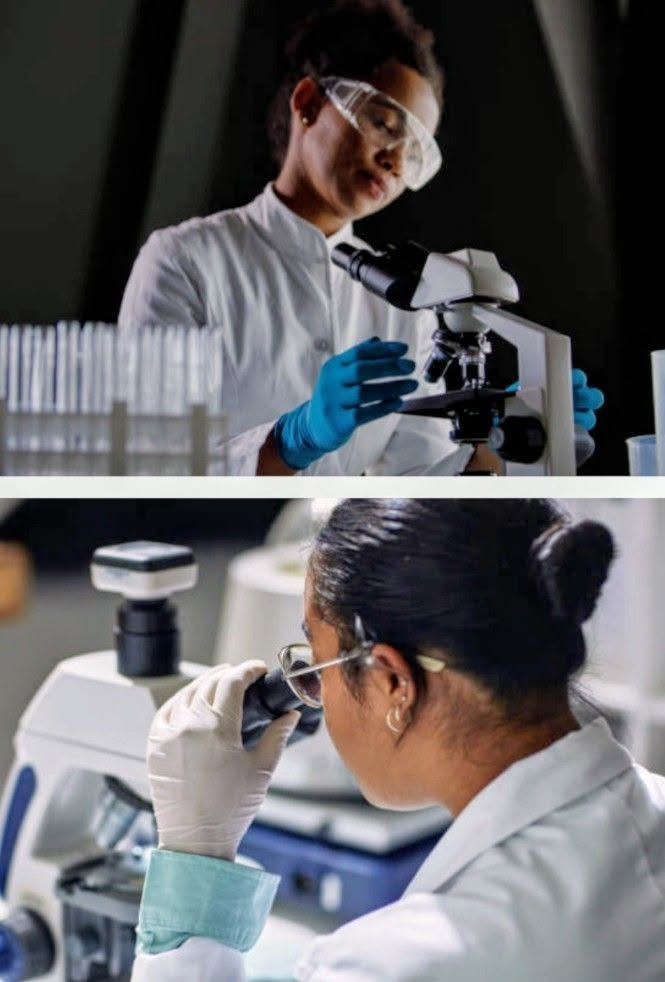
Across the 13 Council for Scientific and Industrial Research (CSIR) institutes, the Ghana Atomic Energy Commission, the Nuclear Power Institute, the Ghana Space Science and Technology Institute and MEST headquarters, only GH¢10 million in capital expenditure and GH¢16.57 million in goods and services are allocated for 2027. This is insufficient to equip even a single mid‑size metallurgical laboratory with an electron microscope, let alone support advanced research.
While MEST is projected to retain GH¢964.79 million in internally generated funds, 88.1% of that is captured by the Environmental Protection Authority, which spends the bulk on its own staff and administrative costs. The remaining funds are largely insufficient to sustain the scientists who have already produced innovations such as vegetable seasoning cubes and mango seed bread.
As Ghana aims to ban raw exports of bauxite, manganese, cocoa and small‑scale gold by 2030, the lack of investment in research infrastructure threatens to stall the country’s transition to a value‑added economy. The budget’s shortfall raises concerns about the feasibility of the promised “New Economy” and the country’s ability to compete in high‑technology sectors.
What follows is a critical examination of how the budget’s allocations align with Ghana’s industrial goals and what steps may be necessary to bridge the funding gap for science and technology.