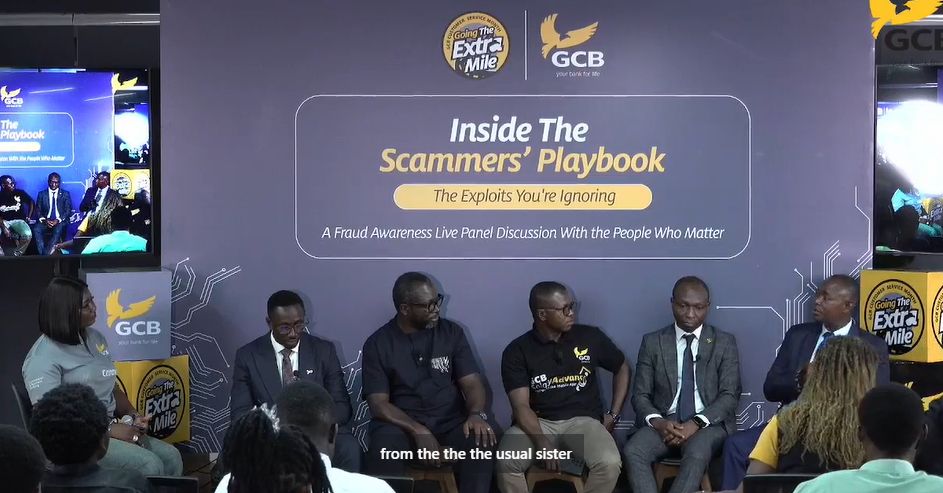
GCB Bank PLC on Thursday, October 22, held a fraud awareness discussion titled “Inside the Scammers’ Playbook” as part of its customer service month. The bank’s Chief Information Security Officer, Illiaso Zango, cautioned customers against sharing passwords, PINs and card details with anyone claiming to represent banks or other trusted organisations.
Mr Zango said that fraudsters increasingly exploit fear, trust and the lure of quick financial gains to steal money and personal information. He urged customers to verify any suspicious calls, text messages or online offers through official channels before taking action.
He reminded that the bank has protected customers’ money and personal data for more than 70 years, and that maintaining that trust requires continuous public education. “If you act wrongly, you report it, and report it immediately,” he said.
The security chief explained that scammers often create a sense of urgency, warning customers that accounts will be blocked within 24 hours or that money is being transferred without permission. He warned that callers claiming to represent GCB Bank, the Cyber Security Authority or MTN may be more likely to gain confidence because of the reputation of the institution they pretend to work for.
Mr Zango highlighted that criminals also target greed and the desire for free products or services, sending messages that promise zero charges on mobile banking or ATM cards and asking for personal information. He advised customers to be cautious of promotions that seem too good to be true and to verify them directly with the institution concerned.
He stressed that the bank will never ask for a PIN, password or card data over the phone. Customers should save the official contact number on their phones and use it to check any suspicious requests, rather than the number in the message.
In addition, Mr Zango warned against clicking on links received through unsolicited text or WhatsApp messages, especially those asking for app updates. He urged customers to download the GCB mobile banking application only from the official Apple App Store or Google Play Store.
Customers are also advised to treat their mobile phones as they would their wallets, given the growing use of mobile devices for banking and other financial transactions.