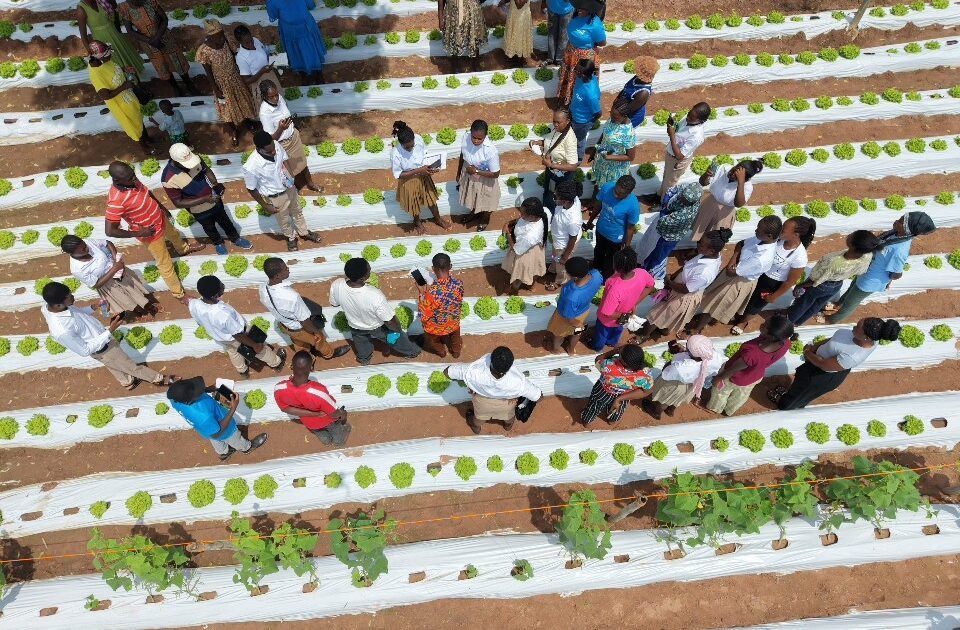
Obiri Yeboah Daniel, a young farmer from Asante Mampong, said his confidence in farming has been renewed after a day at a demonstration farm under the Agricultural Colleges for Horticulture Innovation (ACHI) Project in Ejura. The visit exposed him to drip irrigation, sprinklers and plastic mulch—techniques he had only heard about before.
“I have learned a great deal this morning,” he told reporters, adding that he would return home to share the new methods with his cooperative and encourage others to adopt them. His experience reflects ACHI’s goal of bridging classroom instruction with commercial horticulture demands.
Supported by the Netherlands Enterprise Agency (RVO), the four‑year initiative, running from 2024 to 2028, is implemented by TU Delft and Holland Greentech in partnership with five Ghanaian agricultural colleges. The project aims to equip students, graduates and farmers with practical production skills, business knowledge and access to improved technologies to build a more productive and profitable horticultural sector.
At the Ejura demonstration farm, participants were introduced to drip irrigation, plastic mulch, hybrid seeds and sticky traps for integrated pest management. Trainees were given plots to practice the techniques and observe how the technologies work together. Programme manager at Holland Greentech, Deborah Anobil, said the objective was to ensure participants leave with the confidence and skills to apply what they have learned on their own farms.
“With the right technologies and practices, farmers can produce more from less land and increase their income,” she said. Anobil added that efficient irrigation combined with improved seeds and good agricultural practices can improve yields, produce higher‑quality vegetables and extend shelf life.
The initiative also tackles the challenge of attracting young people to agriculture by turning technical knowledge into sustainable income sources. At Ejura College of Agriculture and Mechanisation Centre, students gain hands‑on experience in irrigation, crop production, harvesting, grading and marketing. A student and farm manager at the ACHI Garden, Elizabeth Aboagyewa Amoah, said the farm provides a practical learning environment for students who arrive with limited experience of modern production methods.
The project’s training includes business planning, financial management, production cost analysis and marketing. Some graduates have already established businesses in produce aggregation and other areas of the horticultural value chain. The wider ambition is to encourage young people to build enterprises not only in crop production but also in logistics, storage, aggregation and post‑harvest management.
Beyond agricultural colleges, the ACHI Project has established 85 demonstration plots and organized 115 farmer field days, reaching more than 5,000 farmers. Over 900 participants have received training in improved horticultural practices and related skills. Field days allow farmers to observe technologies in use, exchange experiences and consider how improved practices might work under their own conditions.
For lasting benefits, continued access to suitable equipment, technical advice and markets will be crucial in determining whether farmers can sustain the changes. The project’s model demonstrates how practical demonstrations can spread knowledge through farmer‑to‑farmer learning and adaptation to local needs.