
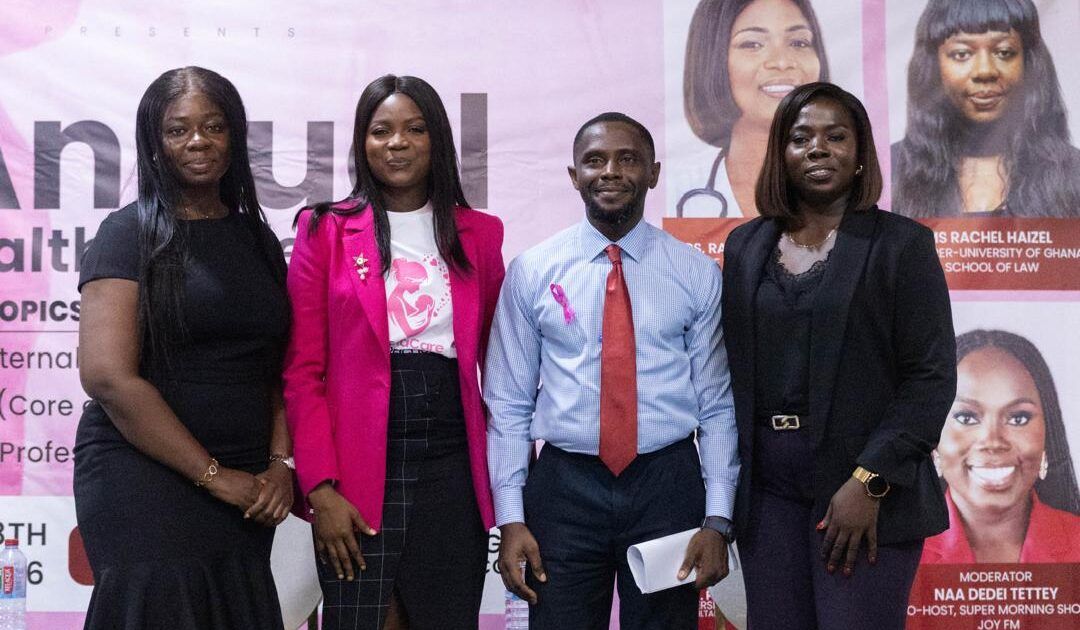
At the annual health conference hosted by the Korle Bu Nursing and Midwifery Training College, obstetrician‑gynecologist Dr Elikem Oklu voiced alarm over the continued loss of mothers and newborns to preventable causes in Ghana.
He questioned why maternal and neonatal deaths persist despite the availability of medical expertise, drugs and health facilities, saying that “for most of us, we do not make a connection between what we know and what we do.”
Ghana’s Ministry of Health reports a maternal mortality ratio of about 234 deaths per 100,000 live births, with 965 institutional maternal deaths recorded in 2025. Dr Oklu said improving outcomes requires health professionals to apply their training consistently, especially when responding to emergencies.
He also highlighted the importance of attitude and institutional culture, noting that empathy and communication can make a difference even when treatment does not result in a positive outcome. He urged health workers to communicate openly on the wards, make appropriate referrals and renew their commitment to professional duty.
University of Ghana School of Law lecturer Rachel Haizel added that medical facilities and health professionals are not sued often enough over alleged medical negligence, which could weaken accountability for poor professional conduct. “We are not suing them enough. If you see the kind of treatment that some of these health practitioners give to their patients, it’s horrible,” she said.
Ms Haizel stressed that healthcare professionals owe patients a duty of care and must exercise reasonable care and skill in line with the standards expected of their profession.
The concerns raised at the conference place renewed attention on clinical practice, patient safety and accountability as Ghana works to reduce preventable maternal and neonatal deaths.