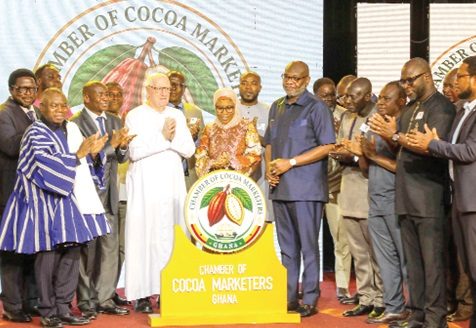
The Chief Executive Officer of Ghana Cocoa Board (COCOBOD), Dr Randy Abbey, has described the newly passed COCOBOD Bill, 2026 as the most significant reform to the cocoa sector since 1984, saying it will help end decades of financial and pricing challenges facing the industry.
Speaking at the launch of the Chamber of Cocoa Marketers in Accra last Thursday, Abbey said the bill and its accompanying funding model are designed to guarantee farmers 70 per cent of gross Free on Board value, ensure liquidity for crop purchases, and promote domestic value addition.
"For 32 years, the syndicated loan served us well, but after it collapsed, we obviously need to take the steps necessary to look at a new funding model," he said.
He questioned the old collateralized funding system, which he said tied up almost the entire crop for international buyers, leaving little room for local processing. "If you have a funding model which obliges you to collateralize almost all your crop, how are you able to provide the raw material for value addition domestically?" he asked.
To fix this, Abbey said COCOBOD is introducing a new financing mechanism that will raise the largest domestic bond ever issued in a single offering in the country's history, aimed at providing year round liquidity and clearing the delays in payment of cocoa taking over receipts that have affected Licensed Buying Companies since 2020.
He also defended the bill's new pricing mechanism, blaming the decision not to adjust cocoa prices in 2017 for the industry's current GH¢2.6 billion annual debt burden, which was later folded into the Domestic Debt Exchange Program. "When prices improve, all stakeholders, including the farmer, benefit. When the prices go down, we all take that blow. We have promised the farmer 70 per cent of the gross FOB; we're delivering on that. The prices will be adjusted when they must be adjusted," he said.
For the first time, the bill also gives legal backing to COCOBOD's mandate to pursue domestic value addition.
Abbey pushed back on what he described as a "misinformation and disinformation drive" surrounding the bill, particularly around farm protection. Citing Clauses 80 and 81, he said the law shields all cocoa farms from destruction and destructive activity within 500 meters, but does not ban good agronomic practices. He added that the bill imposes strict financial management rules on COCOBOD, including compliance with the Public Financial Management Act and ministerial oversight, to prevent future under recoveries.
He called on the newly formed Chamber of Cocoa Marketers to serve as a partner in policy advocacy, digitization and enforcement of standards as the global market places growing demands on sustainability and traceability. "The success of the reforms requires the cooperation and participation of all stakeholders," he said.
The Interim President of the Chamber of Cocoa Marketers, Samuel Adimado, said Licensed Buying Companies had formally transitioned into the Chamber to position themselves as a policy influential body amid sweeping reforms in the cocoa sector, a move he said was necessary following passage of the new cocoa bill, which has changed the dynamics of the entire value chain.
He recalled that since the liberalization of internal cocoa marketing in the early 1990s, LBCs had seen the need for a common platform. Though early engagements with the regulator were informal, he said they laid the groundwork for the association, which was formally incorporated in 2010. He cited the 2003-2004 "Temple Bean" incident, which nearly collapsed LBCs' businesses, as the turning point that pushed the sector toward formal unity, describing the shift into a standard driven, policy influential institution as a strategic response rather than a reactive one.