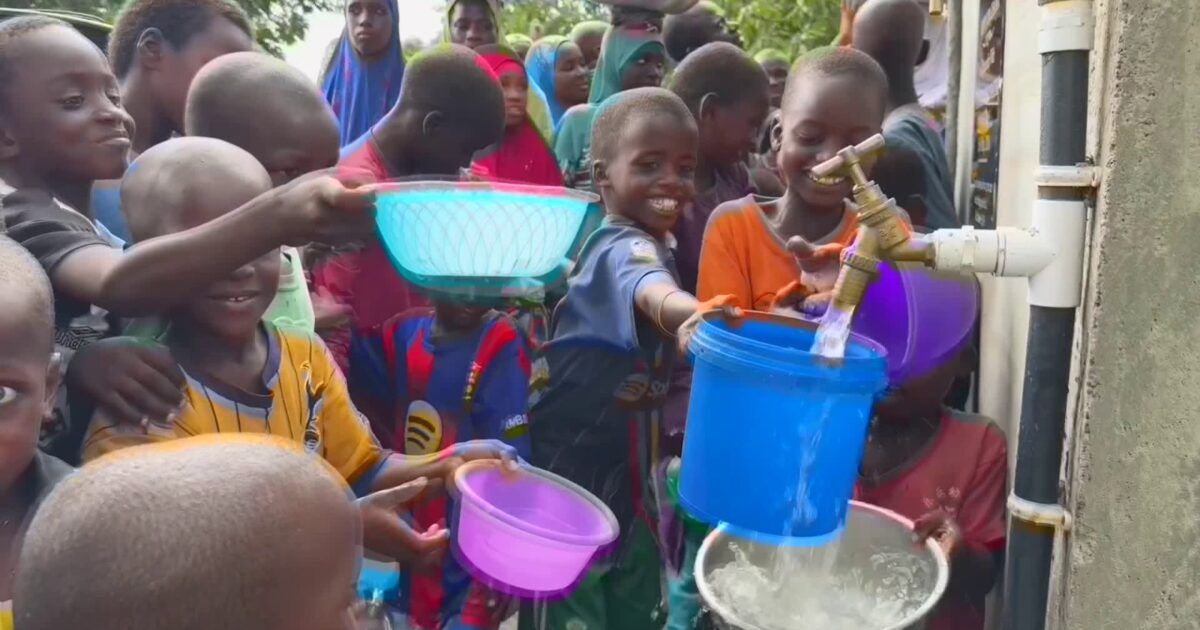
Yorkutime, a village in Ghana’s North Tongu District of the Volta Region, has gained a dependable source of drinking water after years of dependence on a dugout originally built for cattle. The new mechanised borehole, commissioned by Hope for Ghana in partnership with Ingoma Living Waters, replaces the green‑coloured, polluted water that villagers shared with livestock for decades.
For years, the community had no reliable potable water. During the dry season, residents were forced to travel about 10 kilometres by motorcycle to neighbouring towns in search of clean water. The situation drew the attention of Senyo Success Gbormittah, the 2026 JoyNews Impact Maker Award winner in the Education and Water, Sanitation and Hygiene (WASH) category, when he and his team visited in February 2026.
Mr Gbormittah described the condition of the existing source as “unacceptable.” He said,
"Human beings deserve better. They deserve good drinking water, but all they are getting at Yorkutime is water that has green colour and is being shared with cattle."He added that the dugout had been purposely dug for cattle, leaving residents with no alternative.
The new borehole is expected to provide a reliable, clean supply for drinking and household use, reducing dependence on the former dugout. Mr Gbormittah called the intervention a “major transformation” for the community, stating,
"Clean water is what we celebrate today and the greenish, dirty and polluted water that they used to drink in the past is now a thing of the past."
A community representative expressed gratitude, noting that the new source would especially protect children from health risks associated with contaminated water. She said,
"We are thanking Hope for Ghana for giving us this pure clean water which will enable us to go away from diseases and our kids will no more drink any contaminated water."
For residents who previously had to choose between an unsafe source and long travel, the borehole offers much-needed relief. Beyond easing daily burdens, the intervention provides a safer source for drinking and other household needs, marking the end of years of reliance on a cattle‑intended dugout and giving residents renewed hope for healthier lives.