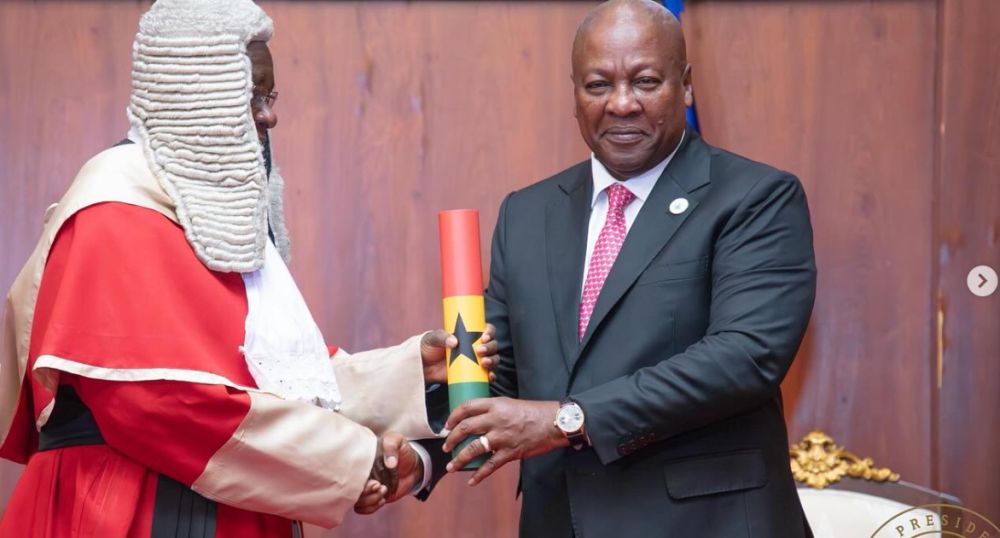
Justice Paul Baffoe‑Bonnie, the Chief Justice of Ghana, made remarks during recent visits to the Minerals Income Investment Fund and the Social Security and National Insurance Trust that have ignited a debate over the perceived political bias of the judiciary. The Chief Justice praised the MIIF’s performance and, in a candid tone, suggested that the institution work to ensure that former President John Mahama’s agenda succeeds. At SSNIT, he questioned the management’s handling of asset sales, including the Labadi Beach Hotel, and expressed disappointment at what he perceived as the country’s decline over the past eight years.
Those comments, which referenced the period from 2017 to 2024—the tenure of President Nana Akufo‑Addo’s administration—were seen by opposition members of the New Patriotic Party as an implicit critique of the ruling party. The NPP called for the Chief Justice to retract his remarks or resign and join the National Democratic Congress. CDD‑Ghana also urged greater restraint, warning that the statements risked creating a perception of political bias. The Judicial Service, however, released a statement asserting that the observations were made in good faith and were not intended to undermine judicial independence.
While the Chief Justice’s comments have not proven any partisan allegiance, they highlight the delicate balance judges must maintain between personal observations and public perception. The Judicial Service’s Code of Conduct stresses that impartiality includes avoiding conduct that could lead a reasonable person to suspect political alignment. In a country where many political controversies eventually reach the courts, the appearance of bias can undermine public confidence in the judiciary’s neutrality.
The debate underscores the broader question of how the judiciary should navigate its role in a politically charged environment. The Chief Justice’s remarks serve as a reminder that even well‑intentioned commentary can have far‑reaching implications for the perception of judicial independence. The next steps will involve monitoring how these comments influence future court proceedings and whether additional safeguards are needed to preserve the judiciary’s impartial image.