
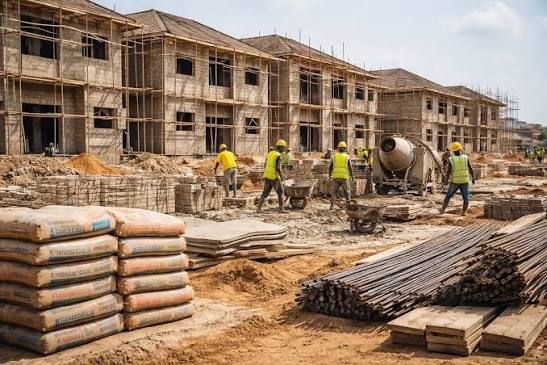
Building cost inflation in Ghana accelerated to 4.6% in August 2026, according to the latest Prime Building Cost Index (PBCI) released by the Ghana Statistical Service (GSS). The figure represents an increase of 0.1 percentage point from July’s 4.0% rate.
Although the month‑to‑month rise is modest, the August rate is still far below the 12.0% peak recorded in August 2025, signalling a significant easing of construction cost pressures over the past year. The PBCI stood at 138.4 in August, compared with 132.3 a year earlier.
Materials remain the dominant driver of the headline rise, registering 5.8% year‑on‑year inflation. They account for 76.5% of the PBCI basket and contributed 96.5% of the upward pressure on the overall rate. Within this category, plumbing, reinforcement, small tools, roofing sheets and glazing recorded the highest price increases at 26.1%, 24.2%, 23.4%, 21.7% and 20.4% respectively.
Conversely, steel, cement and fine aggregate prices fell by 8.9%, 7.1% and 5.1% respectively, offering some relief to contractors.
Plant and equipment costs have emerged as a new risk, with inflation in the category reaching 17.9% in August. The GSS attributes the spike to higher costs for small tools (23.4%) and equipment (10.7%).
Labour costs, however, eased, falling 2.9% year‑on‑year. Skilled labour declined by 1.8% while unskilled labour fell by 4.6%.
Electrical works contributed the largest share of the 4.6% headline rate at 44.1%, followed by metalwork (25.0%), glazing (22.9%), plumbing (19.5%) and tiles (13.9%).
In response, the GSS advises businesses to base contract pricing on current market evidence and to manage exposure to high‑inflation inputs such as plant, tools and construction materials. Flexible procurement arrangements and transparent price‑adjustment clauses are recommended to help firms navigate changing input costs.
For households, the Service urges builders to update budgets with current prices, build in phases where possible and compare supplier quotations. The data also presents an opportunity for the government to improve project delivery by monitoring plant and installation costs and strengthening artisan skills, procurement data and local supply chains.
The August PBCI was compiled from monthly prices for 406 construction items collected from 489 outlets across 16 markets, covering materials, labour and plant or equipment.