In Accra on 14 September, Ghanaian agri‑forest restoration company Afarinick Company Limited (ACL) and Japan’s Meiji Co., Ltd. signed a Letter of Intent (LOI) to advance sustainability and circularity across Ghana’s cocoa value chain. The ceremony, held during the 100th anniversary of Meiji Milk Chocolate, drew representatives from the Government of Ghana, the Ghana Cocoa Board, the Embassy of Japan and other stakeholders.
Joe Forson, Executive Chairman of Afarinick, and Bunjiro Yao, President and Representative Director of Meiji, signed the LOI, which lays out a framework for a joint agroforestry cocoa farm that will use farm plant waste as a core resource. The plan envisions a circular model that combines cocoa production, agroforestry and the productive use of materials generated within the farming system.
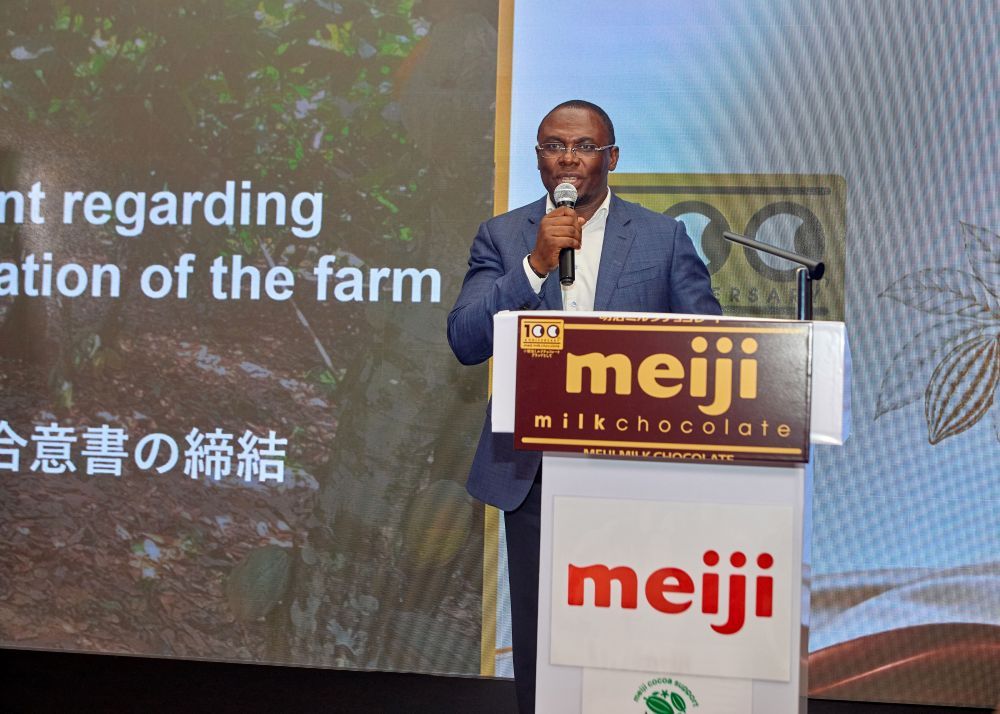
For Afarinick, the partnership marks a significant step in bringing its Ghanaian expertise in farm management, agroforestry and forest landscape restoration onto an international stage. The company operates Ghana’s largest privately owned sustainable cocoa plantation, a 2,000‑acre commercial site in the Volta Region that integrates cocoa with plantain, indigenous trees, irrigation and other climate‑smart practices.
By focusing on farm plant waste, the LOI introduces a new dimension to Ghana’s cocoa sustainability agenda, aiming to create greater value from resources already produced within cocoa farming systems. The partnership is positioned as a framework for developing a model farm rather than just another cocoa plot, emphasising the integration of agroforestry and circular resource utilisation to support more sustainable cocoa production.
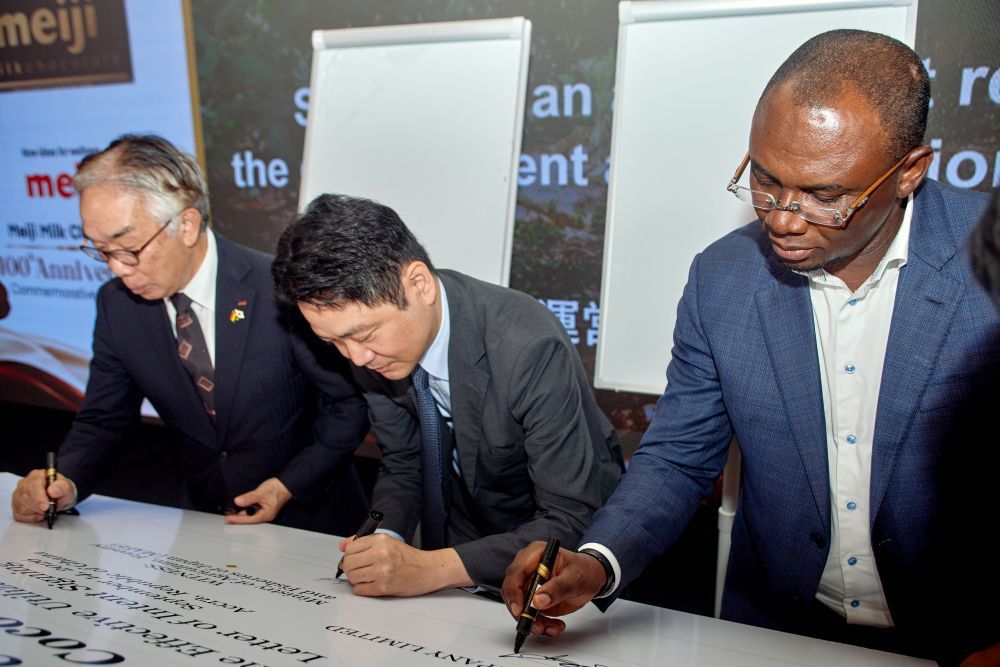
With this collaboration, Afarinick is positioning Ghanaian sustainability expertise on a larger global stage, while placing the country’s cocoa value chain in a wider discussion on circularity, resource efficiency and the future of food production.
What follows is the development of the model farm and the scaling of agroforestry practices across Ghana’s cocoa sector, potentially setting a benchmark for sustainable cocoa production worldwide.