

The National Food Buffer Stock Company (NAFCO) has unveiled a new National Food Reserve Programme, underpinned by an initial GH¢100 million government grant, aimed at strengthening Ghana’s capacity to manage food crises and curb price volatility.
Introduced after reports of grain gluts in parts of the country, the programme will see NAFCO maintain a strategic stockpile of staples such as maize, rice and gari. By the end of 2025, the company had already stored 36,597 bags of maize, 21,287 bags of rice and 5,982 bags of gari across warehouses in Tamale, Badu, Kumbungu, Dzodze, Wenchi and Kumasi.
"Under this program, NAFCO is required to keep or hold some quantity of food as a buffer for the nation and release it when necessary, including emergencies, disasters and high food cost seasons," CEO George Abradu‑Otoo said. He added that the reserve would help keep inflation in check, reduce post‑harvest losses and support government interventions in agriculture.
The initiative is part of a broader effort to reinforce Ghana’s food security architecture, which includes rehabilitating and expanding storage facilities nationwide. Many of NAFCO’s warehouses had deteriorated and become unfit for purpose, prompting an aggressive rehabilitation programme with support from the Ministry of Food and Agriculture, ECOWAS and the World Food Programme.
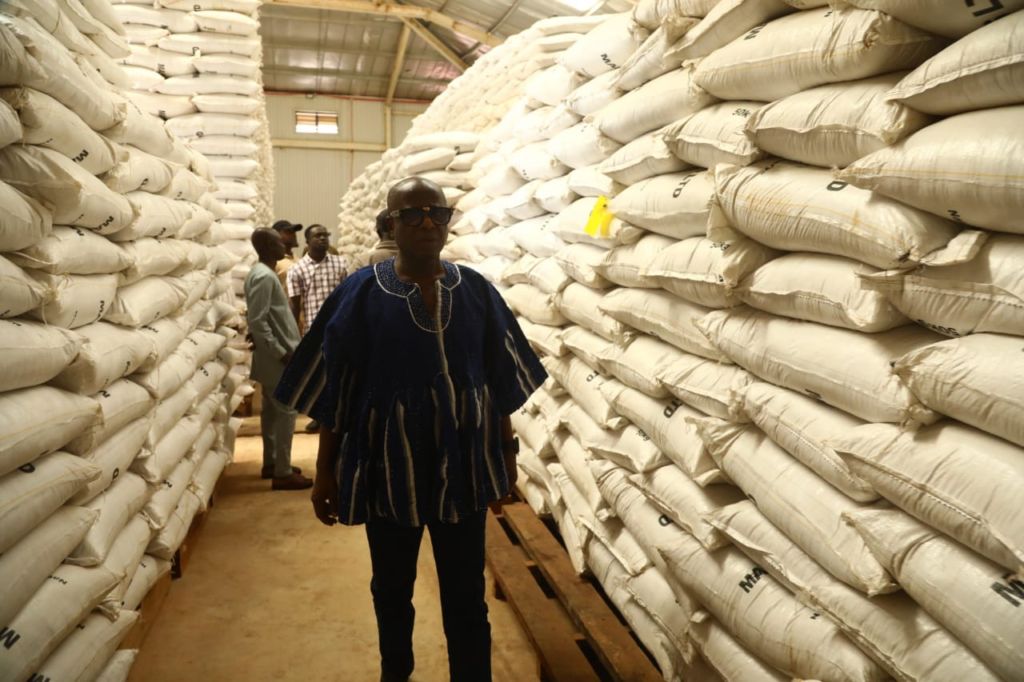
NAFCO’s expansion also covers the provision of laboratories, testing equipment, tracking and digital devices, as well as training and retraining of personnel. All 16 regional offices are now fully operational, strengthening the company’s regional presence.
2025 proved a turning point for the company. NAFCO posted a net profit before tax of GH¢91.7 million – its highest in 16 years – after a GH¢19.4 million loss the previous year. The company also paid GH¢20.3 million in taxes, the largest annual contribution in its history. Structural reforms, including a dedicated Procurement Department, a strengthened Internal Audit Department, a fortified Food Safety Department and a reconstituted Board, were cited as key drivers of the turnaround.
Looking ahead, NAFCO plans to continue building its buffer stock and expanding its infrastructure to ensure a resilient food supply chain for Ghana.