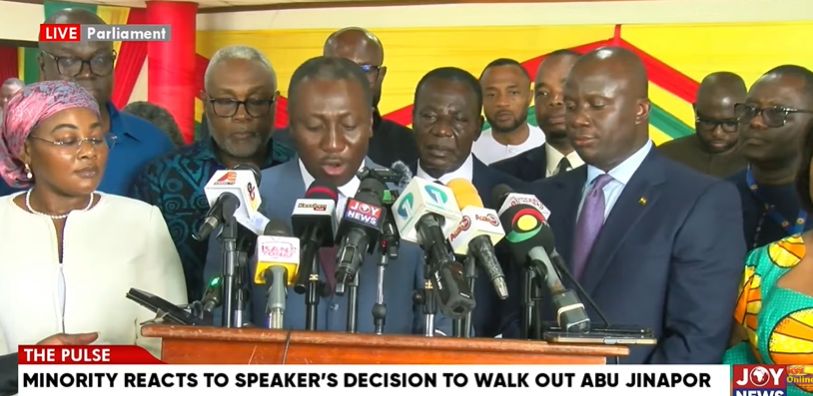
On Wednesday, November 4, Minority Leader Alexander Afenyo‑Markin cautioned that executive dominance and the curbing of parliamentary scrutiny could usher in an “elective dictatorship.” He called on the Speaker of Parliament to ensure fairness and protect the rights of the Minority.
Afenyo‑Markin said an electoral mandate does not grant any government the authority to undermine accountability, stressing that parliamentary majorities must respect constitutional limits and allow opposing views to be heard. He warned that the growing frustration over the Minority’s ability to scrutinise government actions posed a threat to effective parliamentary oversight.
His remarks followed Tuesday’s removal of Damongo MP Samuel Abu Jinapor from the Chamber by a Parliamentary Marshal after he refused to withdraw an allegation against Foreign Affairs Minister Samuel Okudzeto Ablakwa. Afenyo‑Markin cautioned the NDC Majority that numerical strength does not confer unlimited authority, reminding members that the electorate could withdraw its mandate.
“People who give you power can take it away,” he said, citing U.S. midterm elections as an example of how voters could shift political power. He argued that an electoral victory carries the responsibility to govern within constitutional limits and does not entitle a government to silence scrutiny.
The Minority Leader also urged the Speaker to remain a neutral arbiter, insisting that disagreements should not automatically be treated as acts of disrespect. He asked the Speaker to exercise authority with patience and ensure that both sides of the House were given a fair opportunity to make their cases.
“We therefore respectfully ask that challenges be met with composure, disagreement distinguished from disrespect, and authority exercised with patience,” Afenyo‑Markin said. He maintained that Parliament must allow allegations against public officials to be examined on their merits, rather than frustrate attempts by the opposition to demand accountability.
“Let a mighty minority make its case. Let the evidence be examined. Let the minister be heard. Let Parliament perform its duty. And let the people decide. This is what we call for,” he added.