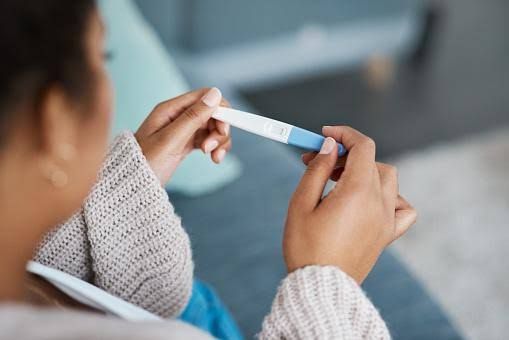
Efia married at 22 in 2022, a year after a routine fertility check that returned normal results for both her and her husband. Efia says the first year of married life felt "ordinary," but as months turned into years, the silence around her growing emptiness grew louder.
After a year, a second, and then a third of waiting, she and her husband consulted a fertility hospital for a second opinion. Again, nothing abnormal was found. Efia explained, "We decided we were going to wait on the Lord." Four years later, she remains childless.
Within the first year, external expectations surfaced. "Once you get married, people are expecting that in your first year or your first few months, you should be pregnant and give birth," she says. When that did not happen, comments became pointed: "hurry up, give birth." Her mother’s house turned into a forum of questions and unsolicited advice, while her in‑laws largely ignored the pressure.
Church attendance shifted as well. The church she attended before marriage became a place of uncomfortable stares. "They look at you in a weird way," she recalls. She eventually stopped going and joined her husband’s church, a move her mother disapproved of. Even there, pastors would call pregnant women forward for prayer, leaving Efia feeling excluded. She said,
"I try not to get closer because someone might not want me close to their child."
A public humiliation occurred at a naming ceremony when a baby was taken from her arms by its mother. "It was one of the most embarrassing days of my life," Efia said, tears hidden behind a forced smile.
Harassment extended to a market vendor who mocked her daily, suggesting her lack of children was due to her bedroom choices. After the vendor herself became pregnant, Efia witnessed the same judgment she had once directed at her, now turned against the expectant mother.
WHO’s 2025 infertility guideline notes that while men and women experience infertility at similar rates, blame disproportionately falls on women. Efia says her experience mirrors that global pattern, with cultural expectations amplifying the stigma.
Not every Ghanaian couple faces such hostility. Adjoa, married in 2023, has endured a loss of pregnancy and a quiet waiting period without the same level of public scrutiny. Yet she too feels the weight of visible waiting within her family circle.
As the story unfolds, it underscores a persistent bias that judges women for both not having children and, paradoxically, for having them at perceived “wrong” times or numbers. The cycle of blame remains, even as society slowly acknowledges its existence.