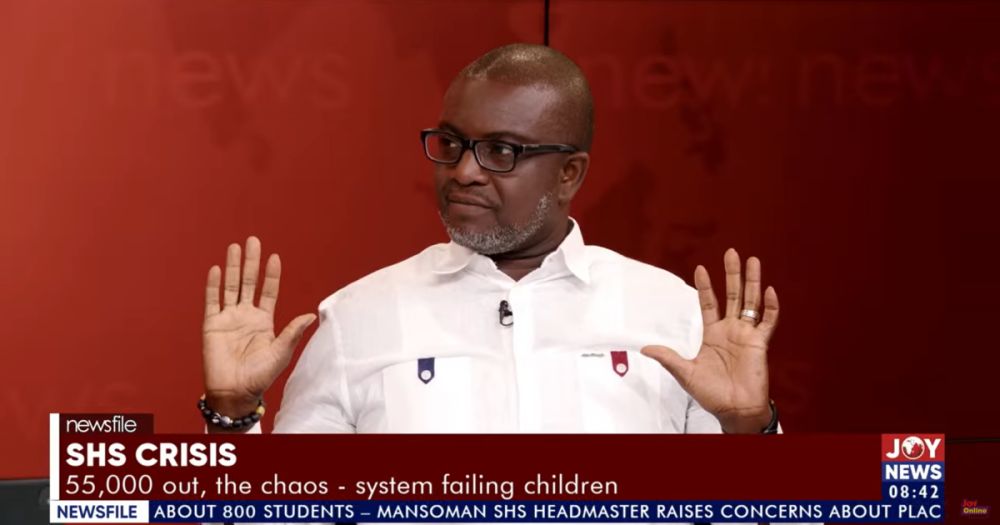
Executive Director of the Africa Centre for Energy Policy, Ben Boakye, called on the Ghanaian government to shift its focus from the categorisation of senior high schools to the overall quality of education they provide. Speaking on JoyNews’ Newsfile on Saturday, September 12, he warned that the current debate around the Senior High School (SHS) placement system should not be centred solely on which schools are classified as Category A, B or C, but on ensuring that all schools have the teachers, facilities and support needed to deliver quality learning.
Boakye said there are short‑term, medium‑term and long‑term issues that must be addressed. “I don’t see how we should lock ourselves into categories of schools and not improve quality of education at all levels,” he said. He urged the government to ensure that schools across the country have capable teachers who can provide students with the education and training they need.
He acknowledged that parents and students may continue to have strong preferences for certain schools, including emotional attachments to particular institutions, but added that such preferences should not determine the government’s education priorities. The focus, he said, should be on ensuring that every secondary school can deliver the kind of training and learning that students need to build the human capital Ghana requires.
Boakye also called for a broader approach to assessing students, particularly at the Junior High School (JHS) level. He said the education system should prioritise ensuring that every child gets the opportunity to attend school and develop their abilities, rather than placing excessive emphasis on grades obtained at the JHS level. “The problem we really need to face is that we need to make sure that every kid goes to school,” he said. “We shouldn’t be too busy about grades and judging kids by their grades at JHS level.”
He stressed that children develop at different rates and that strong performance at the JHS level does not necessarily determine how well a student will perform later in life. “Because kids, you know, develop at different paces, right? Some will do better at JHS. They go to university, they do better than those who did well in JHS,” he said. He therefore urged an education system that gives students equal opportunities to develop regardless of their early academic performance.
Boakye added that improving the quality of education across all secondary schools should be a shared priority, particularly because most teachers are graduates and should be supported to deliver effectively. He said effective monitoring could also help ensure that schools meet the required standards. “The teachers, and most of them are all graduates in the schools. In some instances, just monitoring to make sure that the schools deliver,” he said.
This call comes amid an ongoing debate over the challenges facing the Computerised School Selection and Placement System (CSSPS), including strong competition for places in some of the country’s most sought‑after senior high schools.