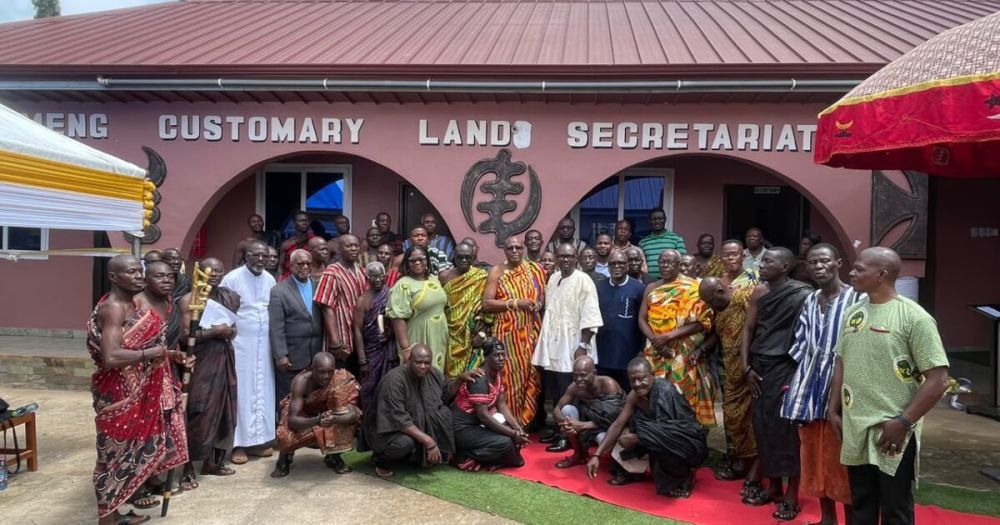
Two Customary Land Secretariats were inaugurated today in Sunyani, Bono Region, and Kwahu Obomeng, Eastern Region, as part of a national push to make land administration at the customary level more transparent and accountable.
The initiative is backed by the Office of the Administrator of Stool Lands (OASL), which says the new offices will serve as repositories for land records, document land rights and record transactions within their respective areas.
Gad Asorwoe Akwensivie, the Administrator of Stool Lands, praised the traditional authorities of Sunyani and Kwahu Obomeng for setting up the secretariats. He said the move shows a commitment to improving land administration while ensuring that customary practices can work alongside modern systems.
"It reflects a deep sense of responsibility towards your people. It also demonstrates your belief that customary land practices can co‑exist with modern systems of land administration," Akwensivie told the crowd.
He warned that poorly managed land could become a source of conflict and that about 80 per cent of land in Ghana is held under customary ownership, placing a significant responsibility on traditional authorities.
According to the OASL, the secretariats will provide accurate and accessible land information to the public, including prospective investors, and help reduce disputes, improve tenure security and promote orderly planning and development.
Akwensivie noted there are currently about 100 Customary Land Secretariats operating across the country, working with the Lands Commission, LUSPA, the National Development Planning Authority and land‑based NGOs.
He urged staff and members of the Land Management Committees to uphold integrity, professionalism and accountability, adding that the trust of the people should be earned and maintained.
The administrator also challenged the committees of both secretariats to become models for other stools, skins, clans and family land‑owning communities that have yet to establish similar structures.
Government will continue to support the initiative, with the OASL and the Lands Commission providing technical assistance to ensure the secretariats fulfil their intended purpose under the Land Act, 2020.
The new secretariats are expected to contribute to more systematic land documentation at the customary level, improve access to land information and help reduce disputes associated with land transactions.