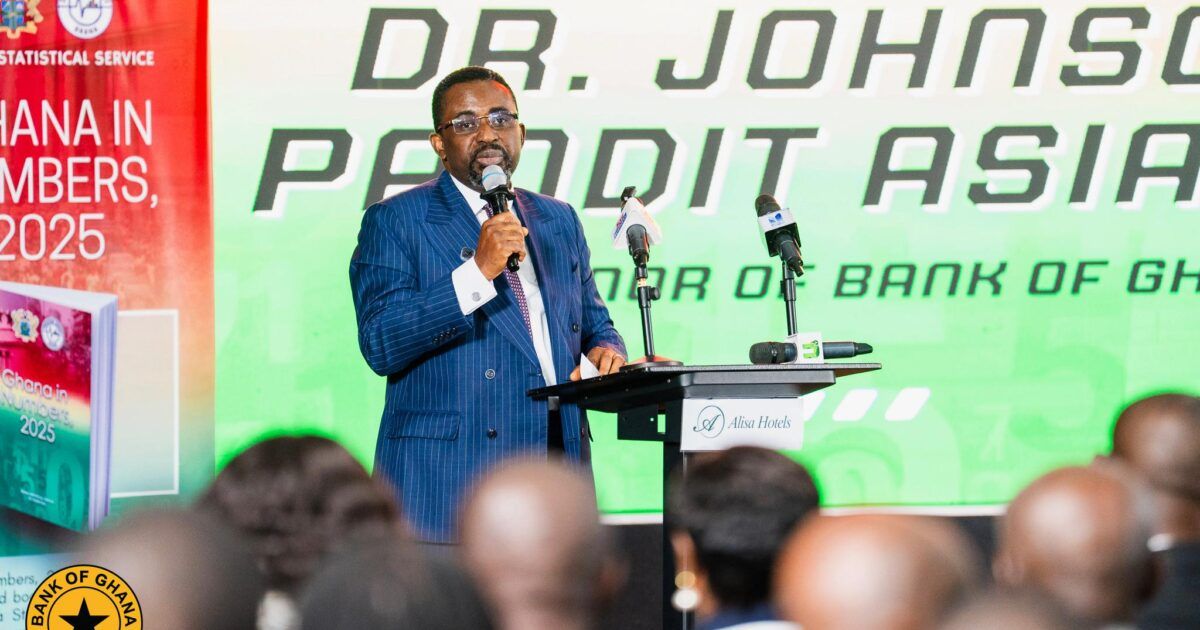
On Thursday, October 29, Dr Johnson Pandit Asiama, Governor of the Bank of Ghana, announced that the average lending rate fell from 30.25 % in December 2024 to 15.78 % in September 2026, while real private‑sector credit growth surged from 0.20 % to 26.42 % over the same period. The figures were released at the launch of the maiden edition of Ghana in Numbers 2025, a publication by the Ghana Statistical Service.
Asiama said the decline in borrowing costs and the uptick in credit supply reflect the success of recent macro‑economic management, which has also kept inflation in single digits for 13 consecutive months and maintained a relatively stable exchange rate. He added that the banking sector’s resilience has helped sustain these gains.
The governor highlighted that a stable macro‑environment and a well‑functioning financial system are essential for expanding economic opportunities, especially for Ghana’s large youth population. He urged that to unlock the country’s entrepreneurial potential, young people need relevant training, access to finance and an environment that encourages investment.
He noted that the Bank of Ghana is pursuing initiatives to improve financial inclusion, making formal financial services more accessible and affordable for young people, women, MSMEs and underserved communities. The governor said these steps would help turn business ideas into viable enterprises.
Asiama described Ghana in Numbers 2025 as more than a statistical publication, urging stakeholders to use it as a national resource for assessing circumstances, measuring progress and informing policy decisions. He expressed hope that the report would become a trusted reference for strengthening transparency, supporting evidence‑based policymaking and promoting a more productive and inclusive economy, particularly for young people.