Fidelity Bank Ghana has called for sweeping reforms to extend pension coverage to the country’s vast informal workforce and diaspora communities, describing expanded financial inclusion as vital for long-term retirement security and national economic development.
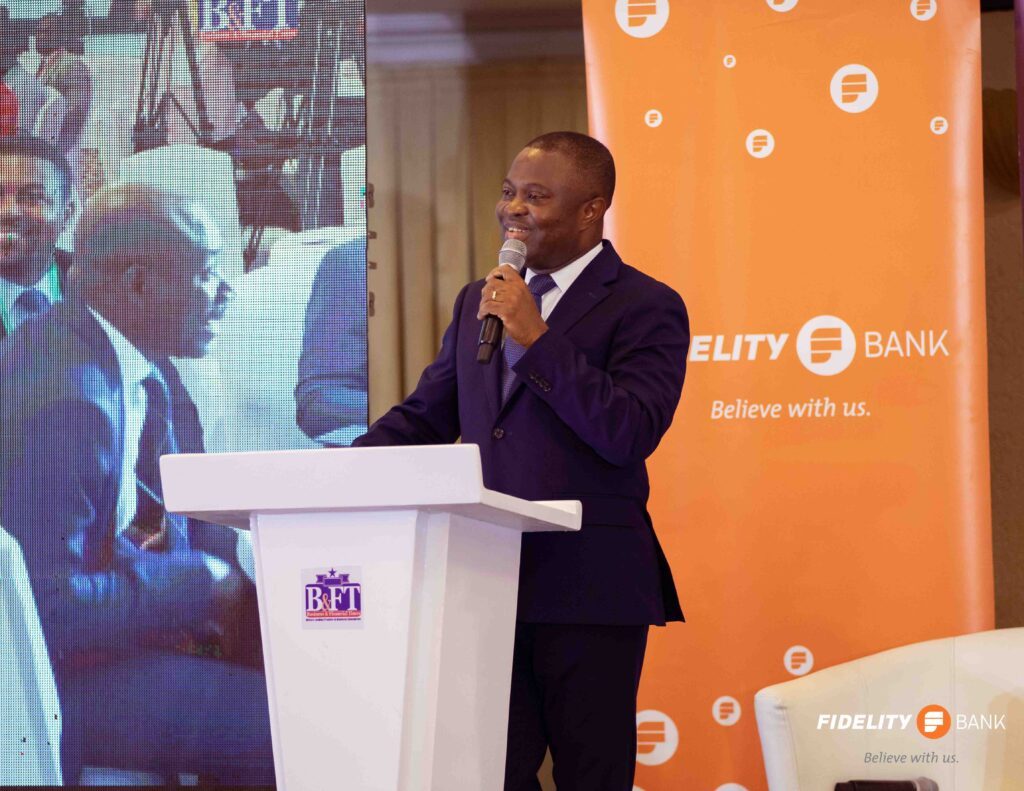
Speaking at the 2026 Africa Pension Supervisors Association (APSA) Annual Conference in Accra—held under the theme "Unlocking Informal Sector and Diaspora Pensions: From Financial Inclusion to Sustainable Retirement Security". Fidelity Bank’s Deputy Managing Director for Operations & Support Functions, Atta Yeboah Gyan, detailed Ghana’s stark "pension coverage paradox."
Addressing the "Pension Paradox"
While Ghana’s total pension assets across all three tiers have expanded to an estimated GHS114 billion, participation remains heavily skewed toward formal employees. Mr. Gyan highlighted that although informal workers represent over 80 percent of the national workforce, fewer than one percent actively contribute to the Tier 1 pension scheme.
"For every 100 Ghanaians working outside the formal sector, whether as market traders, artisans, smallholder farmers, kayayei or commercial drivers, only one is contributing to a formal pension," Mr. Gyan explained. "This is not because they lack concern for their future, but because the system, as originally designed, did not adequately reflect their realities, circumstances, or needs."
He emphasized that the industry's focus must evolve beyond asset accumulation to creating retirement security solutions built around the unique income patterns of non-salaried workers.
Tapping Into Diaspora Remittances
Highlighting Ghana's overseas population as an untapped financial driver, Mr. Gyan noted that remittance inflows reached US$7.79 billion in 2025, representing one of the nation's most stable foreign exchange channels.
He argued that converting even a fraction of these inflows into retirement savings could unlock massive, patient capital:
10% Remittance Capture: Directing 10 percent of annual remittance flows into structured pension products would generate nearly US$780 million per year.
Five-Year Horizon: Over five years, this mechanism could yield close to US$4 billion in long-term development capital.
Mr. Gyan suggested using existing digital remittance platforms to integrate pension contributions as a simple "second settlement instruction" during routine money transfers.
Adapting to Informal Sector Realities
Addressing the domestic informal market, Mr. Gyan stressed that low participation is not merely a financial literacy issue, but a product design flaw. Conventional pension products require predictable monthly contributions, whereas informal workers typically earn daily, seasonally, or irregularly.
To boost adoption, he advocated for micro-contribution models allowing daily, weekly, or seasonal payments without penalties for missed months, supported by public outreach to rebuild consumer trust. He cited successful African precedents, including:
Rwanda’s Ejo Heza voluntary savings scheme.
Kenya’s mobile-enabled pension solutions.
Three Practical Interventions
To fast-track pension inclusion, Mr. Gyan outlined three key action points for regulators and industry players:
Dedicated Diaspora Products: Establish tailored, regulatory-backed pension vehicles designed specifically for citizens abroad.
Mobile Money Pilots: Roll out flexible micro-contribution models utilizing existing mobile money infrastructure.
Ghana Card Integration: Embed pension enrolment into national identity registration to streamline access.
Financial Institutions as Key Drivers
Highlighting the role of commercial banks, Mr. Gyan revealed that Fidelity Bank currently serves more than 2.2 million inclusive banking customers, many of whom work in the informal economy.
He reaffirmed the bank's commitment to bridging the gap between existing pension models and customer needs by leveraging its physical branch network, digital platforms, and global remittance partnerships.8+9