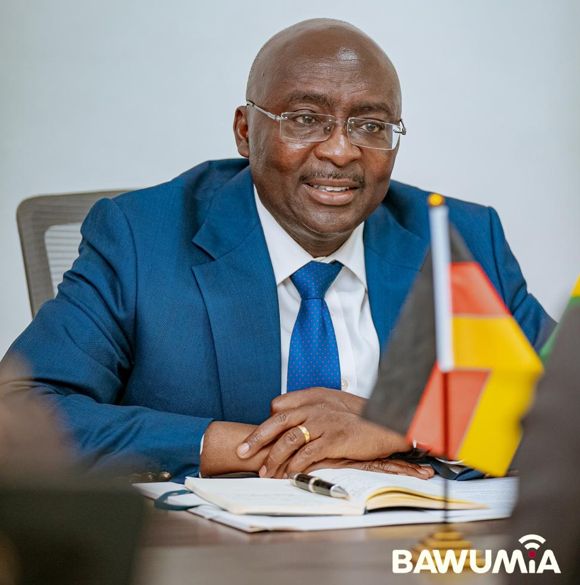
Dr Mahamudu Bawumia, flagbearer of the New Patriotic Party, urged lawmakers to enact legislation that would protect Ghanaian workers from the potential displacement caused by the rapid deployment of Artificial Intelligence (AI). The call came during an engagement with the Trades Union Congress (TUC), which focused on labour issues, economic transformation and the future of work.
While acknowledging AI’s capacity to boost productivity, efficiency and service delivery, Bawumia warned that its swift advancement could threaten employment and income security for many Ghanaians. He described AI as a “frightening prospect” for workers, noting that machines and software are increasingly able to perform tasks that were traditionally carried out by humans.
The former Vice‑President highlighted that businesses worldwide are adopting automation to cut operational costs and improve productivity, making several occupations vulnerable to technological disruption. He argued that Ghana must take proactive measures to address the implications of AI on the labour market rather than remain a passive observer as the technology transforms industries.
Bawumia stressed the need for a national strategy that ensures AI adoption promotes economic growth without undermining workers’ livelihoods. “Artificial Intelligence should be a tool to complement human labour and not a substitute for it,” he said. He proposed collaboration among the Government, organised labour, employers and technology experts to develop laws and regulations that would protect workers while encouraging innovation.
The proposed framework should provide for retraining, reskilling and continuous education to equip workers with the skills needed to remain relevant in an increasingly digital economy. Bawumia encouraged labour unions to participate actively in national discussions on AI to ensure that workers have a voice in decisions affecting their employment and future.
He expressed concern that Africa’s youthful population could face increasing unemployment if technological advancement outpaces investment in human capital development. Deliberate policies, he said, are required to ensure that the benefits of AI are widely shared and do not deepen existing social and economic inequalities.
With confidence that appropriate policies and legal safeguards would enable Ghana to harness the benefits of AI while protecting employment and preserving the dignity of work, Bawumia called for a collaborative effort to shape the country’s AI future.