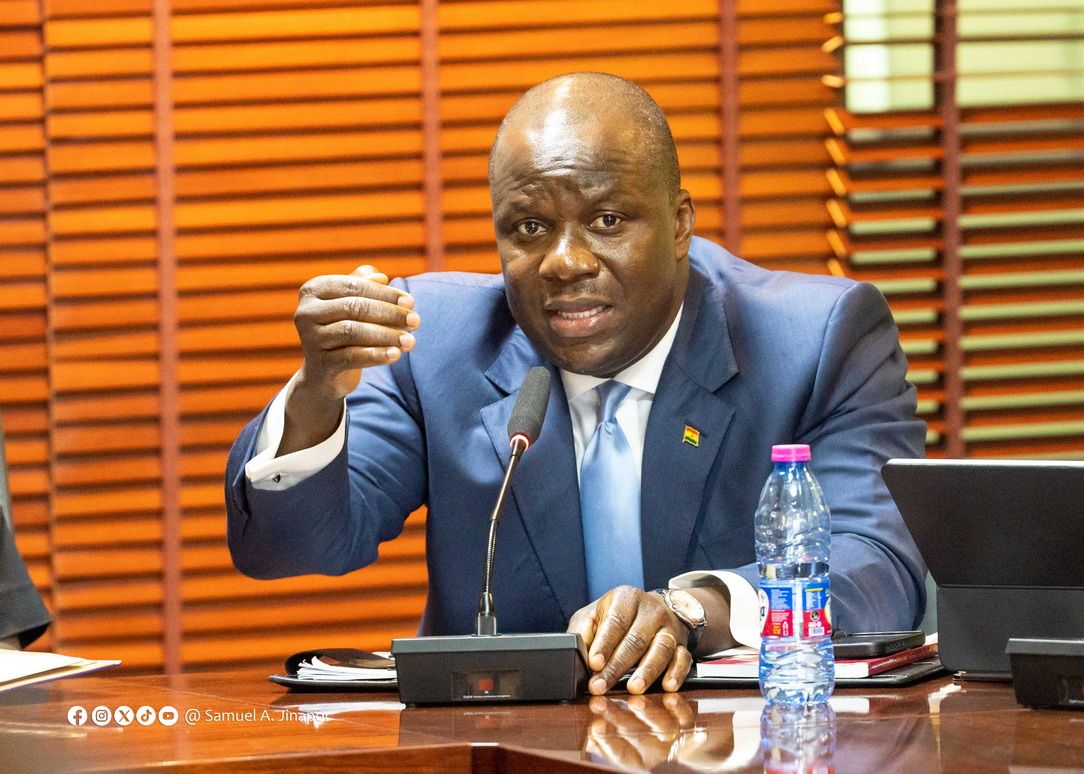

Dr Theo Acheampong, Technical Advisor at the Ministry of Finance, defended the government’s claim that the Accra‑Kumasi Expressway could create at least 30,000 jobs, calling the figure a conservative estimate. He clarified that the employment impact should include not only workers on construction sites but also those in quarrying, cement production, haulage and other related services.
In a Facebook post on Thursday, September 10, 2026, Acheampong answered questions about the project’s potential job creation. He noted that the Ministry of Finance’s Minister, Dr Cassiel Ato Forson, had earlier stated that the expressway could generate approximately 30,000 direct and indirect jobs.
According to Acheampong, infrastructure employment is typically measured in “job‑years”, where one full‑time position maintained for 12 months equals one job‑year. He estimated that direct employment could produce between 38,000 and 48,000 job‑years during construction, based on a $400‑$500 million labour component. Using a blended annual employment cost of about $10,000, he chose the lower estimate of 38,000 direct job‑years for his calculation.
He added that local procurement and services required for the expressway would generate additional employment. “Every truckload of aggregate from a quarry, every bag of cement, every haulage contract and every caterer is a job created by project spending,” he said. He estimated that domestic purchases of $1.2‑$1.5 billion could support a further 12,000 to 14,000 job‑years in quarrying, cement, haulage and services, bringing the total to about 50,000 job‑years. He placed the plausible range between 38,000 and 70,000, depending on factors such as the labour share of the project, wage levels and the proportion of materials and equipment imported.
Over an estimated 30‑month construction period, Acheampong said the project could employ around 20,000 people at any given time, with more than 50,000 individuals potentially earning wages from the project before its completion because of labour turnover. He maintained that the 30,000‑job projection should be regarded as a minimum rather than an inflated figure, stating, “So 30,000 is not an exaggeration: it is the floor.”
He warned that the longer‑term employment impact could extend beyond construction, especially through logistics hubs, industrial parks and improved market access along the corridor. He noted that every ten percentage points of project spending shifted from imports to Ghanaian suppliers could add roughly 4,000 job‑years.
To maximise local benefits, Acheampong urged that construction contracts include local labour and sourcing requirements and that apprenticeship opportunities be linked to technical and vocational education and training institutions. He also called for payroll‑verified reporting of direct employment figures to enable independent audits of the jobs created by the project.
The Accra‑Kumasi corridor is a major transport route linking Ghana’s economic and commercial centres, and the proposed expressway is expected to improve connectivity and facilitate movement of people and goods between the two cities.