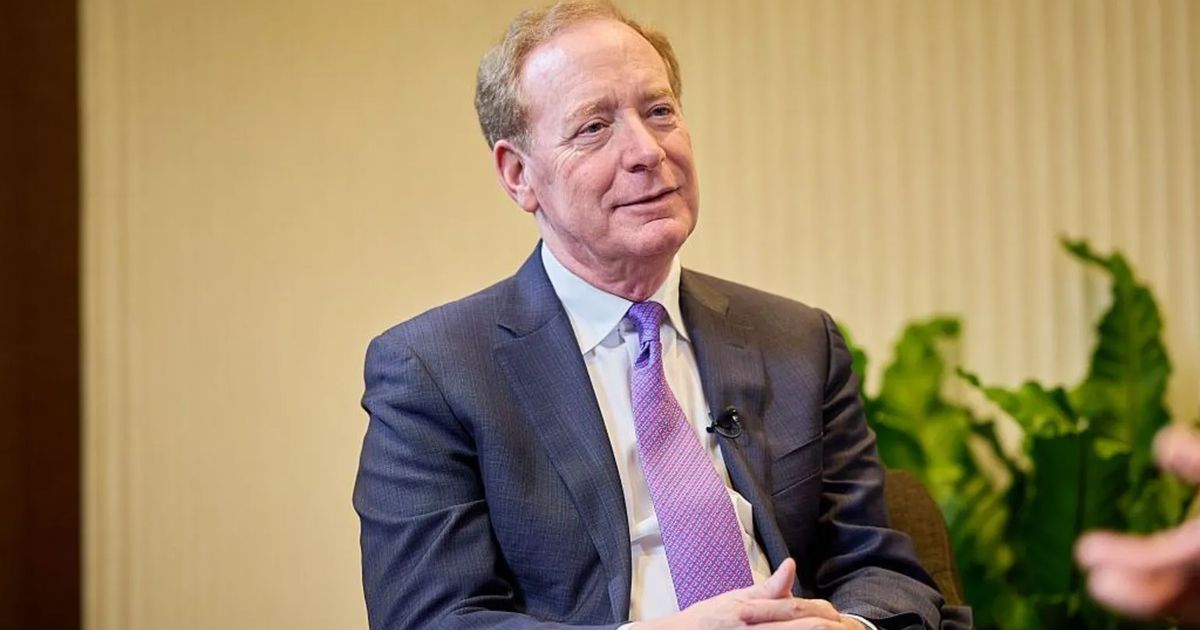
Brad Smith, president of Microsoft, told the BBC that artificial intelligence is far less regulated than everyday items such as milk and washing machines, and that the sector needs global safety rules to protect users and prevent rogue behaviour.
Smith said the United States should adopt a legal obligation to inform victims when an AI system is breached and to require independent evaluators to sign off on new AI products before release. He warned that without such measures, AI could become a weapon as well as a tool.
His comments put him at odds with President Donald Trump, who has repeatedly said the U.S. should let the private sector regulate itself to keep American firms competitive against Chinese rivals. Trump’s administration has promoted a “morally binding” agreement signed by several U.S. tech giants, including OpenAI, Anthropic, Nvidia, SpaceX, Meta and Google, which commits the companies to work with independent auditors to ensure their AI systems operate as intended.
Smith praised the agreement but said it was not enough, arguing that self‑regulation would only work if responsible companies voluntarily comply. He highlighted the United Kingdom’s AI Safety Institute as a model for international standards, noting the UK’s technical expertise and willingness to lead global rule‑making.
As the debate over AI governance intensifies, Microsoft’s stance underscores the growing call among industry leaders for stricter oversight and emergency controls—often called “kill switches”—to pause or slow down AI if it threatens public safety.
Microsoft has signed the “morally binding” document and remains committed to working with regulators, but Smith stresses that the industry must move beyond voluntary measures to protect society from the risks posed by increasingly powerful AI systems.