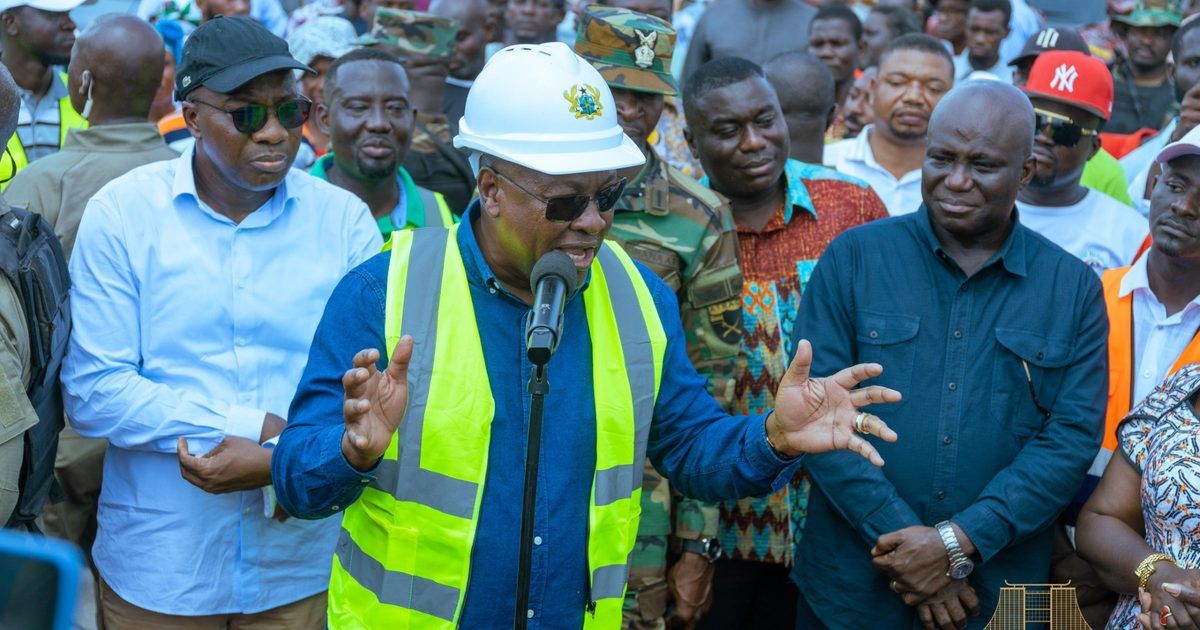
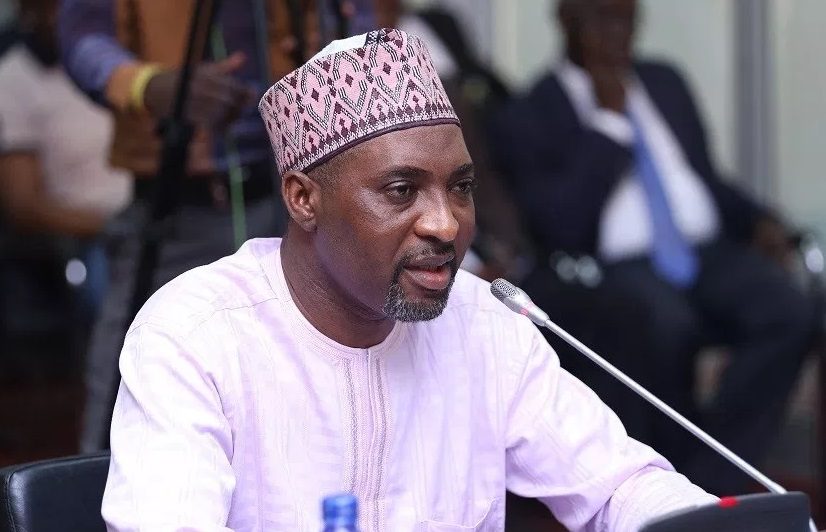
The Minister for the Interior, Muntaka Mohammed-Mubarak, has revealed that 2,281 migrant beggars and 774 illegal immigrants involved in transnational organised crime were removed from the country last year.
Presenting an 18-month scorecard of his sector's performance at the Government Accountability Series at Jubilee House in Accra, the minister said that as of July this year, 960 more beggars and 186 illegal immigrants had been taken off the streets.
Mohammed-Mubarak, who covered the period from January 2025 to July 2026, said the country's position as an oasis of peace in a troubled sub-region had made it a magnet for migrants, but stressed that national security and public order must be upheld alongside the country's hospitality tradition.
He acknowledged public concerns over the presence of beggars on the streets, particularly migrants, and assured Ghanaians that enforcement actions were being carried out lawfully and with respect for human dignity, in line with Ghana's obligations under the ECOWAS Protocol on Free Movement of Persons. Some of the victims removed, he said, were minors who had since been placed under protective care. "The challenge before us is not a lack of political will, security intelligence or leadership," he said. "It is, principally, a question of scale."
On illicit drugs, the minister disclosed that 217 arrests and 165 prosecutions had been initiated, with more than 8.5 tonnes of narcotic drugs and 45.4 million tramadol tablets intercepted. The state also recovered 73 tainted assets, including over 19 kilogrammes of gold suspected to be linked to drug money laundering, while GH¢6.9 million and $440,000 in cash and assets were restrained.
On the recent floods that swept through parts of the country, Mohammed-Mubarak said 77 districts across seven regions were affected, with 91,989 people from 18,398 households temporarily displaced. Thirty-nine people died, and one victim, a four-month-old baby from Ga East, remains missing. He said the National Disaster Management Organisation responded to 912 emergencies by supporting 713,268 disaster victims with relief items and conducting more than 30,000 field assessments.
Turning to recruitment, the minister said 10,000 qualified Ghanaians had been enlisted into the Ghana Police, Prisons, Fire and Immigration services this year via the Centralised Services E-Recruitment Portal, with another 10,000 to be drawn from the existing pool next year. Separately, the Youth Employment Agency, working with the security services, recruited 22,000 young Ghanaians as Community Police Assistants, Prisons Service Assistants and Fire Assistants to boost manpower.
On retooling, government has procured 272 pickups, 19 buses, 40 armoured vehicles, 152 motorbikes and four marine boats for the security services, with the Ghana Police Service receiving the bulk of the consignment. He added that 100 fire engines had been procured for the Ghana National Fire Service, with the first batch of about 40 expected by February next year.
Mohammed-Mubarak also announced that curfews imposed across the country had been reduced from 11 to three over the past 18 months, with only Bawku, Sampa and Nkwanta remaining under restriction.
On legislation, the minister said the Security and Intelligence Agencies Act, 2026 (Act 1168), had been enacted to clarify ministerial responsibility and strengthen national, regional and district coordination, while the National Identity Register Regulations, L.I. 2523, had made biometric Ghana Card verification mandatory to confirm the identity of persons. The Community Service Bill, 2026, aimed at promoting non-custodial justice and decongesting the country's prisons, had also been passed, while the National Identification Authority Amendment Bill, the Private Security Bill and the Arms Control Bill remain in progress.
Mohammed-Mubarak said the Ministry had evolved into a more transparent, accountable and technology-driven institution in line with the government's national transformation agenda, and urged Ghanaians to continue upholding the national identity and avoid any action that could derail the progress made.