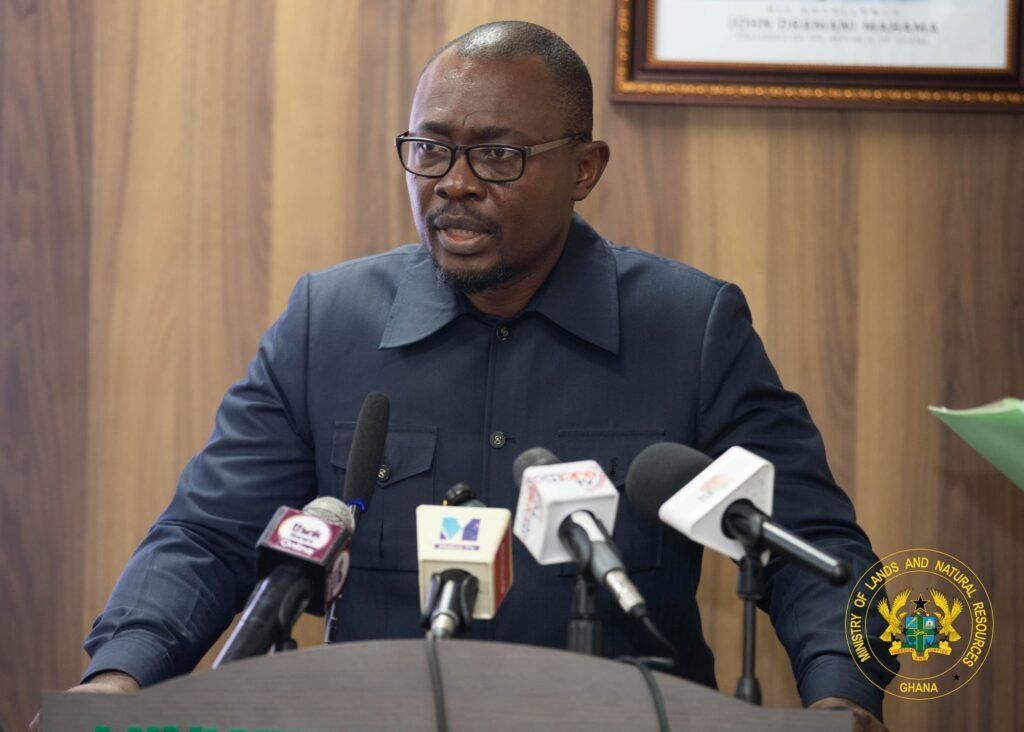
As of 30 October 2026, the Office of the Administrator of Stool Lands has mobilised GH¢405.3 million in stool land revenue, more than doubling the GH¢189.5 million collected in 2025.
Dr. Gad Asorwoe Akwensivie, the Office’s Administrator, said the increase results from revised ground rents, the opening of new offices and collection points, digitalisation of operations and tighter monitoring of regional and district offices.
He added that the revenue was disbursed in accordance with the law: 25 percent to the land‑owning stool, 20 percent to the traditional authority and 55 percent to Metropolitan, Municipal and District Assemblies (MMDAs) for development projects, after the Office’s 10 percent administrative allocation.
In 2026, the Office also established 10 new Customary Land Secretariats, bringing the national total to 131. The new secretariats are located in Greater Accra, Eastern, Bono and Central Regions.
The Office has intensified engagement with traditional authorities, reaching the National and Regional Houses of Chiefs and more than 47 traditional authorities across the country. A partnership with the University of Professional Studies delivered a short course in Alternative Dispute Resolution, training 67 traditional authorities for the first time.
Community education reached 836 communities out of a target of 1,000, alongside 47 radio programmes aimed at improving public understanding of land administration and encouraging participation in stool land revenue mobilisation.
Looking ahead, the Office targets GH¢630 million in 2027 and plans to establish 50 additional Customary Land Secretariats. It will deepen collaboration with key land sector institutions, traditional councils, the Houses of Chiefs and the Department of Land Economy at KNUST, and expand public education programmes to 80.
Dr. Akwensivie stressed that the goal is to translate customary land revenue into visible development, alleviate poverty and support the Government’s Reset Agenda.