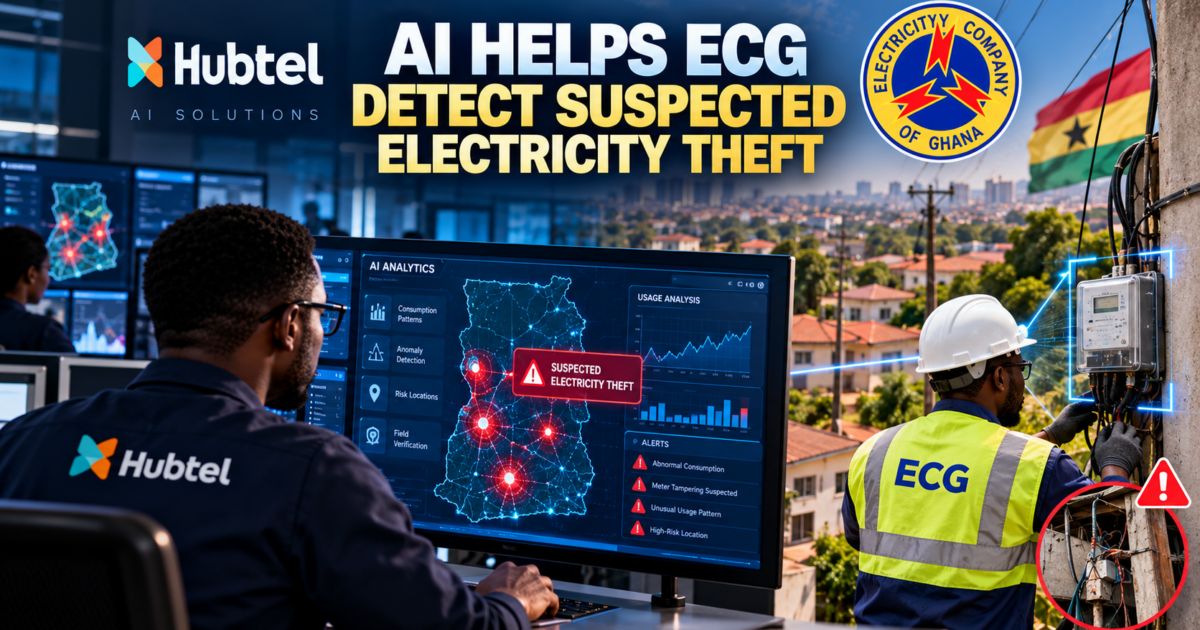
Hubtel Chief Executive Alex Bram announced that the company’s AI laboratory has partnered with the Electricity Company of Ghana (ECG) to deploy artificial intelligence that identifies customers suspected of stealing electricity. The initiative, launched in 2022 and formalised when Hubtel opened its AI lab in 2023, used ECG’s consumption and billing data to train machine‑learning models that flag unusual usage patterns for further investigation.
“They gave us an opportunity to help them use AI to find people who could be stealing electricity. And that data was very helpful to ECG,” Bram said. He added that the partnership demonstrated how AI could address practical challenges for businesses and public institutions in Ghana.
Hubtel’s early experiments, however, exposed significant hurdles. The company struggled to recruit the 30 machine‑learning engineers it needed, and even after doubling its recruitment budget it could not find enough local talent. Data‑sharing arrangements with other firms also faltered due to a lack of a national framework for exchanging information.
By late 2024 and into 2025, Hubtel shifted from building its own models to using commercially available AI systems, a move that reflected the growing affordability of advanced tools from international providers.
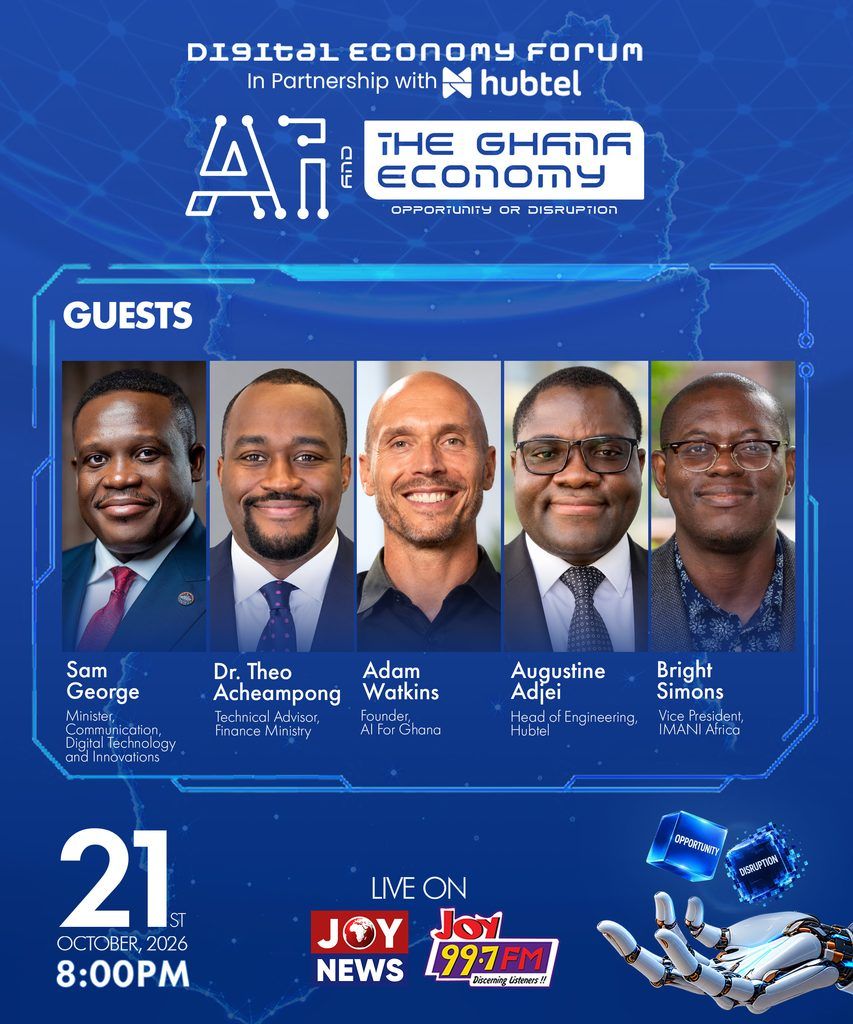
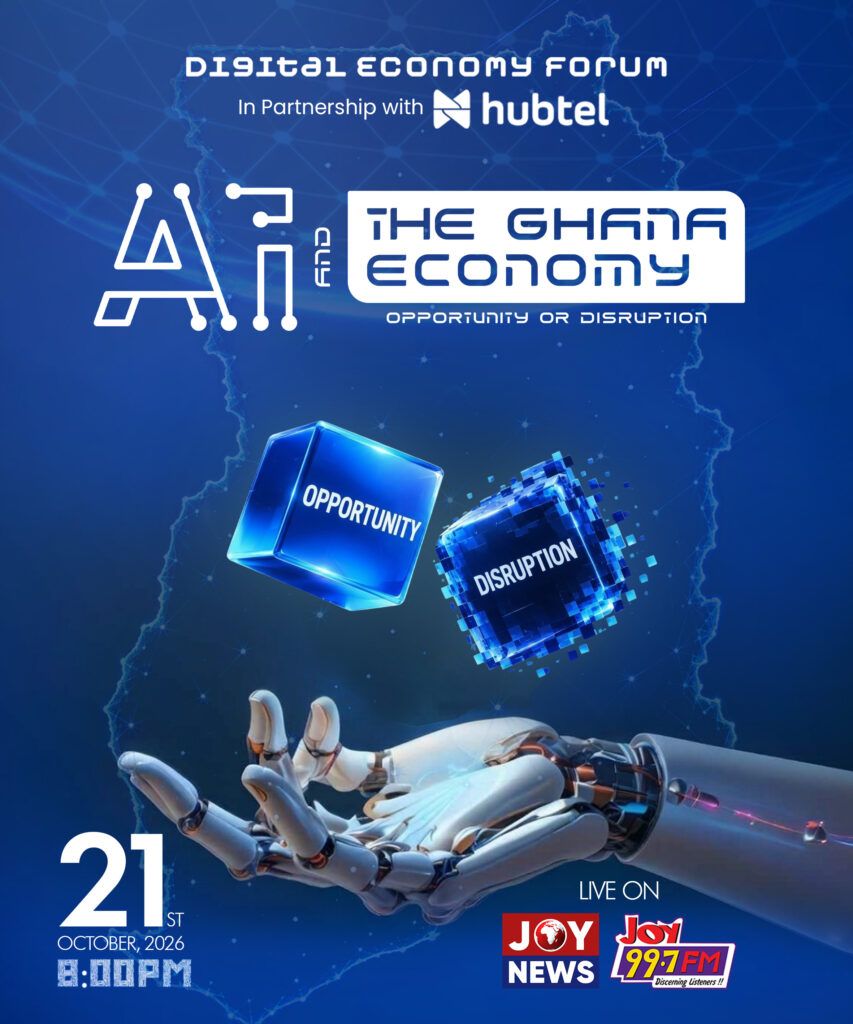
Speaking ahead of the second episode of the Digital Economy Forum on 21 October, Bram urged the government to support a national AI compute centre with robust data and skilled professionals. “If that AI compute centre is to succeed, it needs data,” he said. He called for a national data‑sharing framework, stronger technical training and closer public‑private cooperation to unlock AI’s benefits for sectors such as manufacturing, agriculture and public services.
Despite the setbacks, Bram remains optimistic about Ghana’s AI future. He hopes the country will produce more designers, manufacturers and farmers who can harness AI to improve their work and drive economic growth.