
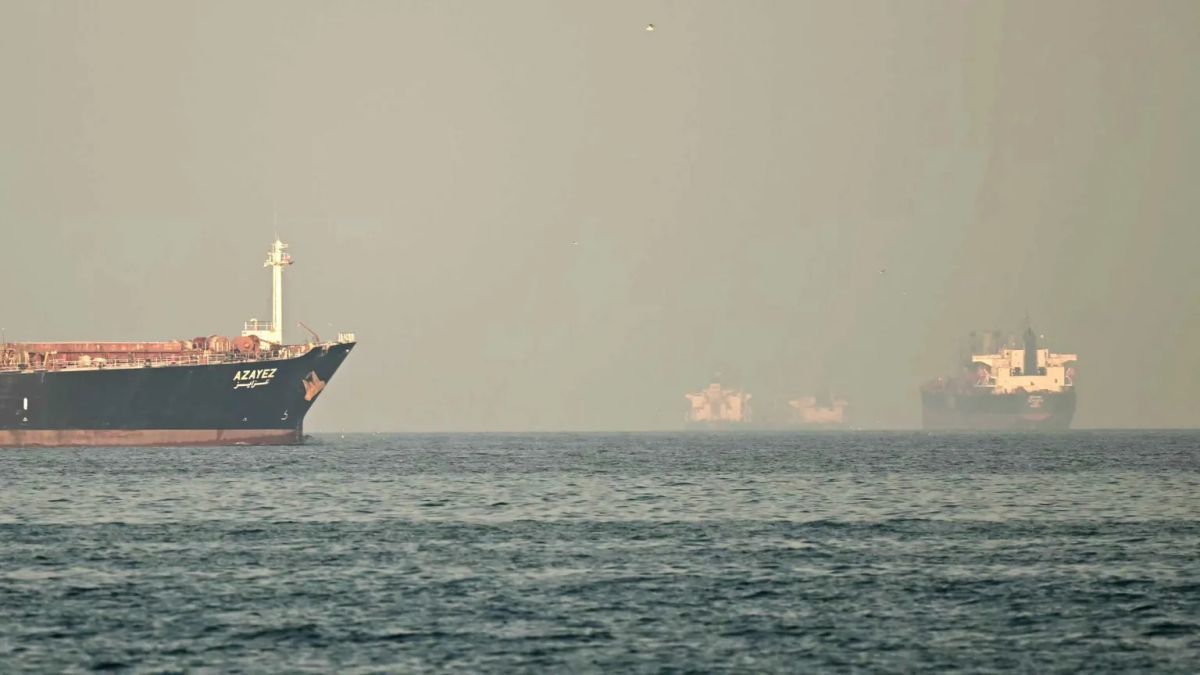
Seven commodity vessels passed through the Strait of Hormuz on Tuesday, the lowest count since July 23, according to analytics firm Kpler. The figure represents a steep drop from the peak of 27% higher crude crossings the week before, when attacks on tankers reached their highest since the start of the Iran‑US‑Israeli war.
Crude crossing the strait fell to at least 10.1 million barrels a day, returning to a September‑average level but only 74% of its pre‑war volume. Most of the decline was in ship‑to‑ship transfers in the Gulf of Oman, where cargoes move between tankers.
Exports from the Gulf of Oman coast and the Red Sea rose to 6.7 million barrels a day, more than twice pre‑war levels, offsetting the loss of supply through Hormuz and keeping overall Middle East crude exports at pre‑war levels.
The number of vessels transiting edged up to 10 on Wednesday, still well below the 20‑plus daily tally seen on Sunday and Monday. More vessels entered the strait than exited over the past two days, though the figures exclude ships with their Automatic Identification System transponders turned off.
London Stock Exchange Group data showed eight vessels on Tuesday, evenly split between entries and exits, down from 14 the day before. These included five oil tankers and the liquefied natural gas tanker Al Mafyar, which loaded at Ras Laffan in Qatar and was bound for Port Qasim in Pakistan.
Attacks on tankers in the strait peaked last week, the highest since the Iran war began, as Gulf producers intensified exports. In the latest incident, projectiles struck a tanker 51 nautical miles north of Qatar’s Madinat ash Shamal, with casualties reported by the United Kingdom Maritime Trade Operations agency on Wednesday.
Before the February 28 start of the Iran war, roughly 125 large commercial vessels crossed the strait each day, carrying a fifth of global crude oil and liquefied natural gas supplies.
With the current decline in transit numbers, analysts will watch whether the trend continues or rebounds as tensions and shipping patterns evolve.