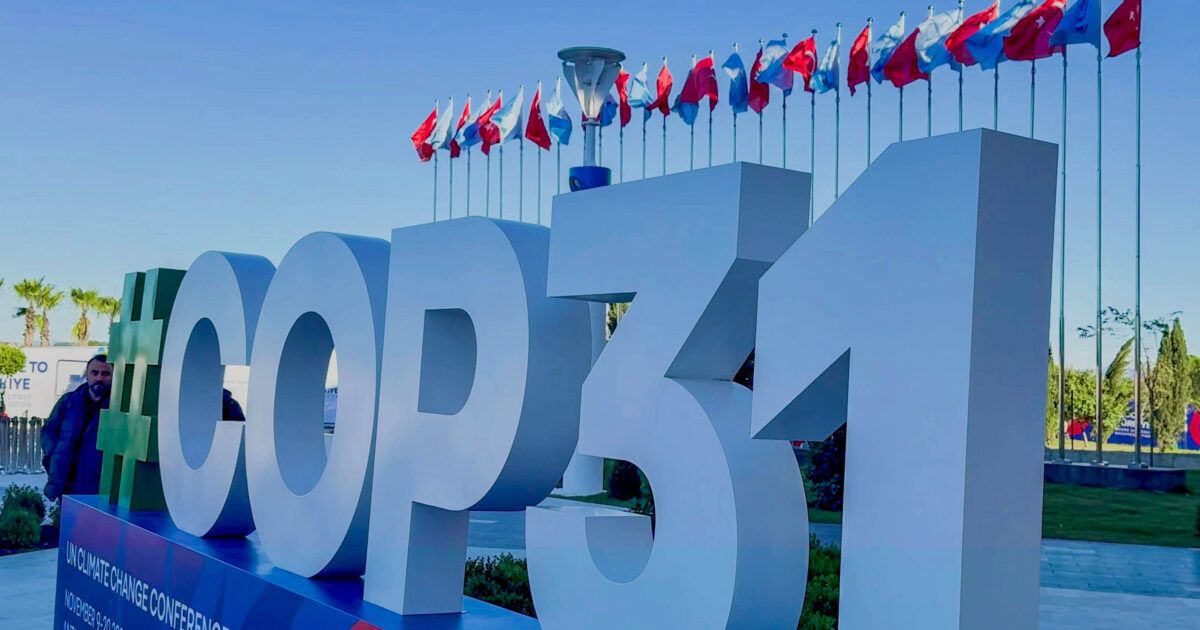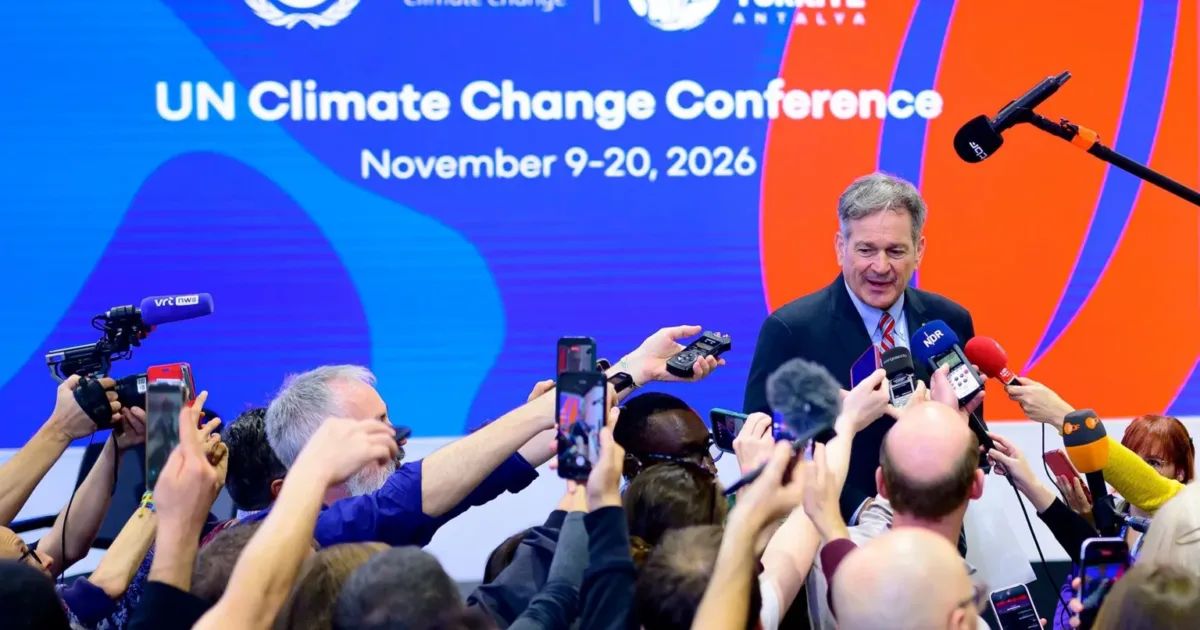
Negotiations at the COP31 UN climate summit in Antalya, Turkey, have reached a deadlock after more than 36 hours of overtime, with delegations unable to agree on a new global climate deal. The EU and several Pacific island nations have pushed back against the latest draft agreement, which contains no reference to reducing the world’s demand for fossil fuels. A second sticking point involves the Africa Group’s demand for commitments on additional adaptation funding, a request the EU has previously rejected.
Delegates scheduled to depart on Sunday morning have postponed their flights to Monday, signalling that a consensus remains elusive. If consensus is not reached, the UN climate talks process could suspend negotiations, ending the summit with no deal and forcing a reconvening next year – an outcome that has occurred only once since the first COP in 1995.
EU Commissioner for Climate Wopke Hoekstra warned that if the bloc cannot secure “what is needed in terms of climate action…then there’s no deal.” In contrast, the UK’s chief negotiator, Energy Secretary Miatta Fahnbulleh, expressed optimism, stating that “these are difficult negotiations, but discussions remain productive and there is a deal to be done.”
Key negotiators from Panama, Solomon Islands, Côte d’Ivoire and the EU are fighting to secure a commitment to phase out oil, gas and coal in the final agreement. Panama’s environment minister Juan Carlos Navarro declared, “It is not acceptable to have a COP or a cover decision that does not even mention fossil fuels and we simply will not put up with it.” France’s Minister of Ecological Transition, Monique Barbut, echoed this sentiment, criticizing references to carbon capture, use and storage as a licence for continued fossil‑fuel use.
For the first time, the Antalya Accords could acknowledge that the goal of keeping global temperature rise below 1.5°C has been missed, ushering in an “overshoot” period that scientists warn will expose millions more people to sea‑level rise and extreme heat. Australia’s climate change and energy minister, Chris Bowen, countered the need to include fossil‑fuel language, arguing that the summit should focus on implementation and the shift toward clean energy sources.
Renewable energy is expanding rapidly, with solar panels now the largest contributor to new global energy demand, surpassing oil and gas. The International Energy Agency has warned that ongoing fuel supply disruptions through the Strait of Hormuz could accelerate the switch to electricity powered by renewables. Meanwhile, a separate meeting in Shenzhen saw US President Donald Trump, Chinese President Xi Jinping and Russian President Vladimir Putin agree to increase oil production amid supply disruptions, proposing that petro‑states sign a pledge for 35% of their energy consumption to come from electricity by 2035.
The Africa Group’s chair, Ghana’s Environment Minister Zanetor Agyeman Rawlings, said, “We did not come here to beg, we came here to claim what is rightfully ours for our people who are suffering the brunt of anthropogenic activities of developed countries.” Climate activists, including Mohamed Adow of Powershift Africa, slammed the talks, calling COP31 the worst ever. Observers noted that Turkey’s hosting has been unpopular, citing a lead negotiator’s walkout from crucial negotiations that left many delegations feeling “disrespected.”
With negotiations still in flux, delegations are monitoring the situation closely as the summit’s outcome hangs in the balance. The next day’s talks will determine whether a historic climate agreement can be forged or if COP31 will conclude without a binding deal.